
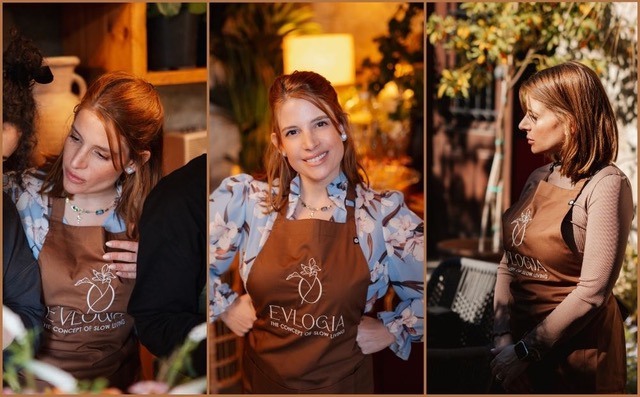
Some businesses begin with a market opportunity. Others begin with a personal need. For Stavri, founder of Evlogia, the idea grew out of a desire to slow down. Before teaching people how to grow herbs, arrange flowers, and reconnect with nature, she was building a career in marketing and events, working long hours and juggling multiple projects at once. Eventually, she found herself asking a simple question: what kind of life did she actually want to create?
Almost every meaningful project begins with a moment of change. Looking back, what was happening in your life before Evlogia became a reality?
I studied marketing and multimedia, and I started my career in digital marketing. For several years I worked with food and beverage brands in Limassol, with marketing and food styling.
At the same time, I was always drawn to flowers, plants, and colour. That passion eventually took me to London, where I completed a floral design course. When I returned to Cyprus, I worked as a florist and collaborated with an event planner. Together we designed concepts for weddings and large events.
It was creative work and I loved it, but it was also exhausting. I was working constantly—weekdays, weekends, every spare hour. By then I already had a young daughter, and I could see that the pace wasn’t sustainable. I needed to slow down.
Was that the moment Evlogia was born?
Yes. I’ve always been a purpose-driven person. I knew that whatever I built next had to mean something—not only for me, but for other people too.
Nature has always been where I recharge. It’s where I find clarity and energy. I wanted to create something that would give people permission to slow down, even if only for a few hours, and reconnect with what really matters.
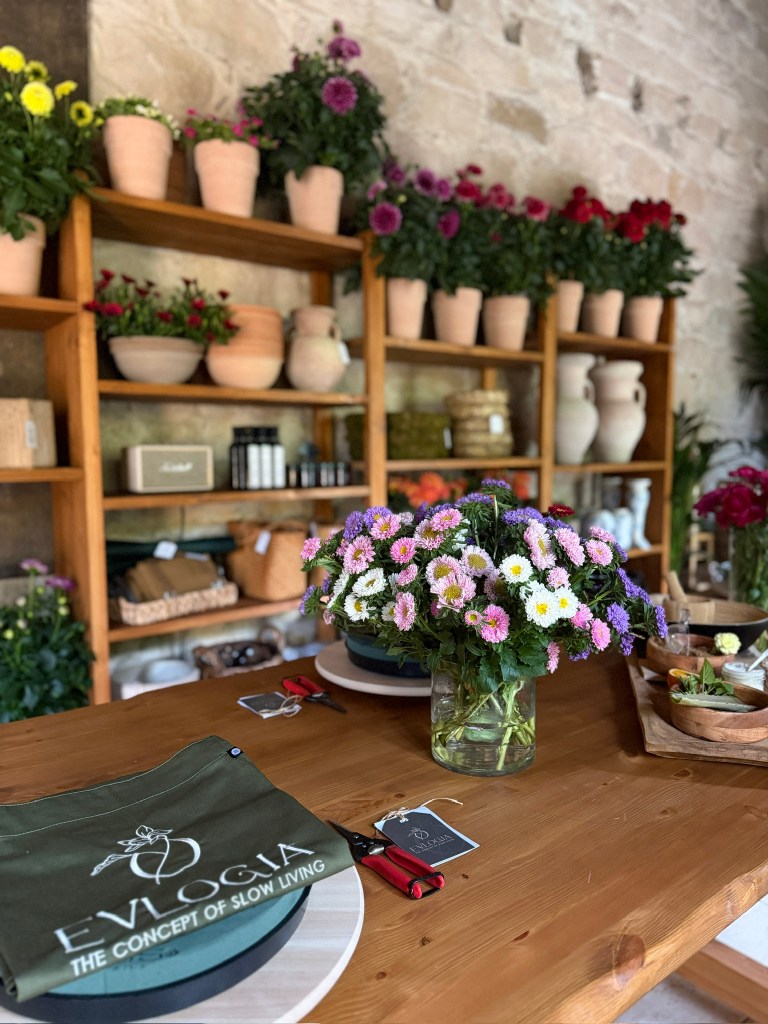
Why the name Evlogia?
Evlogia means “blessing.”
I wanted a name that immediately felt connected to Cyprus and our culture. A name that carried warmth and meaning, a space where people are not just learning but get connected to nature.
For me, nature is a blessing. Food is a blessing. Sitting around a table with people you love is a blessing. Those moments seem simple, but they’re often the moments when we feel most connected to ourselves and to each other. That’s what Evlogia is really about.
You speak a lot about slow living. Cyprus has traditionally been known for a slower pace of life. Do you think that’s changing?
I do, especially in Limassol. The city has changed enormously over the last few years. Traffic alone can completely change the way your day begins. People are working harder, moving faster, and carrying more stress.
Someone coming from London might still think Cyprus feels relaxed, and compared to many places it does. But for people living here, the pace has definitely increased.
And when life speeds up, we often lose touch with the things that keep us grounded.
Can someone live sustainably without slowing down?
That’s an interesting question. I think somebody can recycle, buy sustainable products, and make environmentally conscious choices. But sustainability is also personal.
If you’re constantly stressed, disconnected from nature, disconnected from yourself—how sustainable is that life really? For me, sustainability begins with awareness. When you grow a few herbs on your balcony, make a meal from scratch, or spend time in a garden, something changes. You become more conscious. You pay attention.
You start noticing what you consume, how you eat, who you spend time with, and how you live. It’s a domino effect. Once you slow down, everything else starts to shift.
For someone discovering Evlogia for the first time, how would you describe it?
Evlogia isn’t simply a shop, and it isn’t simply a workshop business. It’s more of a concept—a bridge between people and nature.
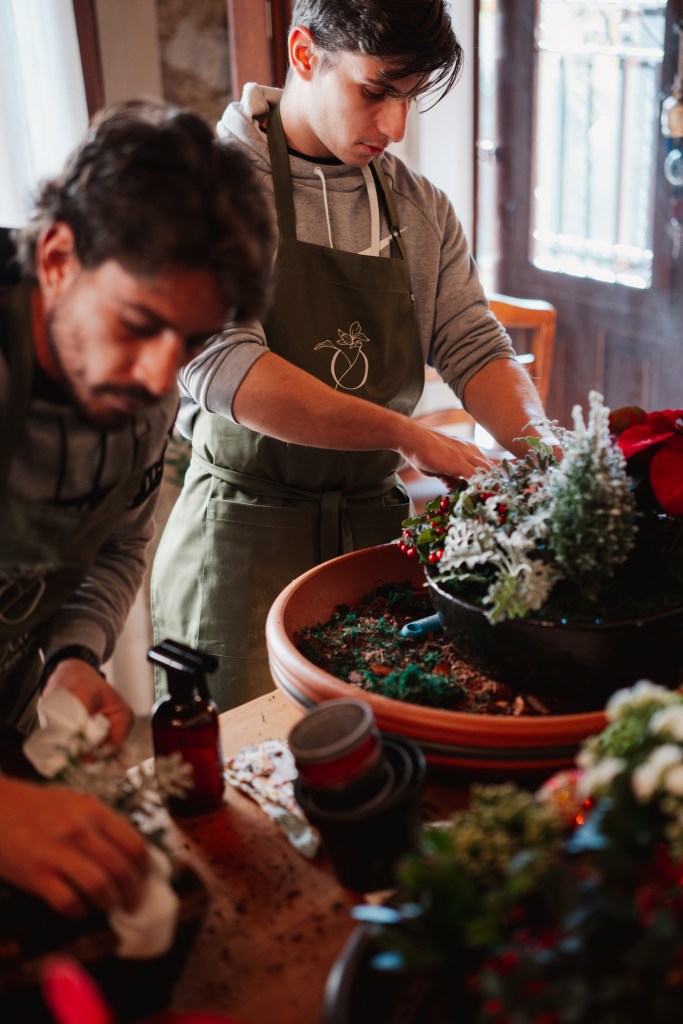
At its heart, Evlogia exists to help people reconnect with simple things that we’ve slowly moved away from: growing plants, working with our hands, preparing food from scratch, learning traditional skills, spending time outdoors and connecting with one another.
People can experience Evlogia in two ways. The first is through our shop, where they can find seasonal plants, gardening tools, good quality soil and carefully selected products that support a more conscious way of living.
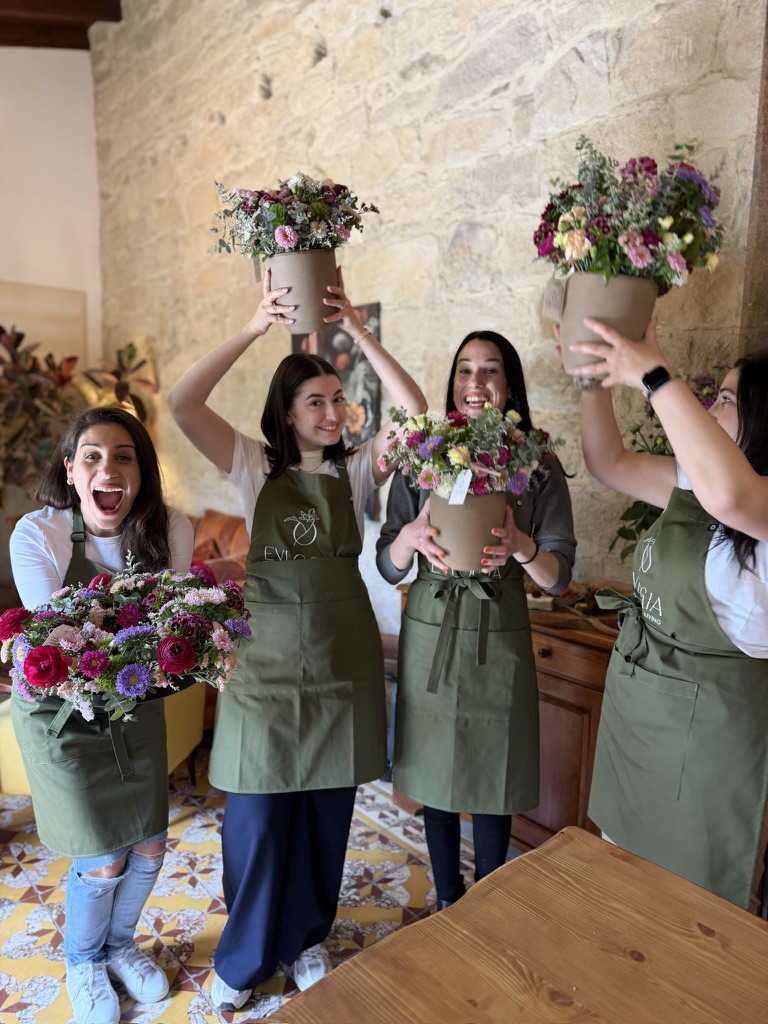
The second is through our workshops, which are really the heart of what we do. They give people the opportunity not only to learn a new skill, but also to slow down for a few hours and reconnect with nature, with themselves and with other people.
What kinds of workshops do you offer?
We started with gardening and flower-arrangement workshops,but we are open to welcome more workshops like we already do. We run bread-making workshops and honey – degustation experiences where participants learn about bees, the journey of honey production and the important role bees play in our ecosystem.
Every workshop is rooted in the same philosophy: helping people understand where things come from and encouraging a deeper connection with nature.
A big part of your work also involves businesses and organisations. How did that develop?
As Evlogia grew, we realised that many of the same principles we teach individuals could have a powerful impact within workplaces as well.
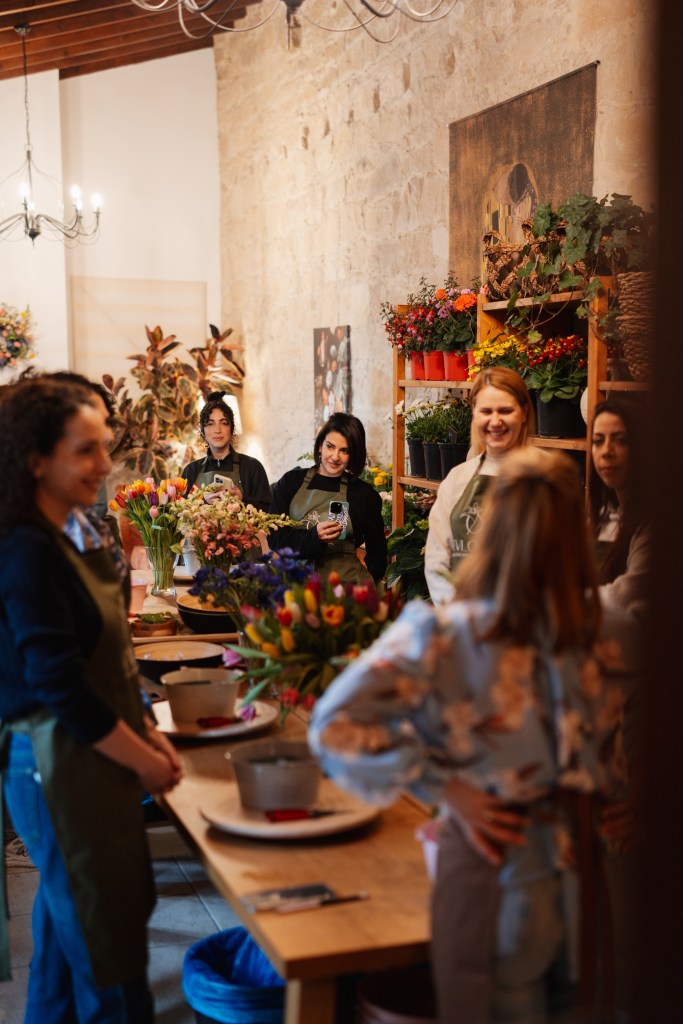
Today we offer team-building experiences that combine education, nature and wellbeing. The idea isn’t simply to bring employees together for an activity. It’s to create an environment where people can genuinely connect, relax and step away from the pressures of everyday work.
When people feel calmer and more grounded, communication improves, relationships become stronger and collaboration happens more naturally.
You also help companies create green spaces.
We wanted to approach green spaces in companies differently.
Together, with our team and landscapers, we work with businesses to design green spaces that employees can actively participate in creating and maintaining. We believe that when people help build something themselves, they care about it differently.
The result is more than a collection of plants. It’s a shared space where employees can spend time, take a break, recharge and feel connected to their environment. We also provide guidance and support until the team feels confident maintaining the space on its own.
What’s next for Evlogia?
We’re expanding our workshop programme quite a bit.
This autumn we’ll introduce new food-focused experiences, traditional Cypriot cooking and other hands-on classes that encourage people to cook more confidently at home. Living on an island, it feels natural to teach traditional recipes that many of us grew up with but don’t necessarily know how to make ourselves.
Ultimately, whether it’s gardening, flowers, bread or cooking, the goal remains the same: helping people return to skills that were once part of everyday life. We want to continue growing both our educational programmes and our impact.
We’re already exploring projects that focus on creating more green spaces, supporting wellbeing initiatives and bringing nature into places where people need it most (like hospitals, for example).
For me, success isn’t measured by the number of products we sell. It’s measured by the number of people who reconnect with nature, learn something meaningful and take that experience back into their daily lives.
What has been the biggest challenge along the way?
Without a doubt, education. When I say I’m a florist, people immediately understand. When I say I worked in marketing, they understand that too.
But when I say I teach gardening, people often look at me and ask, “What exactly do you mean?” Even a few years ago, workshops centred around flowers, gardening or slow living felt unfamiliar in Cyprus. Today they’re becoming more common, which is wonderful to see, but we’re still introducing people to a concept that doesn’t fit into a traditional business category.
People ask me if we sell plants, food, bouquets or something else entirely. The truth is that Evlogia is none of those things and all of those things at the same time. What we’re really offering is knowledge, connection and a different way of experiencing everyday life.
Finally, my last question I ask everyone in my interviews: if there was one thing you wish more people would do towards a more sustainable way of living, what would it be?
Slow down.
It sounds simple, but I really believe it changes everything. When we slow down, we start paying attention. We notice the damage we’ve done—to nature, to our wellbeing and sometimes even to our relationships. But we also notice the things that matter.
Slowing down creates awareness. And awareness creates respect—for ourselves, for other people, for nature and for the future. Once you slow down, you finally have the eyes to see.
Interviewed by Lusine Mirzoyan
Photos provided by Evlogia
 www.natureallydone.com
Leave a comment