
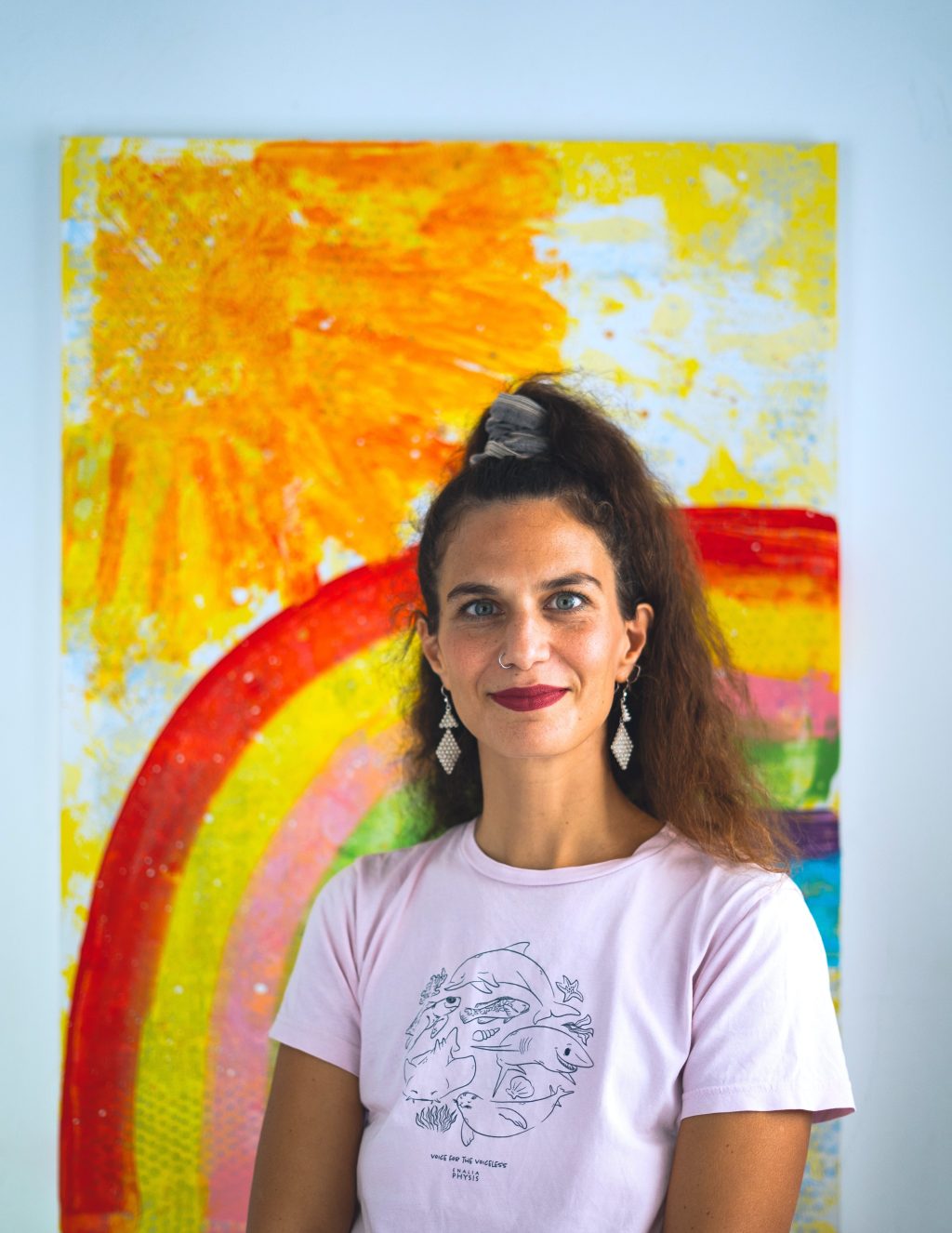
How do we inspire children to care for the ocean before they fully understand the science behind it? Rebecca Katsaris, early years educator, Associate Educator at Enalia Physis Environmental Research Centre, believes the answer lies in creativity, storytelling and emotional connection. In this conversation, she shares how the arts can nurture ocean literacy, why cultural traditions shape our relationship with nature, and how initiatives like Blue Schools are helping build a new generation of environmentally conscious citizens.
Here is the first question you probably didn’t expect: if the Mediterranean Sea could walk into a classroom, what lesson would it teach children and maybe their teachers?
The sea would remind us that it is the cradle of life and that every one of us is deeply connected to it. It provides much of the oxygen we breathe, supports the food we eat, regulates our climate, and shapes life in countless ways that often go unnoticed. But beyond science, I think the Mediterranean would invite us to reconnect with it emotionally. Facts alone rarely inspire people to care or act—connection does. When children develop a sense of wonder, belonging, and empathy for the sea, protecting it becomes not just a responsibility, but something they genuinely want to do.
Behind all the projects and awards, there is always a person with a story. Tell me your story. Who is Rebecca Katsaris, and what led you to the career you have today?
I see myself, first and foremost, as an early years educator who believes that education has the power to transform the way people relate to the natural world. Over the years, I’ve had the privilege of working with children, educators, museums, galleries, and cultural institutions in different countries. Throughout all these experiences, one question has remained at the heart of my work: how can creativity become a pathway to meaningful learning? How can music, storytelling, movement, philosophy, and the arts help people not only understand the world, but also care about it?
I was born in Greece, but I spent the first five years of my life in Oman, growing up by the sea. Looking back, I realise how much those early experiences shaped me. The sea, the landscapes, and the way I was brought up nurtured a deep sense of curiosity and wonder about the natural world.
I’ve always been fascinated by nature and by the idea that it holds everything we need—not only for our survival, but also for our inspiration. The more I learned, the more I realised that our cultures, our stories, our music, our art, and even the way we make sense of the world are deeply rooted in and inspired by nature. That belief has guided my work as an educator ever since. I’ve always wanted to create learning experiences that help children experience that same sense of wonder I felt growing up. Because when children form an emotional connection with nature, learning becomes more meaningful, and caring for the environment becomes something that comes from within, rather than something they are simply told to do.
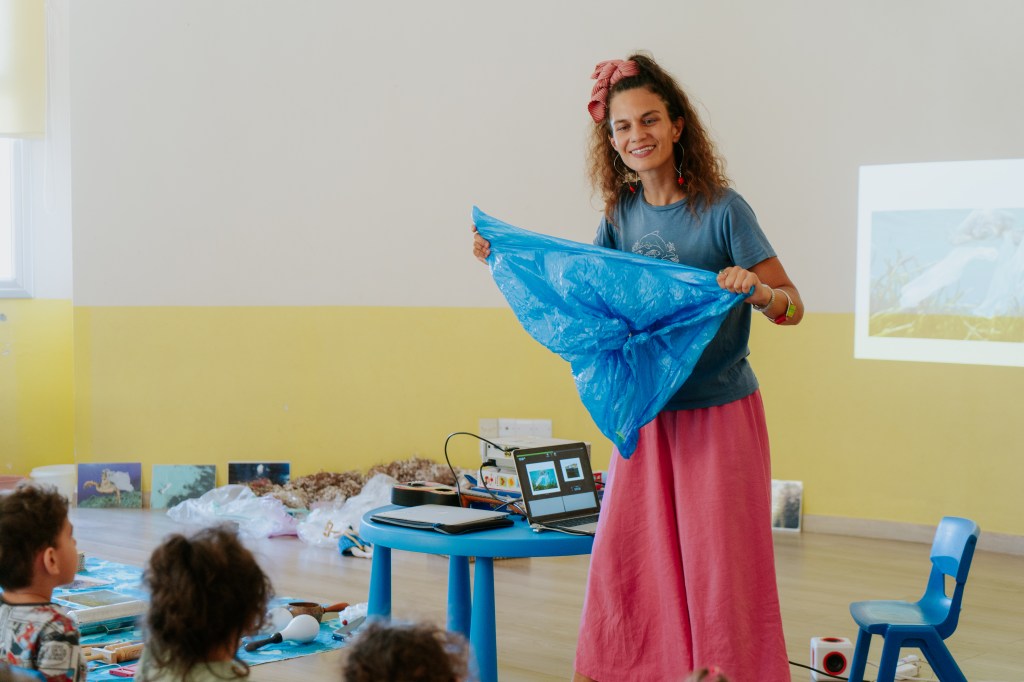
Rebecca, many people associate ocean literacy with science and facts, but your work is mostly through storytelling, music, drama. Why do you believe children need to feel connected to the sea before they can truly learn how to take care of it?
I think science and the arts have different, but equally important, roles to play. Science helps us understand the ocean. It gives us knowledge, evidence, and explains the challenges our seas are facing. But the arts invite us to experience the ocean differently. They create emotion, imagination, and empathy.
When children engage with storytelling, music, drama, movement, or visual arts, they don’t just learn about marine life—they begin to imagine life through the eyes of a sea turtle, a monk seal, or a whale. They become part of the story. And because creativity has no single right or wrong answer, every child brings something of themselves into that experience—a piece of their own thoughts, feelings, and imagination.
That personal investment is incredibly powerful. Science explains the problems, but art helps us care about them. For me, the goal is not simply to teach children facts about the ocean. It is to help them develop empathy for it and to understand that the sea is not something separate from us, it is part of who we are. We are interconnected with this whole living system. When learning becomes personal, caring becomes natural. And it is that emotional connection that inspires lasting action.
Why start in preschool?
Because early childhood is when values, attitudes, and our relationship with the world begin to take shape.
Young children are naturally curious. They ask questions, they wonder, they explore. So the real question is not whether they are ready to learn about the environment, but what kind of values we want to nurture during those early years. What kind of relationship do we want them to develop with nature?
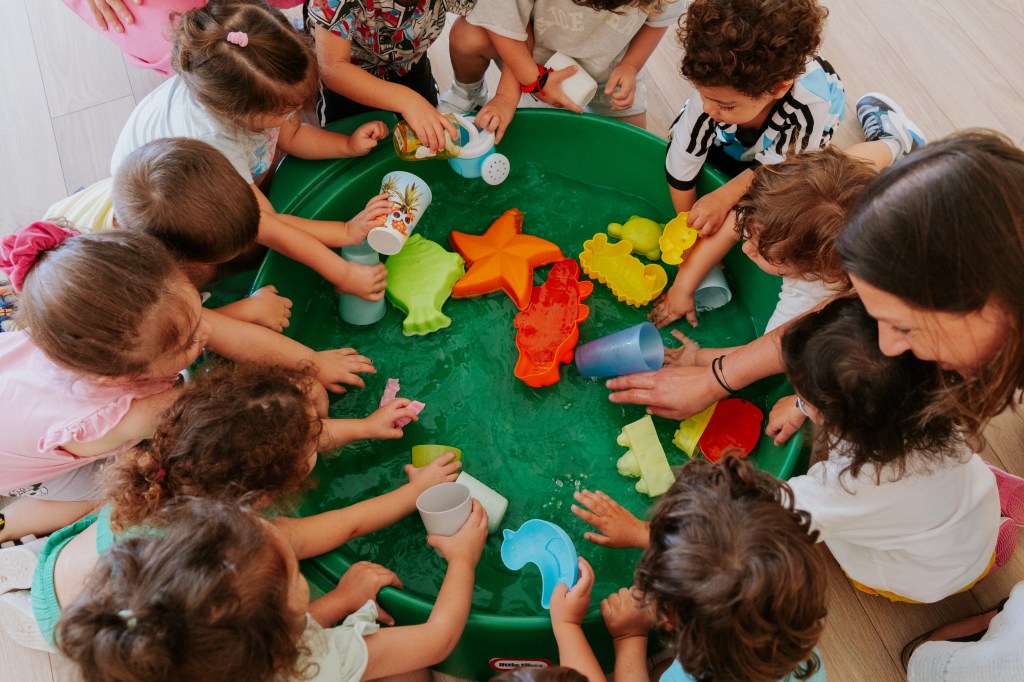
At this age, children are incredibly open—both in mind and in spirit. They learn through their senses, through play, through movement, through exploration. Yet too often, we don’t give them enough opportunities to be outdoors, to get their hands dirty, to roll in the sand, to collect shells, to observe, to ask questions, and simply experience nature. Those emotional and sensory experiences are essential.
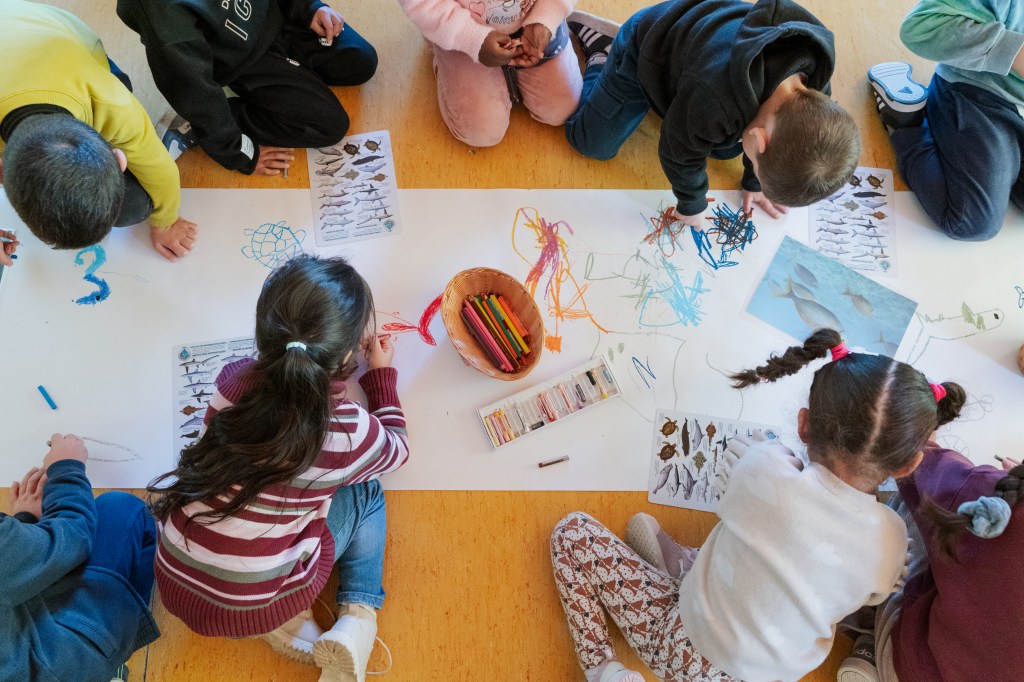
Through our work, children don’t just receive information—they create something of their own. They compose a piece of music inspired by the sea and can’t wait for others to hear it. They write a heartfelt letter to the ocean and want to share it with their families and communities. When we give children opportunities to express themselves creatively, we also show them that their voices matter, that they have something meaningful to contribute.
For me, that’s where environmental education begins. Not with memorising facts, but with nurturing wonder, curiosity, and a sense of belonging. Scientific knowledge can grow throughout life, but empathy, curiosity, and a feeling of connection to the natural world are seeds that need to be planted early. Those are the foundations of lifelong environmental responsibility.
I know you worked not only in Cyprus but also abroad in countries such as England, Columbia and others. Did you find these experiences different?
One of the most beautiful things I’ve learned is that children are curious everywhere in the world. That curiosity is universal. What changes is the way their relationship with nature is shaped by their culture, their family traditions, and their everyday experiences. Even children growing up in large cities can develop a deep connection with nature. It doesn’t always depend on having access to forests or the sea. Sometimes it begins with simple family tradition such as giving thanks for the food they eat, learning about the herbs and plants their families use, or listening to stories that have been passed down through generations.
When I was living in Colombia, I was deeply inspired by the way many people expressed gratitude for the food they ate and for the natural elements that sustained their lives. Those everyday rituals reflected a genuine appreciation for nature not as something separate from people, but as an integral part of daily life.
That experience has stayed with me, and I try to bring that perspective into my educational practice. I love using storytelling to explore how different cultures have their own myths, legends, and traditions about the same flowers, herbs, trees, or animals. Children are fascinated to discover that the same natural element can inspire completely different stories around the world. Those stories help children build an emotional connection with nature while also celebrating cultural diversity. They begin to realise that, although our traditions may differ, our relationship with the natural world is something we all share. I think that’s a very powerful lesson.
I want us to talk a bit about Blue Schools. What are they and how do they differ from simply teaching environmental lessons?
I first discovered the Network of European Blue Schools in 2023, when I was invited to represent our project at the EU Mission “Restore our Ocean and Waters by 2030” – Mediterranean Lighthouse event in Palermo, Italy. It was an incredibly inspiring experience because it introduced me to a community of educators from across Europe who shared the same vision: placing the ocean at the centre of learning. What I really appreciate about the Blue School philosophy is that it encourages schools to see the ocean not as another topic to teach, but as a lens through which learning can take place. Rather than treating environmental education as a separate lesson or an occasional activity, a Blue School places the ocean at the heart of the educational experience. Ocean literacy is woven throughout the curriculum, connecting science, geography, language, music, visual arts, history, mathematics, citizenship, and many other areas of learning.
The philosophy is simple but powerful: helping students understand both how the ocean influences our lives and how our everyday choices influence the ocean. Learning becomes interdisciplinary, meaningful, and connected to real-life issues. It also encourages schools to extend learning beyond the classroom by engaging families, local communities, scientists, artists, museums, environmental organisations, and other partners. In this way, children don’t just learn about the ocean—they experience how it connects to their own lives and to the world around them.
I find that approach incredibly powerful because it moves beyond simply raising awareness. It nurtures curiosity, critical thinking, collaboration, creativity, and a sense of responsibility. Students investigate real challenges, work together to find solutions, and begin to see themselves as active citizens who can make a positive difference.
Do we have blue schools in Cyprus?
Cyprus has a growing network of Blue Schools, and I’ve had the privilege of supporting schools through the application process and the development of their ocean literacy projects. It’s incredibly encouraging to see more and more educators embracing this philosophy and recognising that the sea isn’t just another environmental topic—it’s part of our identity, our culture, our wellbeing, and our future.
For Cyprus, as an island nation, I believe strengthening our marine identity is especially important. The sea has shaped our history, our culture, our economy, and our everyday lives, yet many children grow up without fully recognising that connection.
Children are naturally curious about the sea. Blue Schools provide them with opportunities to transform that curiosity into meaningful learning and real action. They encourage children not only to understand the ocean, but also to feel connected to it and to recognise that they can play an active role in protecting it.
I believe that’s one of the greatest strengths of the European Blue School philosophy, it empowers children to see themselves not just as learners, but as active citizens who can make a positive difference in their communities and for the future of our ocean.
How can a school become a European Blue School? What is the process? Is there any cost involved?
One of the best things about the European Blue Schools initiative is that participation is completely free. There is no cost for schools to join the network.
Schools apply through the Network of European Blue Schools platform, where they can find step-by-step guidance on the application process. They develop and submit an action plan describing how they will integrate ocean literacy into their teaching and learning throughout the school year. Once their application is approved and the activities are successfully completed, they receive official recognition as a European Blue School.
Becoming part of the network also opens the door to many opportunities. Schools gain access to professional development, educational resources, international events, and a vibrant community of educators across Europe who exchange ideas, share good practices, and collaborate on ocean literacy initiatives. I’ve had the privilege of supporting schools throughout this journey—from helping them develop their project ideas and design meaningful interdisciplinary activities to reviewing their applications and guiding them through the entire process. It’s incredibly rewarding to see schools realise that becoming a Blue School isn’t simply about receiving a recognition. It’s about adopting a philosophy of learning that places the ocean at the heart of education and inspires children to become informed, engaged, and active citizens.
What are the biggest challenges you face at your work?
One of the biggest challenges, at least in the work I’ve been doing over the past few years as a travelling specialist freelance educator, is making sure educators have the time, training, and support they need. Teachers are incredibly committed, but they already have many responsibilities and expectations placed upon them. Introducing new initiatives—even valuable ones—can sometimes feel overwhelming.
That’s why I believe professional development is so important. Educators don’t just need information; they need inspiration, practical ideas, and the confidence to adapt those ideas to their own classrooms. When teachers feel supported, they are much more likely to embrace new approaches and make them part of everyday learning.
Another challenge is ensuring that environmental education is seen as something that enriches the curriculum rather than adds to it. My role is often to help schools see how ocean literacy can be naturally integrate into what they are already teaching, rather than becoming an additional task.
That’s also why I try to provide as much support as possible whether it’s helping schools become European Blue Schools, identifying their needs, co-designing projects with teachers, or working alongside them in the classroom. I believe that strong partnerships, ongoing collaboration, and access to the right resources are what enable meaningful and lasting change.
Tell us about the projects you are currently working on.
I’m especially proud of our award-winning project, Increasing Marine Environmental Awareness Through the Creative Arts, which is implemented under the auspices of Enalia Physis Environmental Research Centre with the support of the Cyprus Environment Foundation.
Over the past few years, the project has received several important national and international recognitions. It has been endorsed as an Ocean Decade Activity under UNESCO’s Ocean Decade, received the MakeEUBlue Special Award 2025, and the Sustainable Development Award 2025 in Cyprus. We are also proud to be part of Blue Thread, a global UNESCO-IOC network that brings together inspiring initiatives from around the world, showcasing ocean literacy in action. These recognitions are incredibly encouraging because they demonstrate that creative, interdisciplinary approaches can play a meaningful role in marine education.
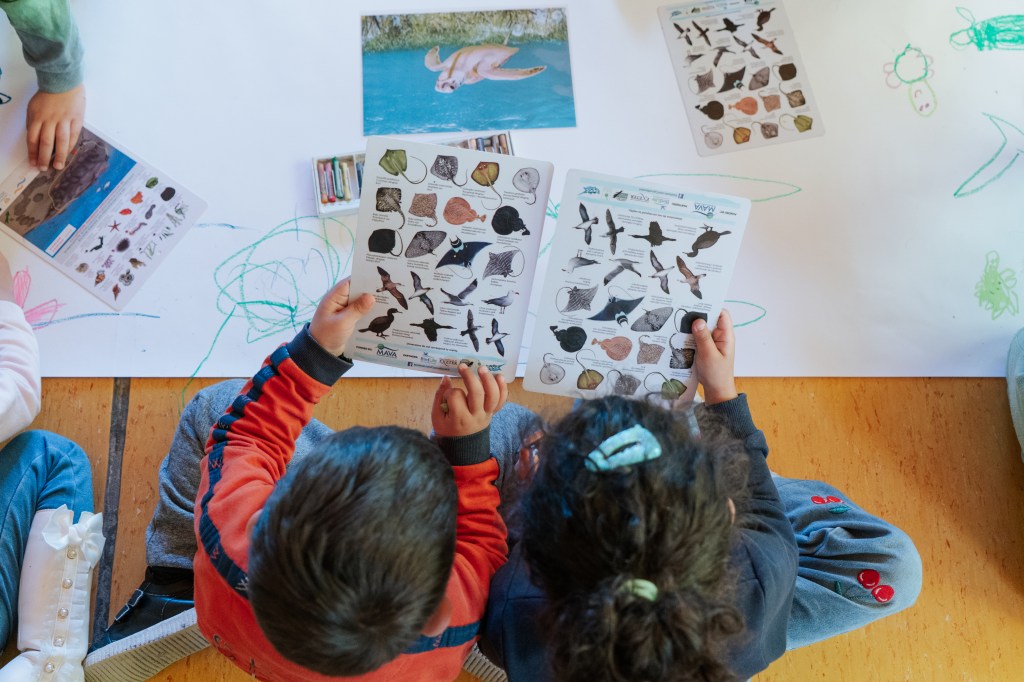
Working with an interdisciplinary team of educators, artists, musicians, storytellers, and marine scientists, we’ve developed experiential workshops, storytelling performances, educator training programmes, and educational resources that combine ocean literacy with music, theatre, movement, storytelling, philosophy, and the visual arts. We’ve collaborated with public and private schools, museums, galleries, environmental centres, and local communities across Cyprus, always aiming to make marine science engaging, creative, and accessible to everyone.
At the moment, we’re preparing the next phase of the project while also getting ready to deliver a teacher training workshop and present our research at the European Marine Science Educators Association (EMSEA) Conference in Barcelona. Alongside our work with children, we’ve also trained hundreds of educators, always focusing on practical, interdisciplinary approaches and tools they can immediately take back into their classrooms.
For me, that’s where the real impact lies. Science provides the knowledge, but our role as educators is to make that knowledge meaningful. Ocean literacy isn’t only about learning facts—it’s about understanding how our actions affect the ocean. Marine identity is about feeling that the sea is part of who we are. And the creative arts help transform that understanding into something memorable, emotional, and enjoyable.
Finally, my last question, which I ask everyone I interview: What is one piece of advice you would give people to help them take one step closer to a more sustainable way of life?
I would say: never lose your emotional connection with nature. Stay curious. Keep asking questions. Spend time outdoors. Listen to the sea, notice the birds, watch the changing seasons, and appreciate the natural world that surrounds you. Sustainability doesn’t begin with perfect choices—it begins with connection. When people feel connected to nature, they naturally want to protect it. And I truly believe that lasting change starts not with obligation, but with love, wonder, and a sense of belonging.
Interview by Lusine Mirzoyan
Photos by Ioanna Economidou
 www.natureallydone.com
Leave a comment