
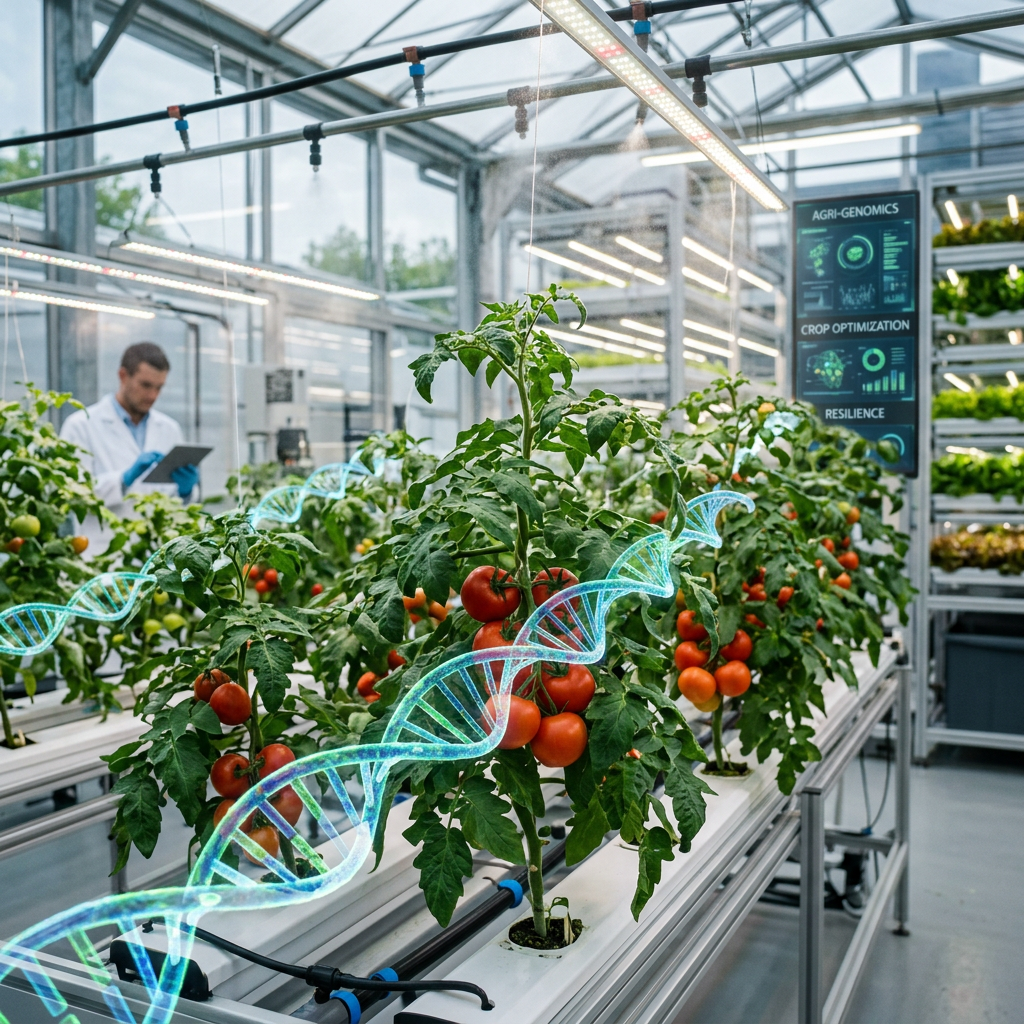
The European Parliament has approved new rules that will make it easier for certain gene-edited plants to be grown and sold in the European Union. Supporters say the change will help farmers grow crops that are more resistant to drought, heat, diseases, and pests.
For me, as a consumer, the biggest question is:
Will this affect the food I buy?
What Are Gene-Edited Plants?
Every plant contains DNA, which acts like an instruction manual.
Those instructions determine things such as:
- How well it handles heat or drought
- How much water the plant needs
- How resistant it is to disease
- How much fruit it produces
Traditional breeding has always changed these characteristics by crossing plants and selecting the best offspring. Farmers have done this for thousands of years. Gene editing uses modern tools to make much more precise changes.
What Has Changed?
The new legislation creates two categories of gene-edited plants.
Category 1 (NGT-1)
These are plants with a limited number of genetic changes that could also have occurred naturally or through conventional breeding. Once verified, they will be treated similarly to conventional plants rather than GMOs.
Examples might include crops with improved drought tolerance, disease resistance, or other beneficial characteristics.
Category 2 (NGT-2)
These plants involve more extensive or complex genetic changes. They will continue to be regulated under the EU’s existing GMO framework.
They must undergo risk assessments and receive authorization before being sold or cultivated.
Why Does the EU Support These Changes?
The European Parliament argues that gene editing can help farmers deal with some of agriculture’s biggest challenges such as climate change, droughts and heatwaves, crop diseases, pressure to reduce pesticide use.
Supporters believe these technologies could help Europe produce food more efficiently while using fewer resources.
Many scientists and agricultural organizations also argue that gene editing is often more precise than conventional breeding methods.
Will These Foods Be Safe?
According to EU institutions and many scientific organizations, gene-edited plants covered by the simplified rules are expected to be as safe as conventionally bred plants. The new legislation was designed around that assumption.
However, some scientists, environmental organizations, and consumer groups argue that certain gene-edited crops should still undergo case-by-case safety reviews before reaching the market.
As with many new technologies, there is scientific agreement on some issues and ongoing debate on others.
Will These Foods Be Labeled?
For many Category 1 gene-edited plants:
- Seeds will be identified as gene-edited.
- Farmers will know what they are planting.
- Final food products sold to consumers generally will not need special labeling.
This means that we may eventually buy products made from gene-edited crops without seeing a special notice on the packaging.
Supporters say this makes sense because these plants are considered equivalent to conventionally bred plants. Critics argue consumers should always be informed.
Who Opposes the New Rules?
Opposition comes from environmental organizations, organic farming groups, some consumer rights organizations. Their concerns focus on long-term environmental effects, consumer transparency, corporate control of seeds, etc. Many critics are not necessarily opposed to the science itself. Instead, they argue for stricter regulation, stronger labeling requirements, or tighter controls on patents.
My personal perspecitve
As I was researching this topic, I found myself between two thoughts.
On one hand, I am not a scientist. I don’t have the expertise to confidently say whether gene-edited plants are the future of agriculture or a mistake.
But on the other hand, I am a consumer.
I buy food, I feed my family, and I believe consumers have a right to understand how their food is produced. Wanting information should not be confused with being anti-science. Transparency builds trust. The more significant the change, the more important it is that people feel informed rather than excluded from the conversation.
What also struck me while reading about the new rules is that many of the promised benefits focus on helping crops survive a warmer, harsher climate. Drought-resistant wheat. Heat-tolerant maize. Flood-resistant rice.
Of course, adaptation is necessary. Farmers cannot wait for global emissions targets to be met while crops fail today. Agriculture needs solutions now. But there is something unsettling about accepting extreme heat, droughts, and changing weather patterns as the new normal and then redesigning our crops around them.
Lusine Mirzoyan
 www.natureallydone.com
Leave a comment