
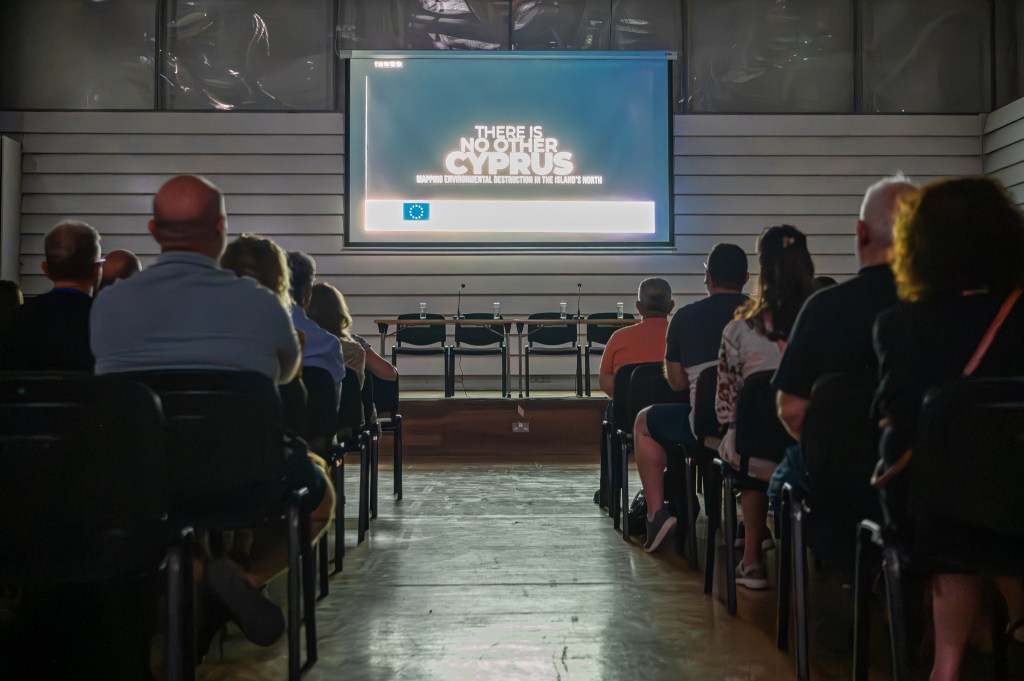
Watching There Is No Other Cyprus was a reminder that environmental problems do not recognise borders, political divisions or administrative boundaries. The documentary, screened recently at the event organized by UNFICYP in collaboration with Cyprus Youth DiplomaCY, tackles a difficult but urgent reality: while Cyprus remains divided politically, its environmental challenges are shared by everyone living on the island.
The film focuses particularly on the north of Cyprus, where years of limited oversight, weak environmental controls and a lack of coordinated planning have created growing concerns for the island’s natural resources. Through interviews with scientists, environmental experts, activists, the documentary paints a picture of an island facing common threats but lacking the cooperation needed to address them effectively.
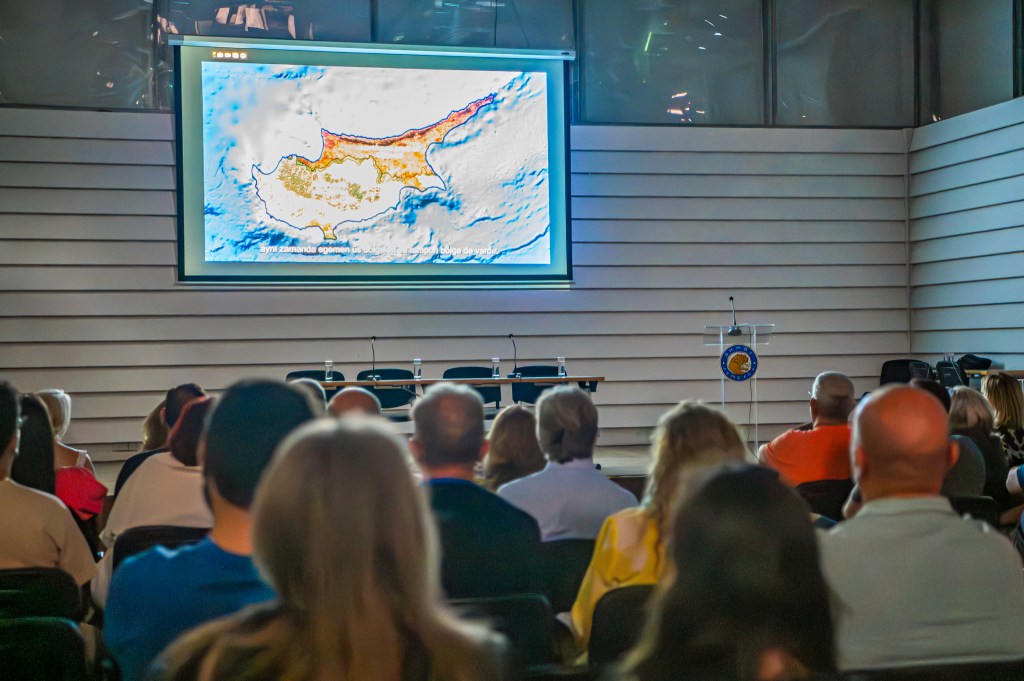
“Cyprus is divided into 4 parts (the Republic of Cyprus, the Northern part, sovereign bases and a buffer zone), which have little or no communication between them. This makes impossible to collect the data and take meaningful actions for protecting the environment” says in the documentary professor of Transitional Justice and Human Rights at UClan Cyprus Nasia Hadjigeorgiou.
One of the strongest messages emerging from the film is that nature does not stop at checkpoints. Water systems, air quality, biodiversity, migratory species and ecosystems move across the island regardless of political realities.
Turkish Cypriot economist Mertkan Hamit pointed out that “this issue is more important than solving the Cyprus problem. If we cannot solve this problem, there will be no Cyprus problem left to solve because there will be no people living on the island of Cyprus.”
Several contributors describe situations in which data sharing is limited, environmental monitoring is inconsistent and coordinated action is often missing. The result is a fragmented approach to challenges that require island-wide solutions.
As Nasia Hadjigeorgiou mentions “The Republic of Cyprus claims it has 76 beaches with blue flags (one of the most cleanest beaches in Europe). In the North at the same time you have reports indicating that the beaches there have the second highest number of microplastics in the world and luxury hotels that don’t have enough sewerage facilities and dumping the sewage in the sea.”
Some of the documentary’s most striking moments come from aerial footage showing the scale of environmental pressures in the north. Unregulated development, landscape alteration and waste management concerns are presented not as isolated incidents but as symptoms of a broader governance problem. These images are both impressive and unsettling, illustrating how quickly environmental damage can occur when oversight is weak or absent.
The film addresses the quarrying in the Pentadaktylos Mountains, a potential Natura 2000 site and the impact the quarries have on both the natural environment and the health of the local population. The environmental activist Hikmet Ulukam says in the film that “mountains are literally being gouged. When they are cut, the plants there also disappear. Nothing is planted instead, bare rocky places remain.”
Halil Erdim, Mining Engineer noted “We shouldn’t look for the solution in quarries. We need to look for the solution in the 80 thousand housing projects. If permission is given for 80 thousand houses, these mountains will end up like this. No one can prevent this. Do we need 80 thousand houses? If so, let’s do it and sacrifice the mountain too. But if we don’t need it, why do it?”
Yet despite exposing serious problems, I don’t see There Is No Other Cyprus as a pessimistic film. If anything, it is a call for cooperation. Throughout the documentary, experts stress that environmental protection could become one of the few areas where meaningful collaboration is both possible and necessary.
The title itself captures the essence of the documentary. There is no other Cyprus. There is only one island, one ecosystem and one shared environment. Whether people live in the north, the south or within the Sovereign Base Areas, they depend on the same natural resources and face the same environmental risks.
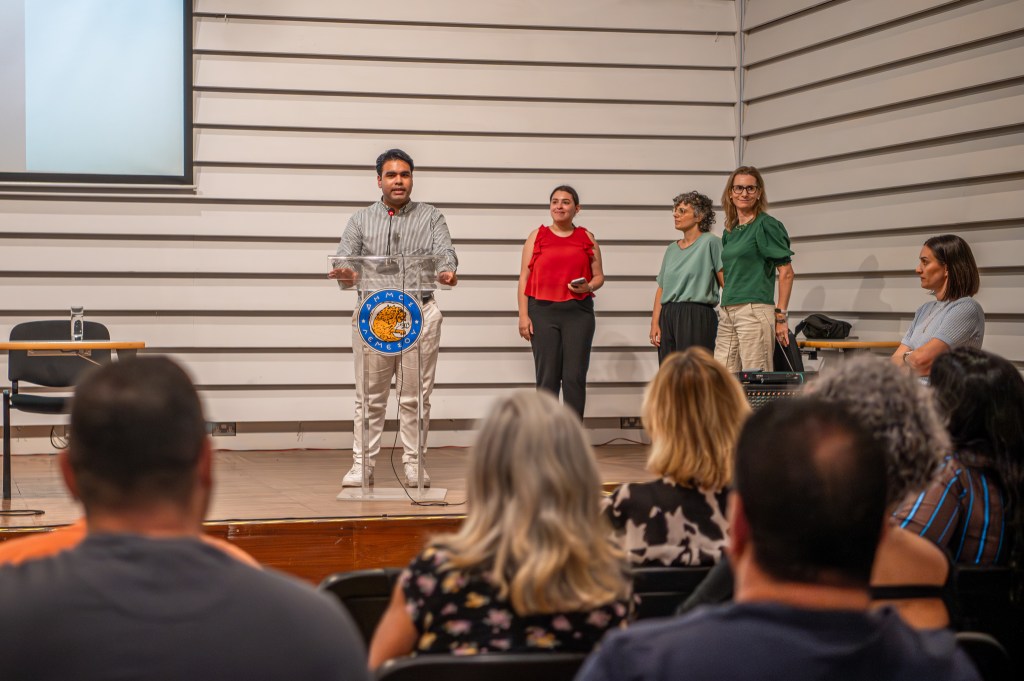
After the screening the discussion followed between attendees and panelists:
- Anastasia Korae, Vice President of Friends of the Earth Cyprus
- Mete Hatay, Senior Research Consultant at the PRIO Cyprus Centre
- Theodoros Kouros, Social Anthropologist, Lecturer at the Department of Communication and Internet Studies of TEPAK/CUT
- Vijdan Sengor, Project and International Relations Officer of the Green Action Group
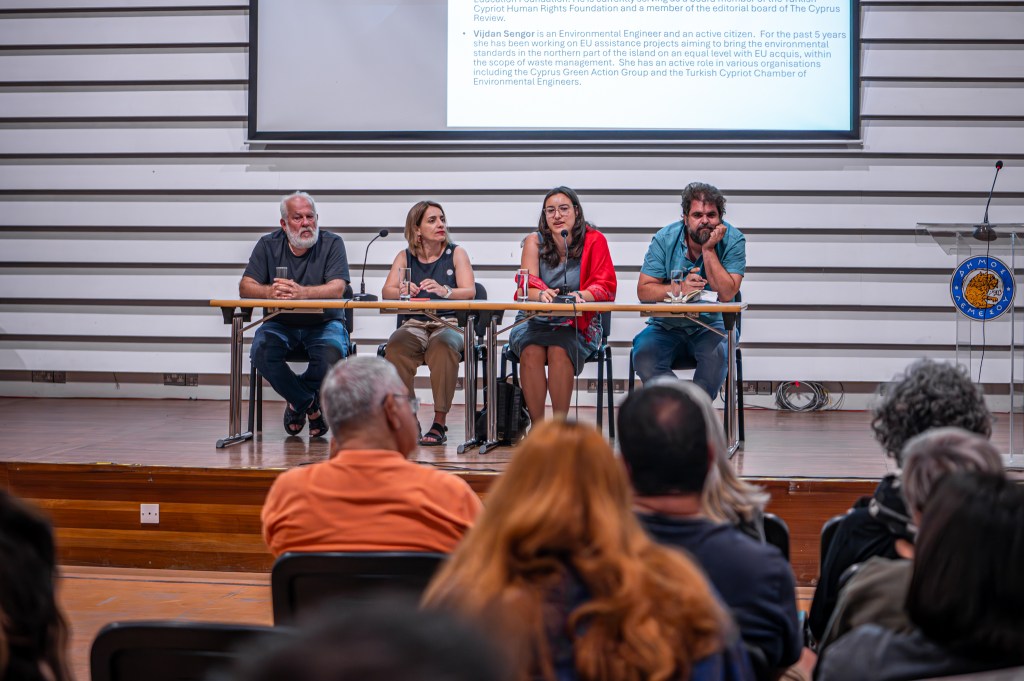
The discussion touched various points: from the need to act and demand the attention to the problem in any way we can, to exploring the ways to promote sustainable construction as economic benefit for developers. I hope the film will be soon available online for more people to see it.
Written by Lusine Mirzoyan
 www.natureallydone.com
Leave a comment