
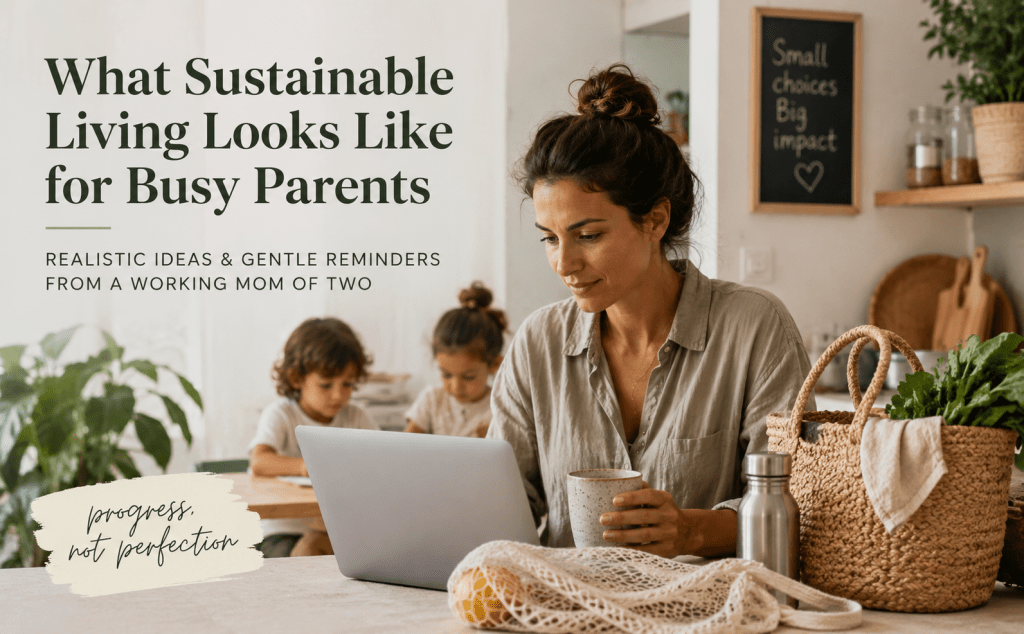
Sustainable living often looks beautiful on social media: perfectly organised pantries, homemade snacks in reusable jars, families growing their own vegetables, and zero-waste kitchens without a single piece of plastic in sight.
But for many parents real life might look very different.
As a working mother of two, I’ve learned that sustainable living is not about perfection. It’s not about doing everything “right”. Most days, it simply means making better choices when possible, taking easy on ourselves when things don’t go as planned, and teaching our children values that matter in the long run.
Because the truth is, sustainability in a family home is often messy, imperfect, and deeply practical.
Sustainability Doesn’t Need to Be All or Nothing
When I first became interested in sustainable living, I felt overwhelmed by the amount of information online. Suddenly everything seemed problematic: plastic packaging, fast fashion, cleaning products, beauty products, food waste, disposable items, children’s toys and the list goes on.
What helped me most was changing my mindset.
Sustainable living is not about achieving perfection. It’s about reducing harm where we can and creating habits that are realistic enough to maintain long term. Sometimes that means remembering reusable coffee cup or a shopping bag. Sometimes it means ordering takeout after an exhausting day because survival comes first. Both things can exist at the same time.
The Small Changes That Made the Biggest Difference
Over time, I realised that the most effective sustainable habits were not the dramatic ones. They were the simple routines that fit naturally into our everyday life.
Some of the changes that genuinely worked for my family include:
- Buying fewer but better-quality clothes for both myself and the children
- Passing down clothes, toys, and books between friends (or donate them where needed)
- Reusing water left from bathing my little one for flushing toilet
- Trying to cook more and order take out less
- Choosing filter jar instead of plastic bottled water (the next step is to install filters at home)
- Becoming more conscious about impulse purchases
- Supporting local farmers and local businesses when possible
- Teaching the children to appreciate what they already have instead of constantly buying more and taking them to sustainability related events when possible (beach clean-ups, tree planting events, etc)
None of these changes required a perfect zero-waste lifestyle (I don’t believe in zero-waste anyway). They were simply manageable adjustments that slowly became habits.
Sustainable Parenting Is Also About Values
One thing I didn’t expect is how naturally children absorb these habits.
Children pay attention to what we do far more than what we say. When they see us reusing, repairing, recycling, avoiding waste, or speaking thoughtfully about consumption, those behaviours become normal to them.
My 4-year old now reminds me not to waste water if I leave the tap running or corrects me if I accidentally put an item in the general waste basket instead of PMD recycling bag. And I think that lesson matters far more than having the perfect aesthetic pantry.
Progress Over Perfection
Today, my version of sustainable living is quiet and realistic. It’s choosing progress over perfection. It’s understanding that every small action still matters:
- using what we already own,
- buying less,
- wasting less,
- teaching our children mindfulness,
- and making more conscious decisions little by little.
Because sustainable living isn’t about being perfect parents.
It’s about creating a better future while still surviving the school runs, work, packed lunches, deadlines, laundry piles, and sleepless nights.
And for busy parents, that is already a meaningful step forward.
Lusine
 www.natureallydone.com
Leave a comment