
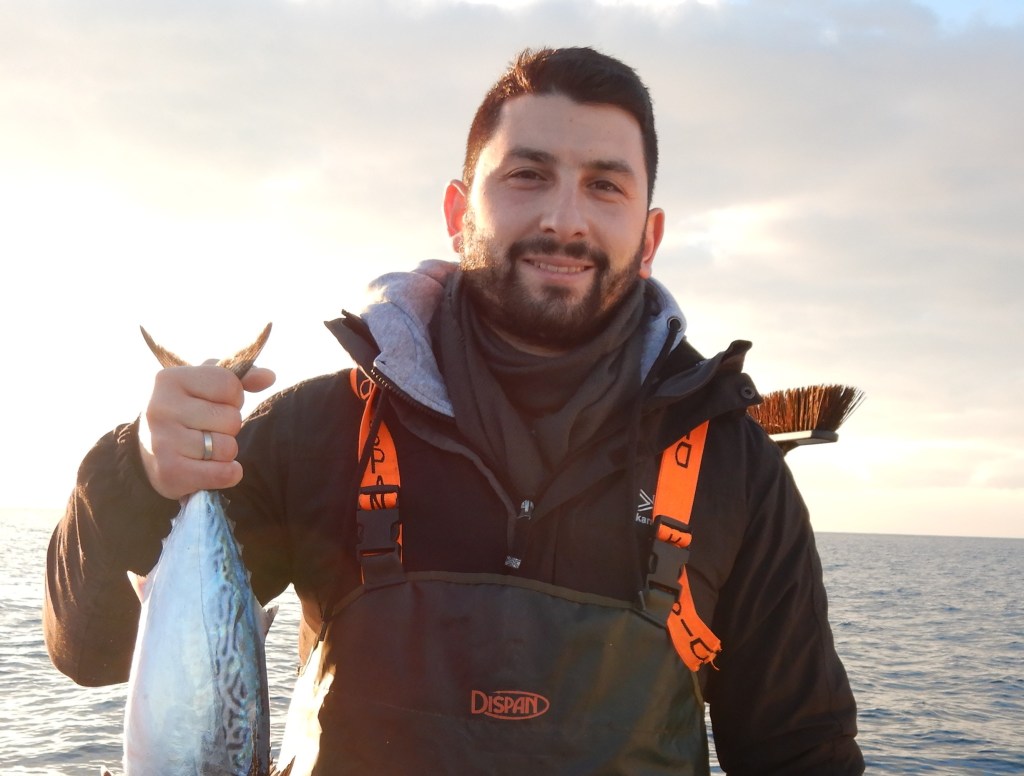
Most of us experience the sea without thinking much about what is happening beneath its surface. We swim in it, eat seafood, spend time by the coast and depend on it for work and tourism. But the sea around Cyprus is changing, and those changes are already beginning to affect everyday life. Marios Papageorgiou, Executive Director at Enalia Physis Environmental Research Centre explains what is happening beneath the surface, why the fish we find in our markets are changing, and what our everyday choices can do to shape the future of Cyprus’ sea.
Can you remember the moment when the Mediterranean stopped being simply a beautiful place and became something you felt personally responsible for protecting? Or maybe you dont’ feel that way.
Protecting the Mediterranean and the waters around Cyprus has become a growing sense of responsibility for me as my understanding of the sea has deepened over the years. My love and passion for marine life brought me into marine biology. Working in marine conservation and with fishing communities added another dimension to my work, because I began to understand how closely people’s livelihoods, memories and cultural identities are connected to the condition of the sea.
When you listen to fishers describe the changes they have witnessed over decades of working at sea, the issues you study become more personal. You understand that changes in ecosystems and biodiversity also influence the lives of people who depend on the sea. That connection between conservation and coastal and fishing communities shapes my work today.
I think most of us do not understand fully how much we depend on sea.
To protect Cyprus’ seas and the Mediterranean, we need to understand how nature and society influence each other. We live in what are called social-ecological systems. We cannot ignore how society functions because we are part of that system and interconnected with it.
Approaching conservation in an ecosystemic context — including people, species, habitats and biodiversity — is, I think, the way forward. You cannot ignore people and their impact, or how decisions such as establishing a new marine protected area could potentially influence the livelihood of a small fishing community if that area has traditionally been a fishing ground.
This is where my work is focused: trying to combine conservation with an understanding of people and how they live their lives. Once we care, we also become responsible. But to care, you need to understand. And when you understand, it becomes personal.
If you could take someone underwater for one hour, what would you show them that might surprise or even worry them?
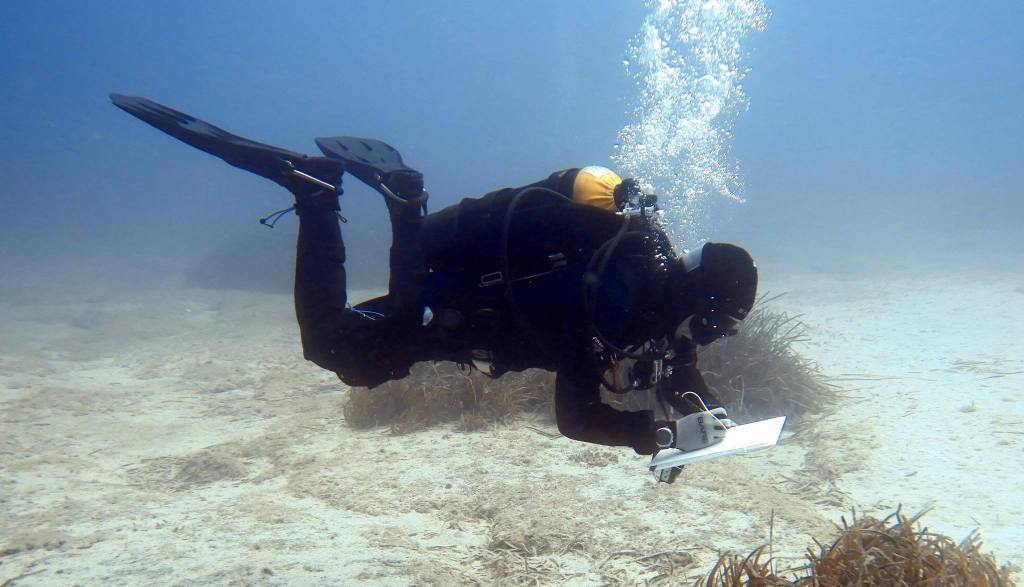
The first thing I would like to show someone — something fascinating and beautiful — would be a Posidonia oceanica seagrass meadow. Posidonia oceanica is an endemic seagrass of the Mediterranean Sea, and I would say it is one of the most important habitats we have. Together with other species, it creates an entire ecosystem.
It is often compared in importance to the Amazon rainforest. It produces oxygen and stores carbon dioxide. From the surface, if you swim over a seagrass meadow, you might see a dark patch and not realise what it is. But when you go underwater, you discover an entire living habitat. It provides food and shelter for many small fish that live among the leaves of Posidonia. Because so much of this life is tiny, it is easy to overlook.
Can anyone visit the area?
If you are comfortable in the water, you can explore Posidonia in very shallow waters, sometimes from around five metres deep, and in some places even shallower. In Cyprus, it can reach depths of 40 to 45 metres. This is unusually deep for a shallow-water species because Cyprus has particularly clear water and visibility remains high at greater depths.
Posidonia oceanica is a seagrass, not an alga. It is a terrestrial plant that adapted to the marine environment, so it needs light to photosynthesise. As depth increases, light availability decreases, which normally limits how deep it can grow.
What do you see as the biggest threats facing the sea around Cyprus today, and how might ordinary people experience them in daily life?
I think there are four or five key threats. I would highlight warming seas, and marine heatwaves. People often think climate change simply means temperatures are increasing, but it is not only about higher average temperatures. It is also about intense marine heatwaves. In the eastern Mediterranean, we have seen that they can be more intense and last longer than in the central and western Mediterranean.
Imagine a marine heatwave lasting 10 to 14 days. We have records of marine heatwaves lasting 14 days. Organisms such as sponges and corals, which cannot move, they eventually die because they cannot withstand the heat. We have many examples of mass mortality events following marine heatwaves.
Coral bleaching is one of those examples?
Yes. If increased temperatures last longer, it becomes a problem and corals can die. If the heat comes and goes, there is a possibility for corals to recover.
Other threats include invasive and non-native species, fishing pressure and destructive fishing practices, and the loss and disturbance of coastal habitats. Pollution adds another layer of pressure — chemical pollution, wastewater, plastic pollution and, more recently, noise pollution. We are developing a better understanding of how intense noise affects marine life, particularly marine mammals that depend heavily on vocal communication.
These problems interact, which makes it harder to address them individually. The approach therefore has to be to address the problems together.
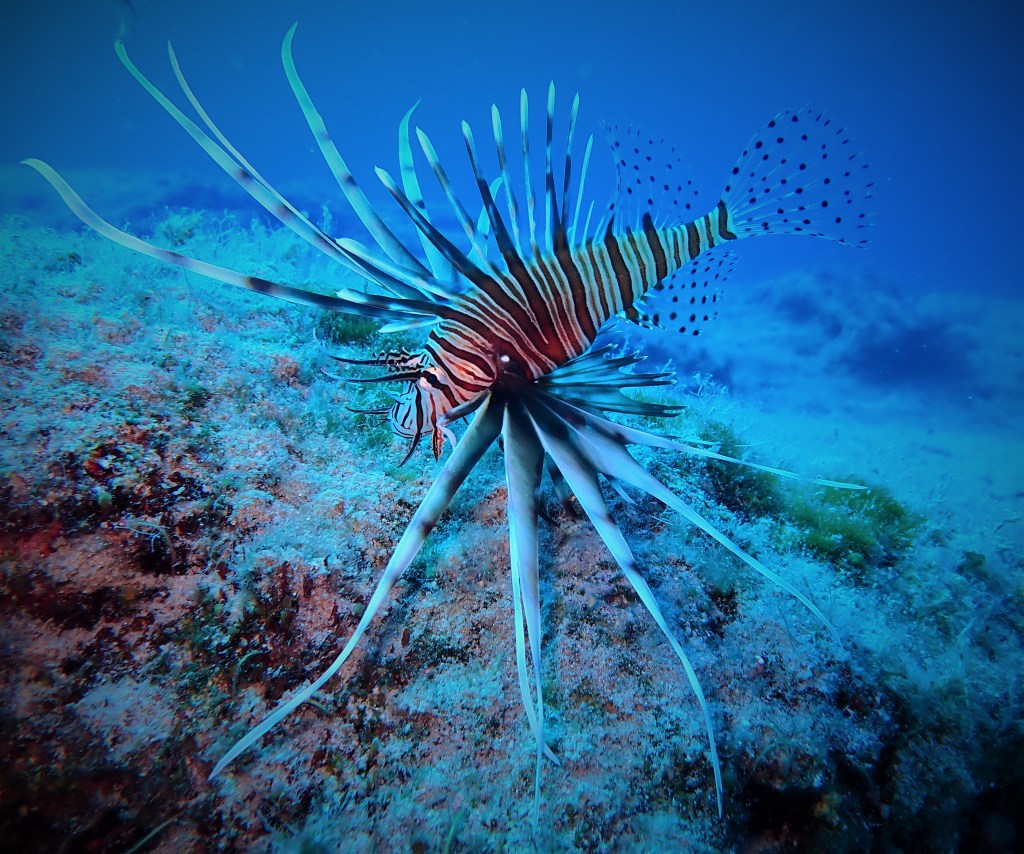
Around Cyprus, invasive species are a particularly tangible example because we can see them. Some can change marine food webs, while others, such as lionfish, can alter entire ecosystems. They can also damage fishing gear or reduce the value of catches for fishers.
People can experience these changes through the fish available in the market. Compared with 10 or 20 years ago, you can find completely different species in Cyprus today. Much of the fish caught by small-scale fishers locally is now made up of non-native species. You can see the change, and those changes also affect fishing families and people who depend on the sea. You can also see them simply by going swimming or snorkelling.
Why should an individual consumer care if the fish available today are different from the fish available 10 or 20 years ago? If one is eating a sea bream (tsipoura) or a sea bass (lavraki), will he care what changes are happening?
A sea bream and a sea bass are species that come from aquaculture. They are locally produced, but they are not locally wild-caught. If your preference is sea bass, sea bream or imported salmon, these changes may not affect you directly.
Another issue we are trying to address is making people more aware of which species are locally caught and produced, and encouraging them to make choices accordingly. This means understanding where fish come from and avoiding imported fish when possible, especially when you do not know how they were caught or what fishing practices were used and if the stocks are sustainably harvested.
Someone who is not particularly aware of these issues can also see the changes simply by swimming in the sea. The spread of species such as pufferfish, for example, has attracted public attention and concern. In one way or another, these changes affect swimmers, businesses and people who depend on the sea.
The value of a healthy marine environment goes beyond what we immediately understand. Even going with your son or daughter and a fishing rod to fish from the shore is an activity that comes from the sea.
If a majority of the catch were not edible or had little value, or the consumers are not yet familiar with all these new species, that would also affect restaurants. They could become more dependent on imported fish, and we would not necessarily know where it came from or how it was caught.
There are different views on marine pollution. How much comes from human activity on land, and how much comes from fishing?
I would not take Cyprus as the main example for fishing pressure because about 95 percent of our fleet consists of small-scale fishers, and we have only two bottom trawlers, their activity is very limited.
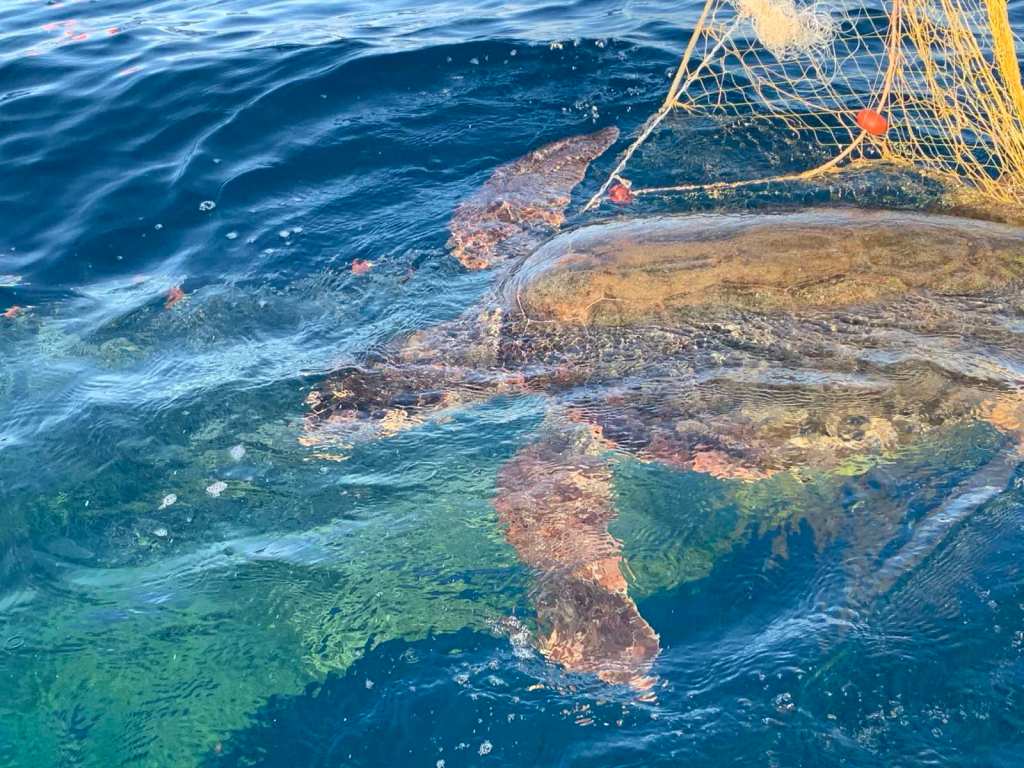
On a global scale, however, discarded, abandoned and lost fishing gear is a problem. It can litter the water and damage the seabed. Another problem is that, especially when gear has recently been abandoned or lost, it can continue to catch fish and other organisms. These animals become trapped and die on the nets. It is not only nets; fishermen can also lose other gear, such as fishing traps. In Greece, for example, there is a problem with lost octopus pods.
But compared with litter and pollution coming from land, the problem caused by lost fishing gear is much smaller. Waste dumped on land can eventually reach the sea. Even when it does not reach the sea directly, rainwater can carry pollutants back into the marine environment.
Pesticides, insecticides and other agricultural chemicals used on crops can also eventually reach the sea. Two years ago, we had a project in which we conducted water and biota analyses. We collected filter-feeding organisms such as mussels and sponges, which can bioaccumulate chemicals and metals, and we found pesticides in bivalves in coastal areas around Cyprus.
For those who do not know Enalia Physis, could you briefly describe the organisation and some of the main projects you are working on?
Enalia Physis is a Cyprus-based non-profit, non-governmental organisation. We work to protect marine and coastal ecosystems through research, education, awareness, policy advocacy and practical conservation.
We study what is happening in the sea and in our coastal ecosystems. We work closely with sea users such as fishers, coastal communities and public authorities. Our aim is to turn the knowledge we generate through research into action — not simply to produce research, but to use that knowledge to create change.
One recent example is our work at Jubilee Shores, an underwater mountain, or seamount, off Pissouri Bay. The project has involved mapping the cave, documenting habitats and carrying out biodiversity assessments, ultimately to support the protection of the area. We are now discussing how Jubilee Shores can be better protected, based on the data we have produced.
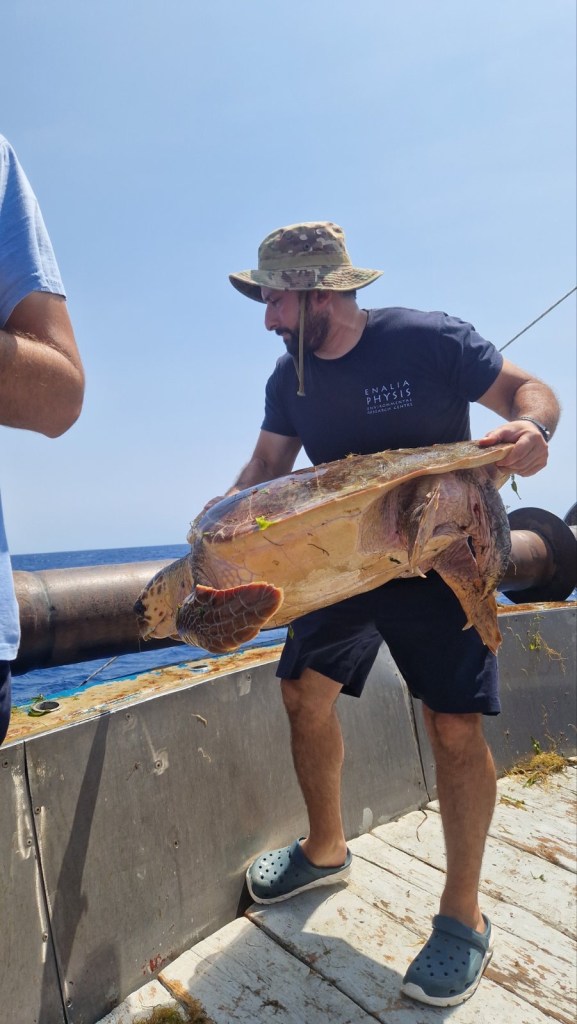
Through our fisheries research, we also study the bycatch of animals such as sharks, rays and turtles. We work closely with fishers to find solutions and measures that could mitigate bycatch. One measure that proved very effective was training fishermen to safely handle and release bycaught animals so that they could be returned to the sea alive.
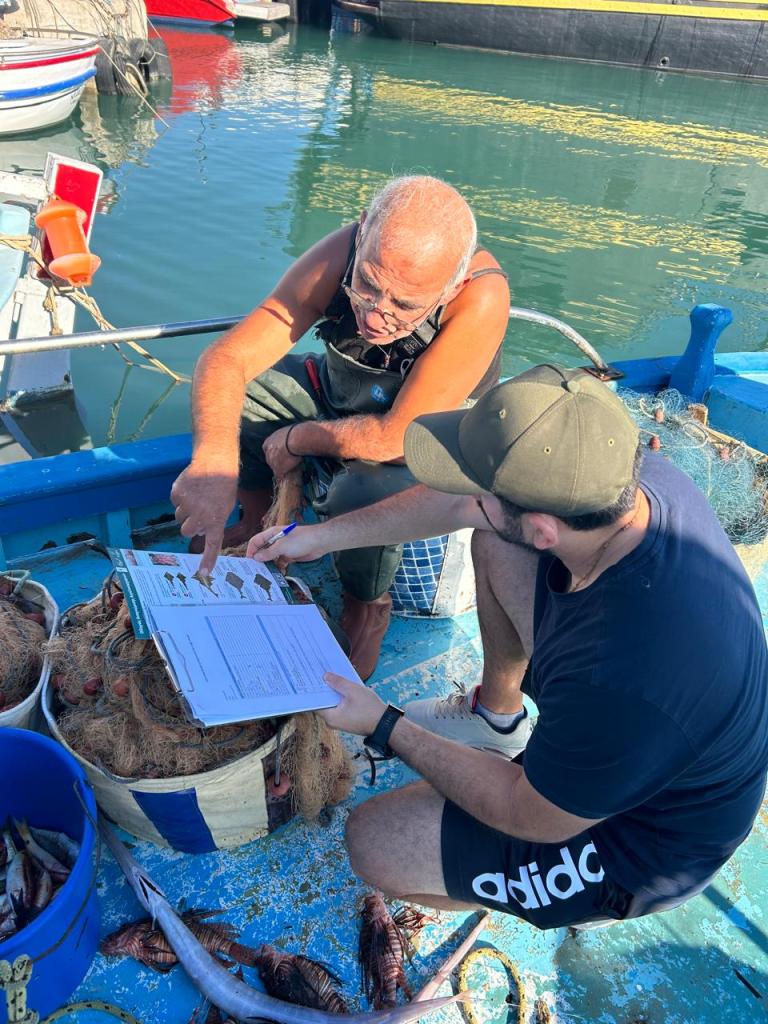
We did not find a single solution that would reduce bycatch in every situation. What we did find was a way to reduce post-release mortality — in other words, to improve the chances of survival after an animal is released. Fishermen often simply did not know how to handle these animals safely. Again, awareness and education are essential.
We also have long-running projects focused on species such as the Mediterranean monk seal. We are studying the impact of human activities, particularly tourism, on monk seal habitats and the animals themselves. This includes looking at how physical disturbance and noise pollution affect their behaviour.
If you go to Ayia Napa in summer, for example, you see the intensity of boats and jet-skies activity. For an animal such as the monk seal, which is a marine mammal highly dependent on communication, this could affect behaviour, particularly when a mother is with a pup. This is something we are still studying.
Alongside our research, we also work on education and outreach to help people understand the sea better and learn how they can contribute to conservation.
What does sustainable fishing look like in Cyprus, and what can fishermen do to protect marine life?
Sustainable fishing means catching fish in ways and at levels that allow populations to replenish. Overfishing means catching more fish than the population has the capacity to recover from.
Sustainable fishing also means protecting habitats and minimising harm to other species. It is not simply about avoiding undersized fish or avoiding fishing during reproductive periods. It also means minimising harm to non-target species such as sharks, rays and turtles.
But sustainability is not only environmental. It also has to be social and economic. Sustainable fishing means preserving the cultural fishing identity of fishers and fishing communities, while ensuring that people can maintain viable livelihoods.
As consumers, what simple questions can we ask when buying fish at a market or ordering it in a restaurant?
A few simple questions can make a difference. First, ask what species it is. If you have some awareness of the species, you can then ask where it comes from and how it was caught.
If, for example, the answer is that it was caught with a bottom trawler, I would personally avoid it. I would prefer a species caught by small-scale coastal fishers using passive rather than destructive gear. In that way, you are also supporting the value chain and small family businesses.
Those answers give us a much better starting point. A label that says “fresh” or “local” does not necessarily tell you very much. Asking these questions gives you a better understanding of the product. Buying local can support fishing communities and make the supply chain easier to understand, but we still need to know how the fish was produced.
You do not have to be a fisheries expert— just ask questions.
Restaurants and markets can also help by making information available to consumers and explaining their products. We published a Sustainable Seafood Guide with the goal of making this information accessible. It shows which species are recommended, which are better to avoid and which species are in season. It is intended to be a practical guide for consumers.
Imagine we speak again in ten years and Cyprus has made significant progress. What would you want to see around the sea, and how could that future become possible?
I would want to see healthier marine habitats. I would like to see functional and effective marine protected areas; not just on paper.
I hope to see young fishermen entering the profession. The average age in the profession is now 56. I cannot imagine a future in which I do not have access to fresh local fish caught by local small-scale traditional fishing boats.
In restaurants, I would like it to become normal to know where and how seafood was produced. Along the coast, I would like to see boating and tourism organised in ways that respect wildlife — allowing people to make a profit while being aware of their impact on marine life.
To get there, we need to connect plans with implementation and sustain financing. We cannot achieve that without continuous research and conservation. Climate change will continue to challenge us.
On a personal level, there is only so much we can do, but we can reduce our emissions and reduce local pressures on the marine environment.
My final question: what is one piece of advice you would give to consumers and businesses looking for a more sustainable way of living or operating?
For consumers, I would say: make more responsible choices, ask questions and know where your seafood is coming from.
For restaurants and businesses, provide traceability and environmental standards. Businesses can aim to become nature positive, reduce the environmental harm caused by their operations and support meaningful conservation projects.


Leave a comment