
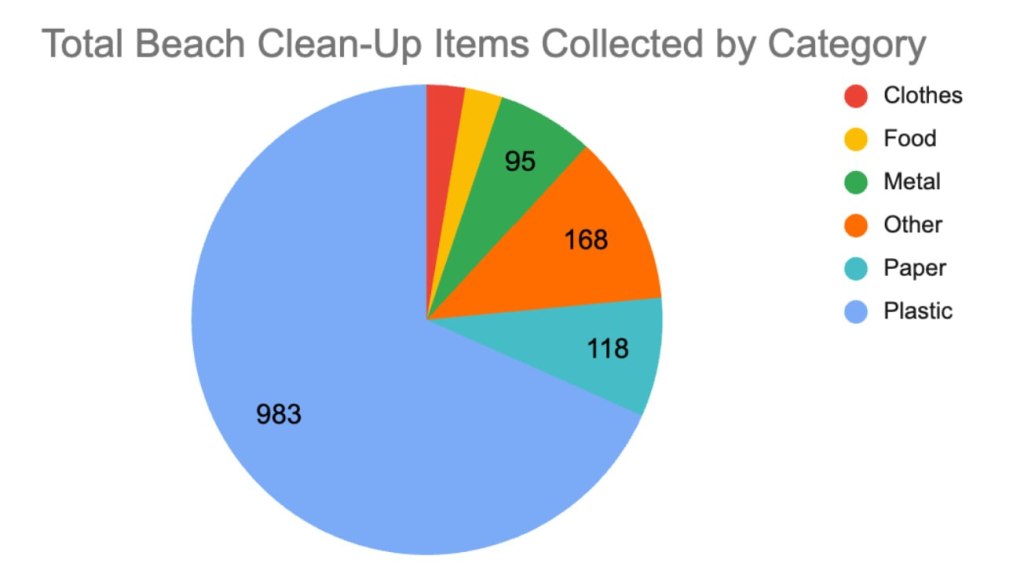
Cigarette butts made up around 40% of the 1,439 items volunteers collected at Limassol’s Dasoudi beach. Here is what the audit tells us about where beach litter comes from, and why prevention matters more than collection.
It is not an official or governmental study. The text below is shared from City Friends Club, who carried out this study in collaboration with Zero Waste Alliance Cyprus. All findings and text below and photos are theirs; we are sharing it because we think it deserves a wider audience.
Beach Cleanup Audit in Dasoudi
by City Friends Club & Zero Waste Alliance
Beach cleanups are often seen simply as a way to remove rubbish, but when they are combined with waste audits they can tell us much more about the pollution problem in Cyprus. They help us understand what types of waste appear most frequently, where they come from and what needs to change if we want to prevent waste instead of simply collecting it after it enters the environment.
Plastic is by far the most common type of litter found on Cyprus beaches. A major study monitoring 20 beaches around Cyprus during 2021 collected 42,499 pieces of marine litter, with approximately 86.3 percent of the items identified as plastic. Plastic bottles and caps, small plastic fragments, food packaging and cigarette butts were among the most common items found. Cigarette butts are particularly problematic. In Cyprus, they represented 42.5 percent of the plastic litter recorded in the same study (yes, cigarette butts are considered plastic ). Researchers also found that tourist beaches had approximately five times more cigarette butts than beaches that were not heavily used for tourism. This demonstrates the strong connection between recreational activity, consumption patterns and the waste that ends up on coastlines.
Another study carried out on nine Blue Flag beaches during the summers of 2016 and 2017 provides an equally striking picture. Researchers collected 7,658 pieces of litter, even though the beaches had already been cleaned by the local authorities. Of these items, 4,552 were cigarette butts, representing around 59.4 percent of all identifiable litter collected. Food wrappers represented another 5.9 percent and straws around 5.7 percent. This highlights an important issue. A beach may look clean while still containing significant amounts of pollution. Municipal cleaning often removes larger and more visible objects, but smaller items such as cigarette butts and plastic fragments can remain in the sand. Over time, these items can accumulate, break down into smaller particles or eventually reach the sea.
Brand audits add another useful dimension because they allow us to identify the brands associated with some of the products found as waste. In the 2018 Break Free From Plastic Brand Audit, one Cyprus audit recorded 67 pieces of identifiable branded plastic. In that specific audit, PepsiCo had the highest number of identified items, with 22 pieces.
These results need to be interpreted carefully. One cleanup cannot tell us which company is responsible for the most pollution across Cyprus. Each audit represents a particular place and point in time. Similarly, finding very few items from one company does not necessarily mean that the company produces less waste. Repeated audits across different locations and over several years are much more useful for identifying reliable patterns. This is also why the work of Zero Waste Alliance Cyprus goes beyond simply organising audit cleanups. The purpose is to collect evidence, identify recurring waste streams and use the findings to promote prevention and systemic change. The Alliance has also promoted practical solutions such as reuse systems, refill stations, food waste prevention and zero waste events. The Zero Trace Festival in Limassol is one example. The event introduced reusable cups and food containers, refill facilities and a deposit return system, demonstrating that public events can reduce their dependence on disposable products.
Cleanups remain very important: they help remove existing waste from the environment, raise awareness and bring communities together. But we also need measures to prevent waste generation, wider use of reuse and refill systems, less unnecessary packaging and stronger producer responsibility.
Cleanups deal with the symptom. Prevention and systemic change address the cause.
Results
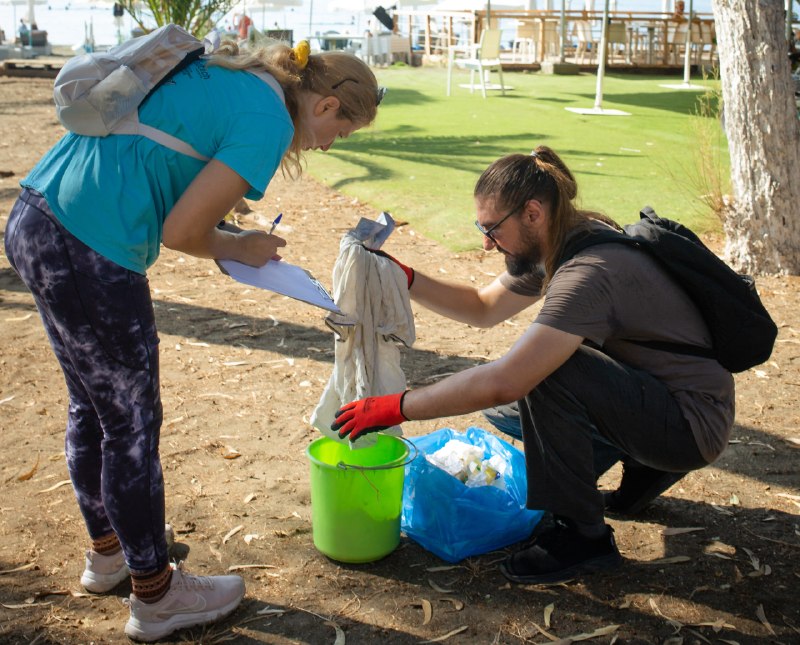
Photo from City Friends Club
Our beach cleanup in Limassol highlighted the scale and nature of litter affecting the coastline. Across all groups, volunteers collected a total of 1,439 items, providing a clear snapshot of the waste most commonly found on the beach.
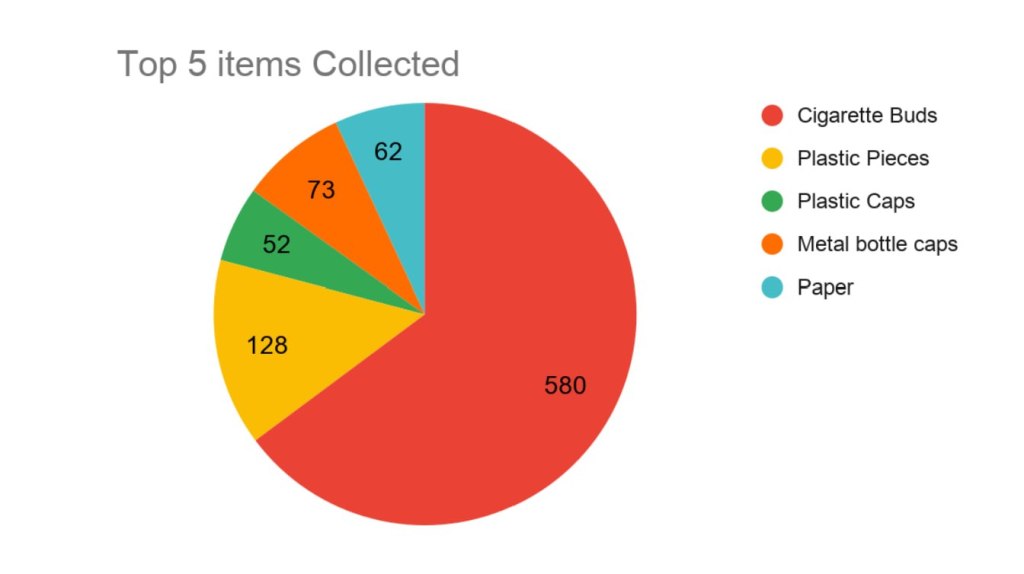
Cigarette butts were by far the most frequently collected item, with 580 pieces, accounting for around 40% of all items collected. The next most common items were plastic pieces (128), metal bottle caps (73), paper (62) and plastic caps (52).
How Can We Address the Problem?
The results help us identify the main sources of litter on each individual beach and develop more targeted measures to reduce pollution.
The key measures include:
- Reducing or eliminating single-use plastics, particularly bottled water, and switching to reusable alternatives
- Installing separate waste and recycling bins and ashtrays on beaches, together with clear signage
- Running awareness campaigns


Leave a comment