
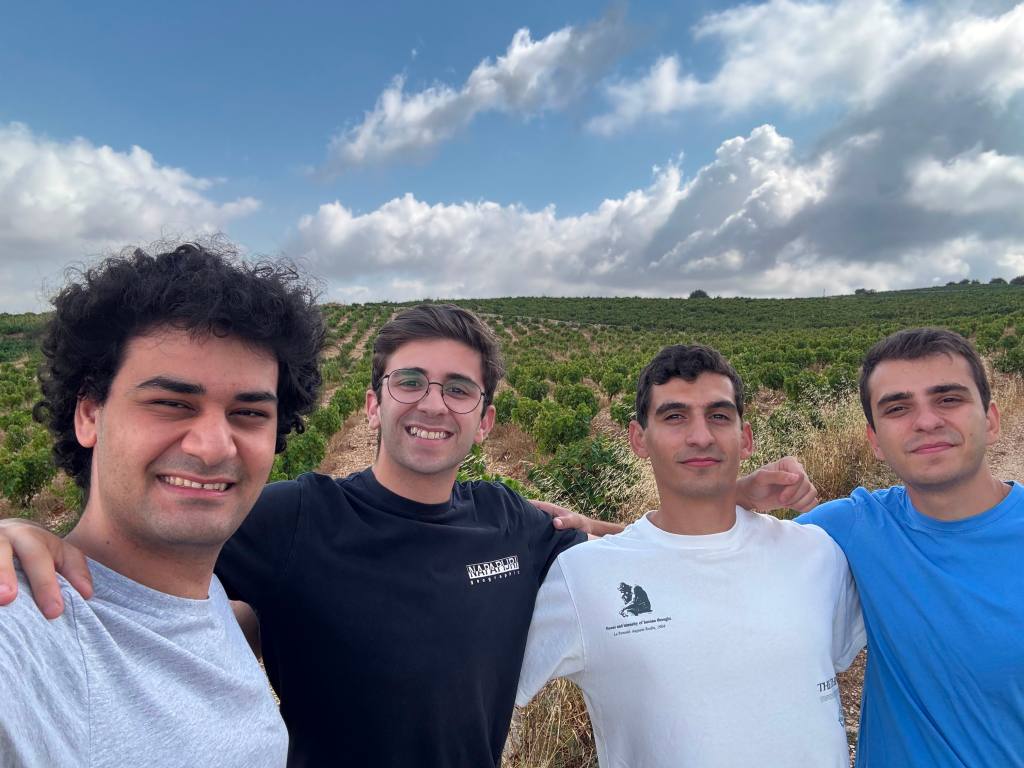
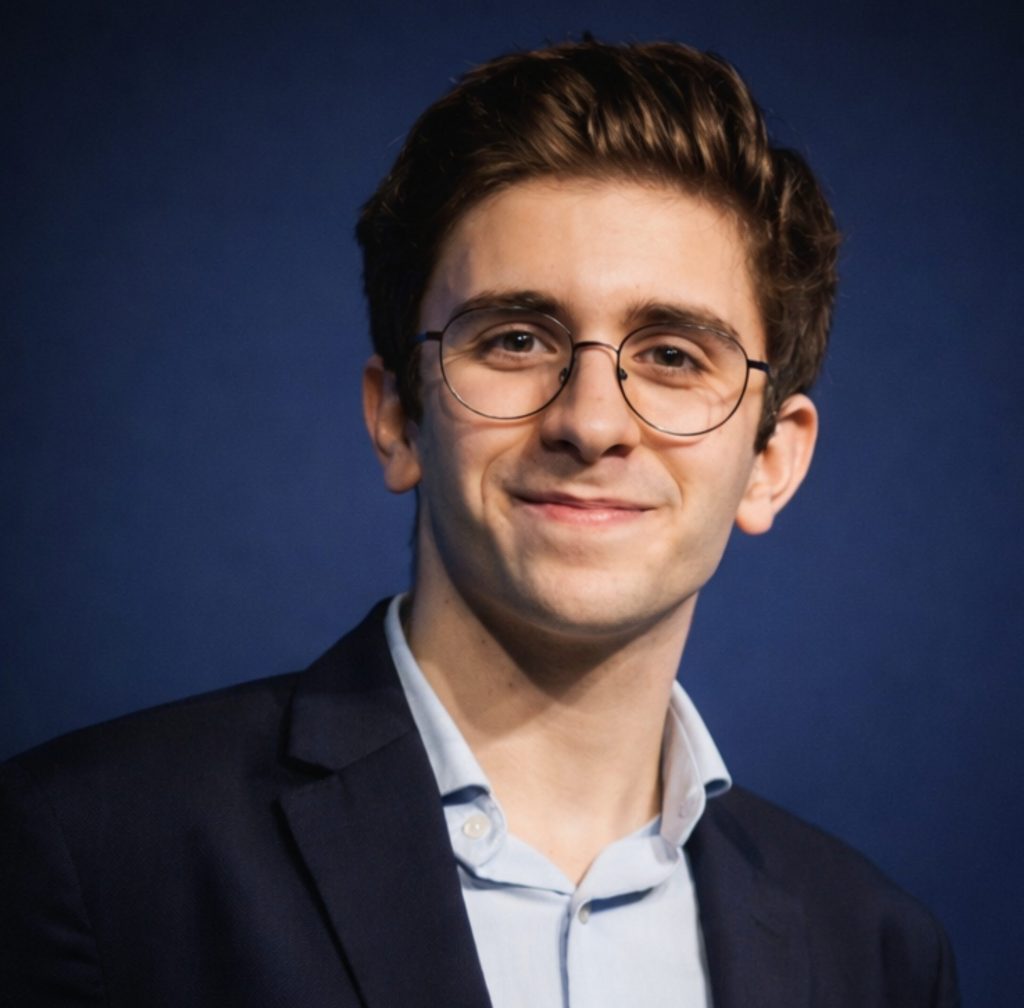
Space technology, artificial intelligence and sustainable agriculture may seem like three very different worlds. For Christos Charalambous, Founder & CEO of LIVIA however, they are increasingly interconnected.
His journey began with a childhood fascination with space and evolved into a broader interest in Earth observation and the many ways satellite data can be applied on Earth. After exploring different Earth observation applications with his team, his focus increasingly shifted towards agriculture. Through LIVIA, drones, satellite imagery and AI are being combined to help farmers make more informed decisions and use resources more efficiently.
I spoke with Christos about his journey, the potential of Earth observation technology, the challenges facing agriculture in Cyprus, the environmental implications of AI, and where he believes Cyprus could find an opportunity to lead.
Your work combines space, technology and sustainability through your agri-tech projects—three areas that people might not immediately associate with one another. How did you personally end up in this direction?
It’s actually a question we get more often than you might expect because, intuitively, these fields don’t seem to have much overlap.
For me, it started with a childhood fascination with space. I loved space from a very young age. I started with astronomy, then moved into exploring what satellite data could do and became interested in Earth observation.
I realised that space is an incredibly interdisciplinary field. When you have a network of satellites constantly observing the Earth and providing enormous volumes of information, that data can be used in many different ways.
Our startup, Livia, actually began because we were experimenting with satellite data for marine biology. That was the starting point. We developed the marine biology idea in Italy, but we weren’t able to commercialise it at the time. A few months later, we realised that the same technology could potentially be applied to agriculture, and we began building a product around that.
We conducted market validation and realised that agriculture represented a genuine intersection of sustainability, space and innovation. That’s how the journey began.
When people hear “space technology”, they often think of rockets or astronauts. What can satellites actually tell us about what is happening here on Earth or in the sea that we might not otherwise be able to see?
There’s a common misconception about the space sector. People sometimes think that if you work in space, you must be an astronaut, as if that’s the only thing the sector involves. In reality, it is an enormous field.
Satellites are fundamental to communications, mapping, navigation and networks—things we interact with every day.
But there is also a huge network of Earth observation satellites. These satellites carry sophisticated sensors—essentially very advanced cameras—that continuously observe the Earth.
The data they provide can be optical, hyperspectral or radar-based, and it has an enormous range of applications.
For marine biology, for example, you can use satellite data to monitor the sea, including its temperature and changes in wave patterns. In forestry, satellites can help detect fires, map forests and monitor how they evolve over time.
They are also extremely important for crisis management, including situations involving earthquakes, avalanches and other natural disasters.
Agriculture is another major application. Because satellites are so far away, the resolution can sometimes be lower than what you would get from sensors on the ground. Nevertheless, the data can provide valuable information about the health of plants and crops.
Earth observation is therefore a critical industry with applications across many different fields.
You also work on Thalassat, which uses satellite data for marine biodiversity. Can you tell us a little more about that project and why it wasn’t ultimately commercialised?
Thalassat was a project we developed while we were still in high school, and it went on to win a competition organised by the Veneto Region in Italy.
It was primarily research-oriented. We explored how satellite data could potentially be used to monitor algae and other marine conditions, alongside the role that IoT and ground-based sensors could play in providing complementary information.
Following the competition, we continued exploring the concept and looked into possible European funding and development opportunities. However, we eventually realised that turning it into a commercially viable product would require considerably more research, validation and resources.
Around the same time, LIVIA began gaining momentum, so we gradually shifted most of our attention towards agriculture, where we saw a clearer opportunity to develop and validate a practical product.
Thalassat remains an idea and area of interest for us, but it is not something we are actively prioritising at the moment.
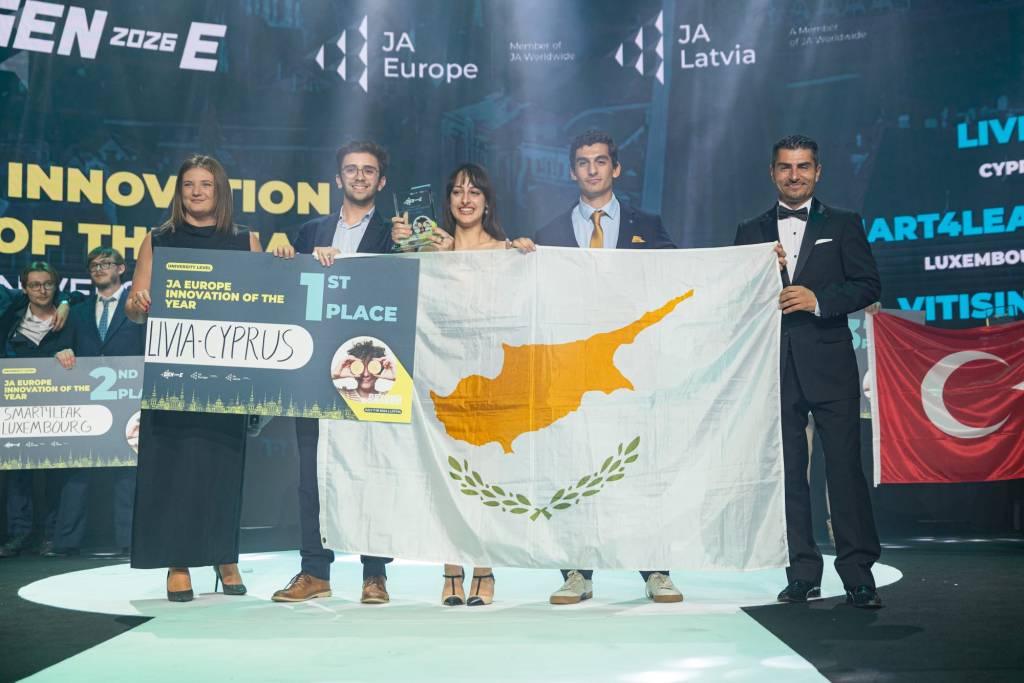
Let’s talk about Livia. It is an award-winning startup that uses drones, satellite imagery and AI to help farmers monitor their crops. Cyprus is facing increasing pressure around water and agriculture. What could a farmer realistically do differently because of the information Livia provides?
Agriculture has traditionally been slower than some other sectors when it comes to adopting new technologies.
Agri-tech is a very significant field globally. There are technologies everywhere that aim to make agriculture more efficient and sustainable. But the sector itself has a lot of friction when it comes to adopting those technologies.
Another challenge, particularly in Southern Europe and Cyprus, is the ageing agricultural workforce.
What we’ve noticed is that there is a large underserved market. Many farmers still don’t have access to what I would call smart solutions in the first place. A lot of processes remain analogue.
Even among those who have adopted some technology, there can still be a lack of trust. People need to know that the technology is actually going to give them useful and accurate information. That is what we are trying to address with Livia.
Our system combines drone data, satellite data and AI. The idea is that the farmer doesn’t have to interpret complicated information themselves. They can simply open their phone, see a map and receive a clear recommendation about what they need to do.
Instead of giving farmers a series of technical indices and expecting them to interpret what those numbers mean, we want to provide the solution.
That is also the most difficult part of what we are working on. The recommendations have to be accurate. We are currently going through the validation stage to make sure that the actions we recommend to farmers are precise and specific.
Water stress is a good example, particularly given how significant water is as an issue in Cyprus.
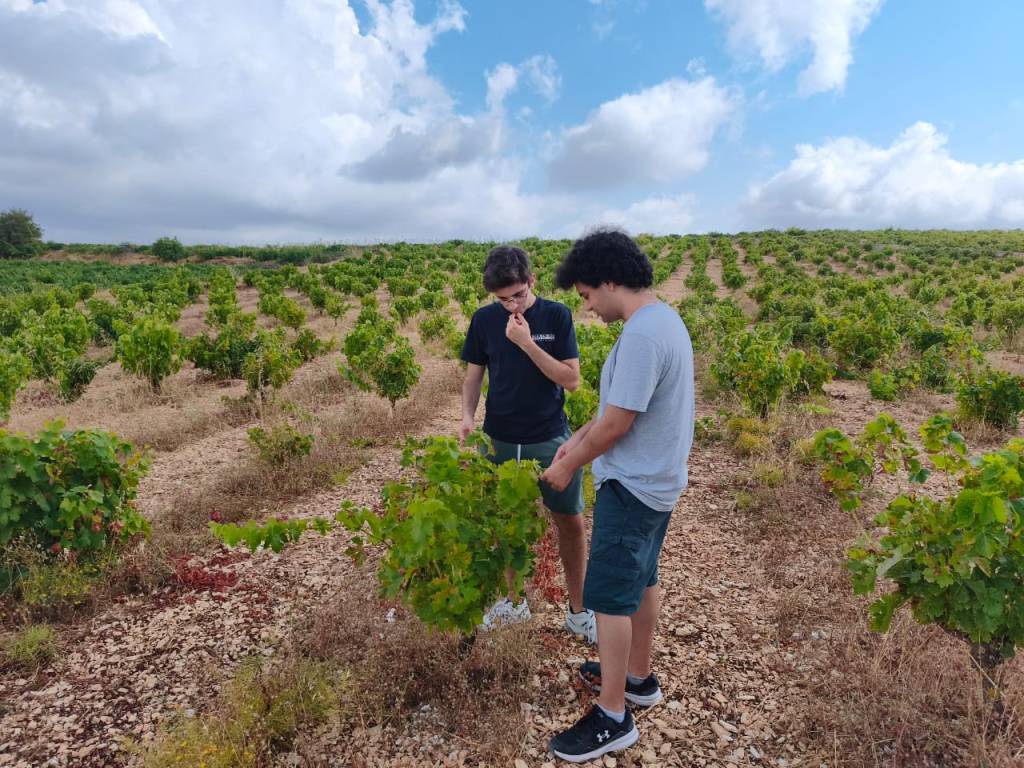
One of the first models we have been developing is a water-stress model. Instead of having to use physical sensors throughout an entire field and take measurements manually, the system can achieve comparable results with a single drone flight. The goal is to provide information that would otherwise require a significant amount of time and resources to collect.
Livia is currently a startup rather than a finished product. If everything goes according to plan, when could the solution become commercially available?
That’s a difficult question because, as you know, startups are risky and volatile. Things can change very quickly.
During the summer, we used limited resources that we managed to secure through non-equity grants in Cyprus, and we have been developing the prototype.
Everyone involved in the startup is a Cypriot student who has been based in the United States. We are now working to secure additional resources so that we can fully develop the product and complete the validation stage. If everything goes well, we hope to have a product that can be rolled out commercially by around the middle of 2027.
We hear a lot about AI as part of the solution to environmental problems. At the same time, AI consumes significant amounts of energy and resources. Where do you think technology genuinely helps sustainability, and where might we be expecting too much from it?
I think there is a very fine line between the resources required to develop and advance innovation and the potential for that innovation to make things significantly more efficient in the future.
With AI, yes, it consumes a lot of power and water, and there are clearly issues associated with that. I think these impacts need to be measured and taken much more seriously, particularly as AI systems continue to scale.
At the same time, AI is also being applied to environmental challenges, agri-tech, climate solutions and energy systems, where it has the potential to improve how resources are managed and used.
For now, I see some of the resources being invested in AI as an investment in technologies that could enable significant breakthroughs and efficiencies in the future. That does not mean we should ignore the environmental cost of developing them, but I also would not necessarily describe those resources as being wasted.
For me, the important question is whether we can develop these technologies responsibly while making sure the benefits ultimately justify the resources we are putting into them.
You have represented Cyprus internationally and recently became the first Cypriot to represent the EU at the G20 Youth Summit. Looking at Cyprus from that international perspective, where do you think this small island could become a leader rather than a follower in innovation or sustainability?
I had a huge opportunity to represent the EU at the G20 Youth Summit on the Innovation and Digital Transformation track, and I’m very honoured to have had that experience.
From an international perspective, I think one of Cyprus’s biggest advantages is its size and agility. It is a small and highly connected economy, which can make it easier to bring people together, build partnerships and test new ideas relatively quickly.
We have also seen growing attention being given to areas such as AI, startups and emerging technologies. I think there is an opportunity for Cyprus to build on that and position itself as a place where innovative companies can pilot, validate and develop new solutions.
That is something we have experienced with LIVIA. We are Cypriot and want to build from Cyprus, while ultimately scaling into international markets, including the United States. Starting here has given us the ability to work closely with stakeholders, test ideas relatively quickly and learn from a market that is accessible to us.
I think Cyprus should capitalise on that advantage.
We should be able to say: if you have an idea and want a place to develop and validate it, come and test it in Cyprus.
Finally, this is a question I ask everyone I interview. If you could give consumers or businesses one piece of advice—one action or one step they could take towards a more sustainable way of living or doing business—what would it be?
That’s a tough question!
I’ll break my answer into two parts, if that’s okay.
For businesses, governments and organisations, I think the most important thing is to lead with foresight.
We need to keep the future in mind, not only the short-term consequences and impact of the decisions we are making, but also the fact that this planet has existed for billions of years and humanity has existed for thousands of years. Hopefully, humanity will still be here for thousands of years to come.
Every decision made by businesses or governments needs to have vision and foresight.
For consumers, when it comes to moving towards a more environmentally friendly and sustainable future, I think the key is openness.
Be open to trying new things. Be open to listening to young people as well. And be open to learning something new and acknowledging that what we have been doing may not always be the most efficient way of doing things.
We need to have the ability to discuss, to listen and to change when necessary.
Interviewed by Lusine Mirzoyan


Leave a comment