
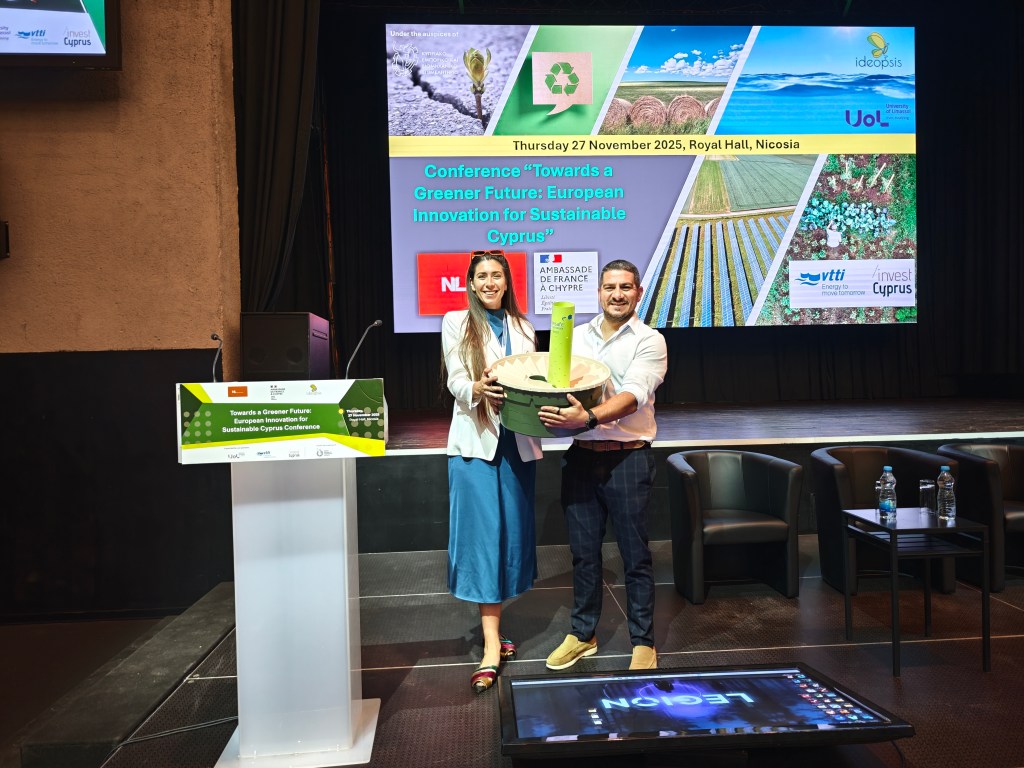
In a world where sustainability often feels abstract or overwhelming, ECOmbare is bringing it back down to earth—literally. Through hands-on reforestation, community-driven initiatives, and a philosophy rooted in responsibility, the Cyprus-based team is reshaping how people connect with nature. I spoke with the founders Marios Polymniou and Kristina Kremko about their mission,projects, impact, and why planting a single tree can change more than just the landscape.
Let’s start from the beginning: the WHY of your company. How and why ECOmbare was founded?
Marios: ECOmbare started with a feeling that was hard to shake.
Most people aren’t indifferent to nature. But they’re often unsure what to do about it. Not because they don’t care, but because no one has shown them how. Environmental action can feel distant, technical, or like something reserved for scientists and activists, not regular people with regular lives.
We wanted to close that gap not with lectures or campaigns, but with experiences. Real, hands-on moments where someone digs into soil, plants a tree, and feels the land beneath their feet. That’s where something changes. It stops being abstract and becomes personal.
How did you chose the name ECOmbare?
The name captures the idea. ECOmbare is ecology meets koumbaros—a uniquely Greek-Cypriot concept of someone who stands by you during life’s most important moments. Not just a friend, but a witness—someone bound to you through trust and responsibility. The best man at a wedding. The godfather of your child.
We believe that’s the kind of relationship we need with the environment. Not as consumers or admirers, but as its koumbaroi: people who show up, take responsibility, and stay.
That’s what ECOmbare is: an invitation to become that for the land around you, your community, and your island.
The events you organize, according to your own words, have a simple purpose: to help, educate, and entertain. Tell me about some of the main events you organize in Cyprus.
All our events start from the same idea: people should do something, not just listen to why they should.
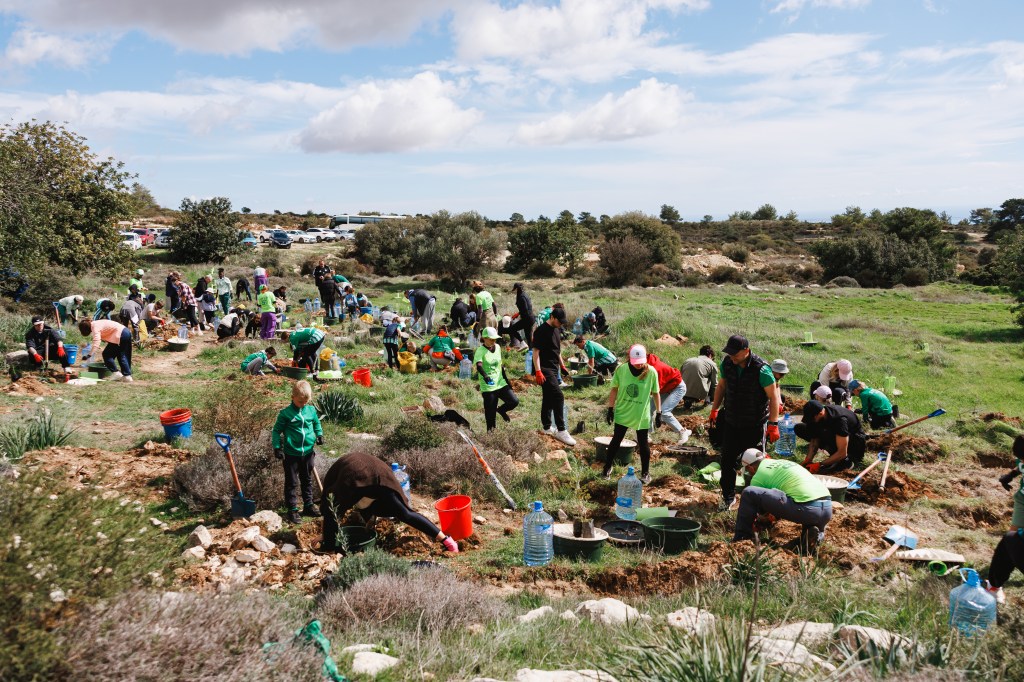
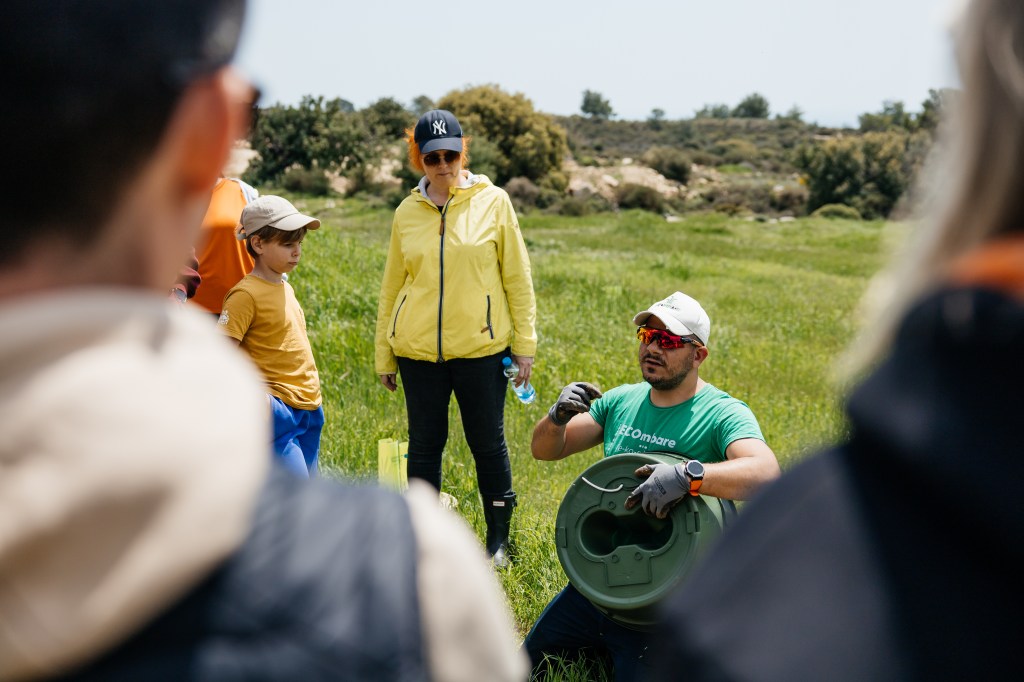
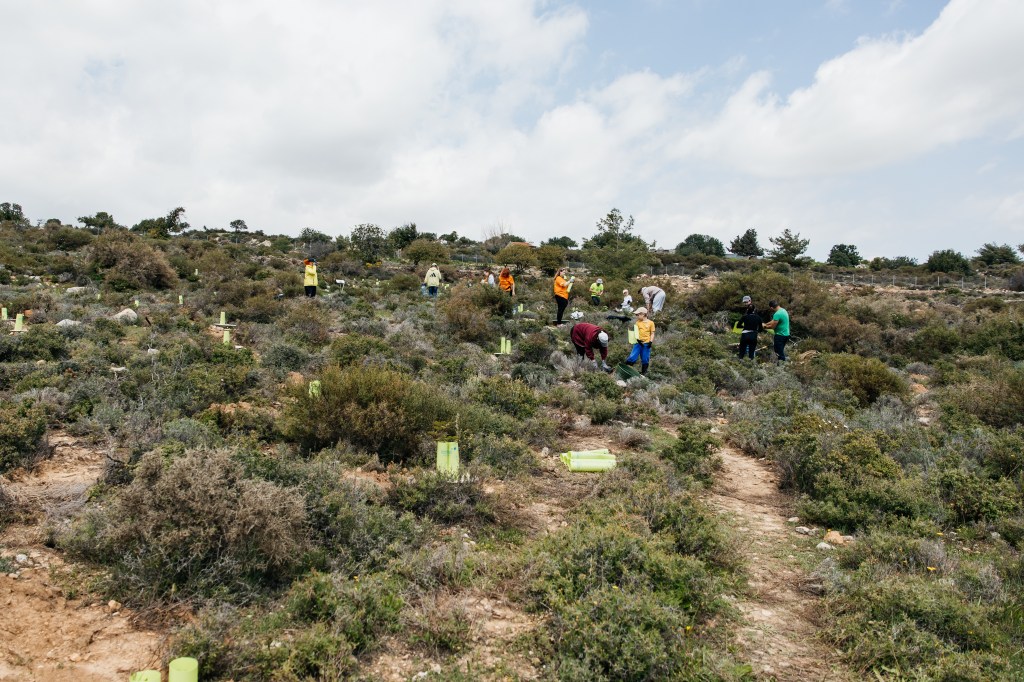
At the core is tree planting with volunteers, corporate teams, families, and school groups. We work in fire-affected areas where participants dig, plant, and learn why each tree is placed in a specific spot and why that matters. People leave muddy, tired, and somehow lighter. That part never gets old.
We also run biodiversity workshops and pollinator sessions, because a forest isn’t just trees: it’s bees, insects, birds, and soil microorganisms. When people understand that an ecosystem is a conversation between hundreds of species, their perspective shifts in how they see a hillside, a garden, even a city park.
For corporate groups, we design full CSR experiences—hands-on and interactive. Teams leave with a real sense of contribution, not just a photo opportunity, but a meaningful experience in the Cypriot landscape.
After the recent wildfires, tree planting has become even more central. The scale of loss is difficult to grasp, but it also brings urgency—something you truly understand only when standing on those slopes yourself.
We pair everything with storytelling: about the land, its species, and its history. Because people don’t protect what they don’t know, and they don’t remember what they don’t feel. That’s the formula, if there is one.
I also know about the “Gift a Tree” initiative which I personally love. What inspired this idea, and how do you choose the locations and species of trees planted?
Kristina: “Gift a Tree” started with a simple observation.
Flowers are beautiful, but they fade. What if love, gratitude, or memory could take root—literally?
The idea came around Valentine’s Day. We asked ourselves: what would it mean to give something that grows stronger every year? A tree planted in someone’s name, in their honor, or in memory of them.
Since then, the initiative has grown well beyond one occasion. Today, people gift trees to mark birthdays, anniversaries, the birth of a child, a sporting achievement or to remember a beloved pet, or someone who is no longer here. Every tree carries its own story. And it stays in the Cypriot landscape for decades.
We plant in Arakapas, where the devastating 2021 wildfire began, destroying over 51 km² of forest. The area is still healing, and that’s where these trees take root.
You are not just planting trees but using some kind of innovative technology?
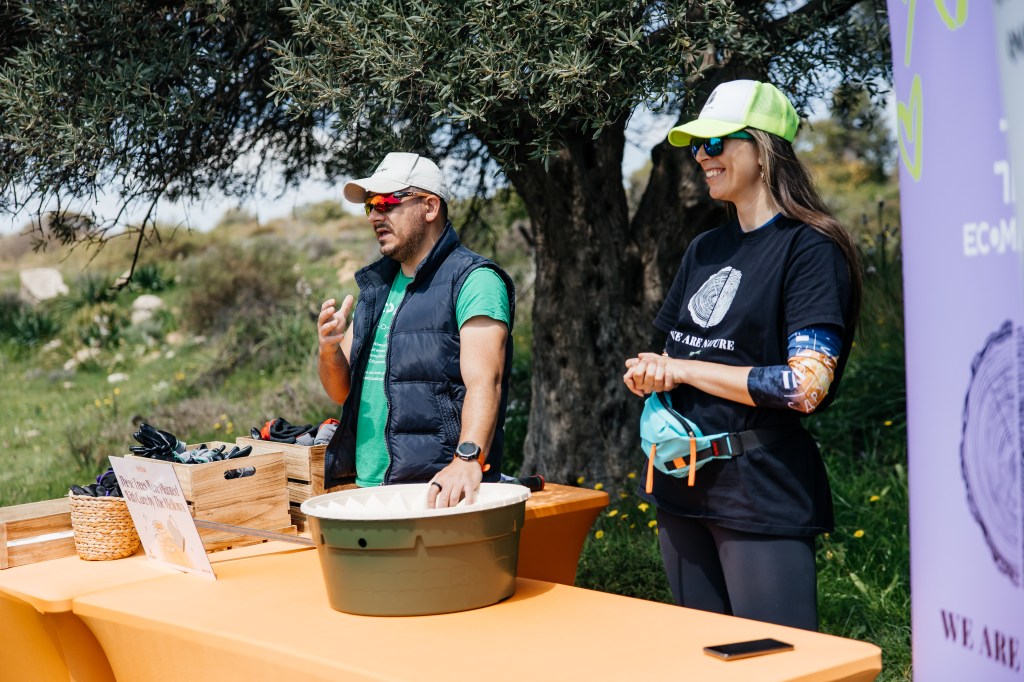
Each sampling is planted using Groasis Waterboxx technology: a system that collects rain and condensation from the air and slowly delivers moisture to the roots, protecting young trees from temperature extremes and eliminating the need for constant irrigation. It makes it possible to grow trees in places where, without intervention, they simply wouldn’t survive.
The recipient gets a personalised certificate — digital or printed, sealed with a wax stamp — along with a metal sign placed next to their tree, and seasonal photo updates on how it’s doing. If they want to plant it themselves, they’re welcome to join one of our monthly planting events.
Because the best part of “Gift a Tree” isn’t the certificate. It’s what happens after — when someone realises their tree is still alive, still growing, still there. That’s when a gift becomes something else entirely.
Can you share some success stories or measurable impact?
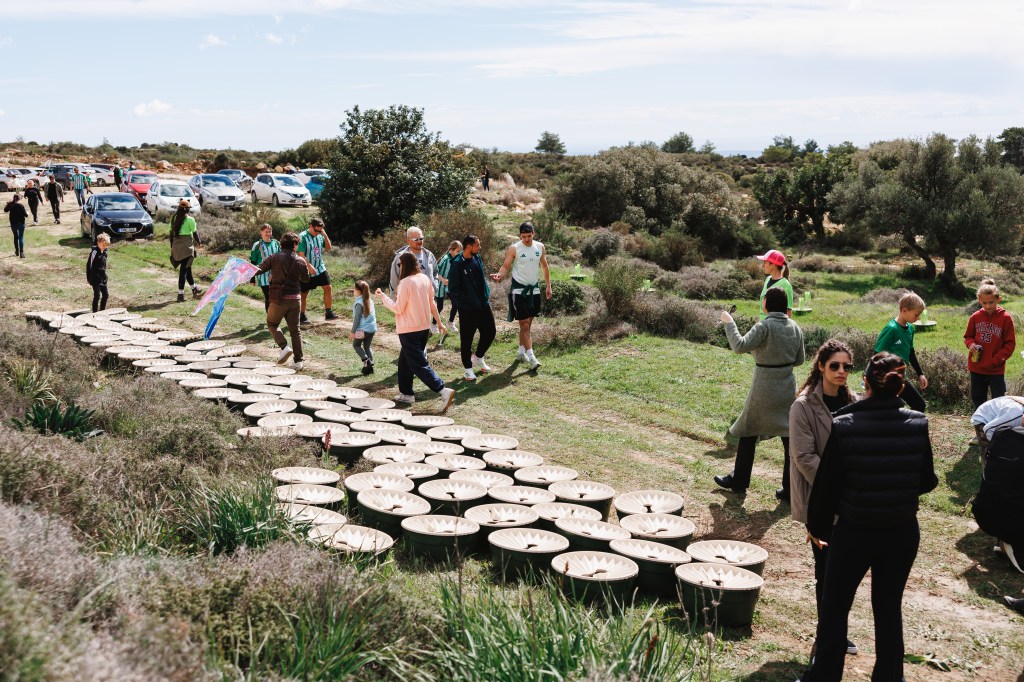
In two years, ECOmbare has installed over 1,000 Groasis Waterboxx systems across Cyprus. That might not sound like much compared to large-scale campaigns—but planting a tree and growing a tree are very different things, especially here.
Cyprus loses thousands of trees each year to fires, drought, and erosion. Without proper water management, most saplings don’t survive their first dry season. With Groasis Waterboxx, each tree gets a real chance: the system harvests rain and condensation and delivers it slowly to the roots, helping the sapling build deep water access long before it has to stand on its own.
So when we say “1,000 trees,” we mean 1,000 trees that are alive and growing. That’s what matters to us. That’s the number we’re proud of.
We’ve also trained over 670 people in the technology, with 22 now certified as planting managers capable of independently leading reforestation projects. But if we’re honest, none of these are our favourite metric.
The number we care about most is how many people come back. Volunteers who return months later to check on their tree. Corporate teams who start asking about their next planting before the first one is finished. Community members who begin to feel that this hillside, this grove, this landscape — is theirs to protect.
That kind of connection doesn’t show up in a press release. But it’s what makes reforestation stick — in the soil, and in people.
What do you see as the biggest environmental challenge facing Cyprus today, and how does ECOmbare help tackle it?
Marios: Cyprus is a small island facing very large problems. Wildfires, drought, soil degradation, disappearing biodiversity — these aren’t distant threats. They’re visible, seasonal, and getting harder to ignore.
What we noticed early on is that solutions often already exist. The world has been grappling with desertification, water scarcity, and reforestation for decades, and in many places, people have figured out what works. Our job, in part, is to find those proven technologies, bring them to Cyprus, and make them actually work here — on this soil, in this climate, with these communities.
Groasis Waterboxx is one example. Developed in the Netherlands, tested across some of the most arid regions on the planet. We studied it, got trained, and built our entire planting methodology around it — because it works. And because Cyprus needs solutions that survive a summer, not just a launch event.
But the technology is only half of it. The other half is people.
Every tree we plant gets a number. And the person who planted it knows that number. They can come back. Check on it. Watch it survive its first summer, push through its second, and start to look like something permanent. That small numbered tag on a Waterboxx turns an afternoon into a years-long relationship — with a specific tree, on a specific slope, in a landscape they helped restore.
We track all of it in our own app. Every tree, every location, every seasonal update — documented and accessible. So that long after the planting day is over, participants stay connected to the place they helped bring back to life.
What are your upcoming plans?
The foundation is there — the methodology, the trained team, the technology, the community that’s already shown up and kept coming back. This year is about building on that in ways that are bigger, but still deeply rooted in what we know works.
The most significant thing in motion right now is a large-scale planting project that’s currently in the approval and logistics stage. It involves a serious number of stakeholders — national and international — and when it comes together, it will be the most ambitious thing we’ve attempted. We’re not ready to say more than that yet, but it’s been a long time in the making and we’re genuinely excited.
Beyond that, we’re expanding our CSR programs for companies operating in Cyprus. The demand is there — organisations are increasingly looking for environmental engagement that goes beyond a logo on a banner. We’re developing formats that give corporate teams real, trackable impact and a lasting connection to the projects they support.
“Gift a Tree” is growing into something wider too — less of a standalone initiative and more of a participation platform, where individuals can stay involved with reforestation on their own terms, not just on event days.
We’re also deepening our work with rural communities, and bringing ECOmbare’s activities to new cities and villages across Cyprus. The island’s environmental challenges don’t stop at city limits — and neither should we.
And quietly, in the background, we’re developing new digital tools that will make it easier for both individuals and organisations to track their environmental contribution over time — and feel it, not just read about it in a report. A lot is moving. We like it that way.
Finally, the question I ask everyone in my interviews: what’s one small act of sustainability you believe everyone can embrace?
Kristina: Go outside. Somewhere green, somewhere local, somewhere you might not have been in a while.
Walk in your nearest forest. Visit a village. Learn the name of one native tree — just one. Notice what’s growing, what’s struggling, what’s been there longer than anyone can remember.
It sounds almost too simple. But we’ve watched it happen dozens of times: someone spends an afternoon on a hillside, plants a tree, learns something small about the ecosystem around them and something quietly shifts. They start paying attention. And people who pay attention, protect.
Sustainability doesn’t begin only with big policy decisions or corporate pledges. It begins with that moment when a place stops being background and becomes something personal. You don’t have to change everything. Just find one local environmental action this year and show up for it. That’s enough to start.
Photos are provided by ECOmbare
 www.natureallydone.com
Leave a comment