Articles · Interviews
From Ashes to Award-Winning Oil: An Interview with Demetris Taliotis on Fire, Soil, and the Future of Farming in Cyprus
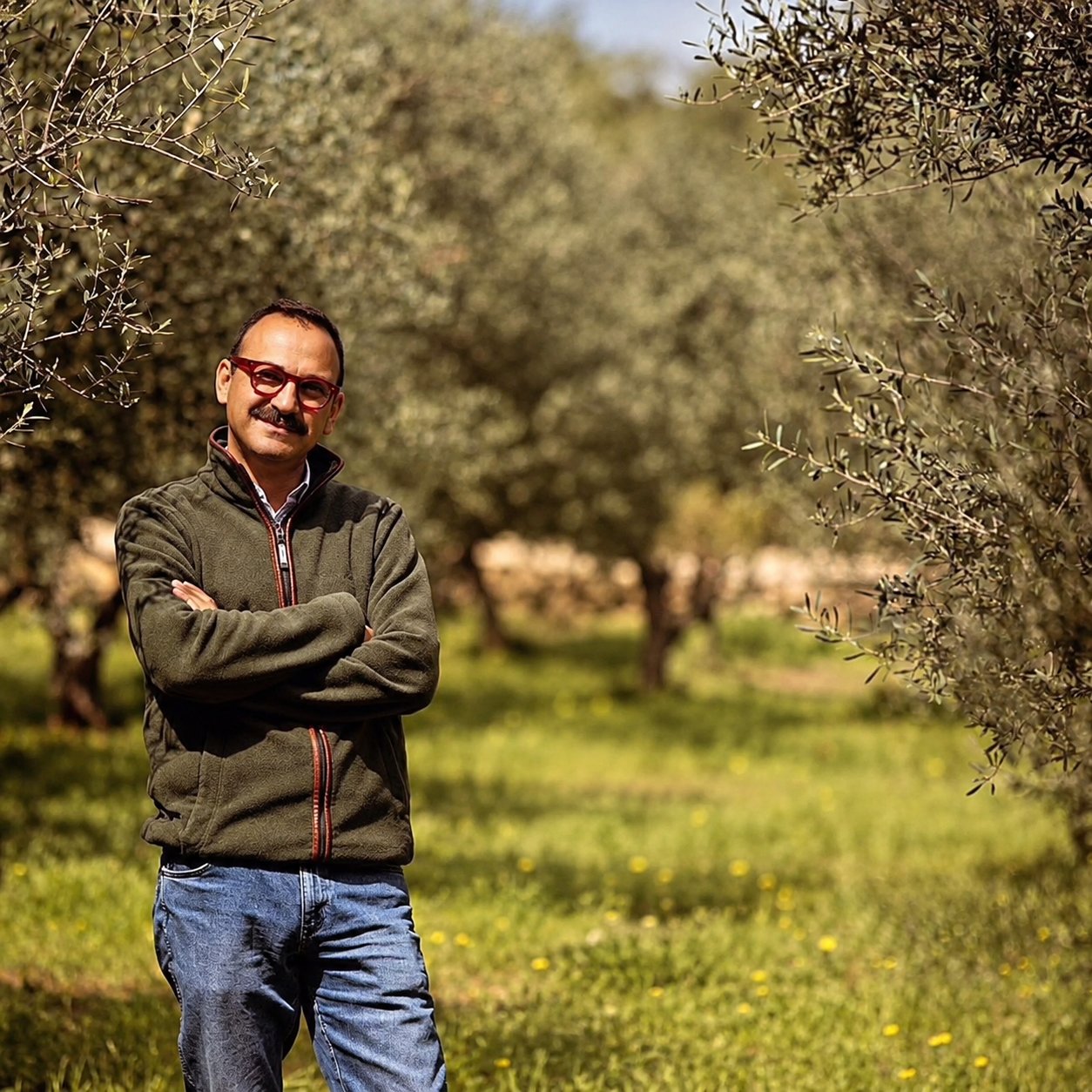
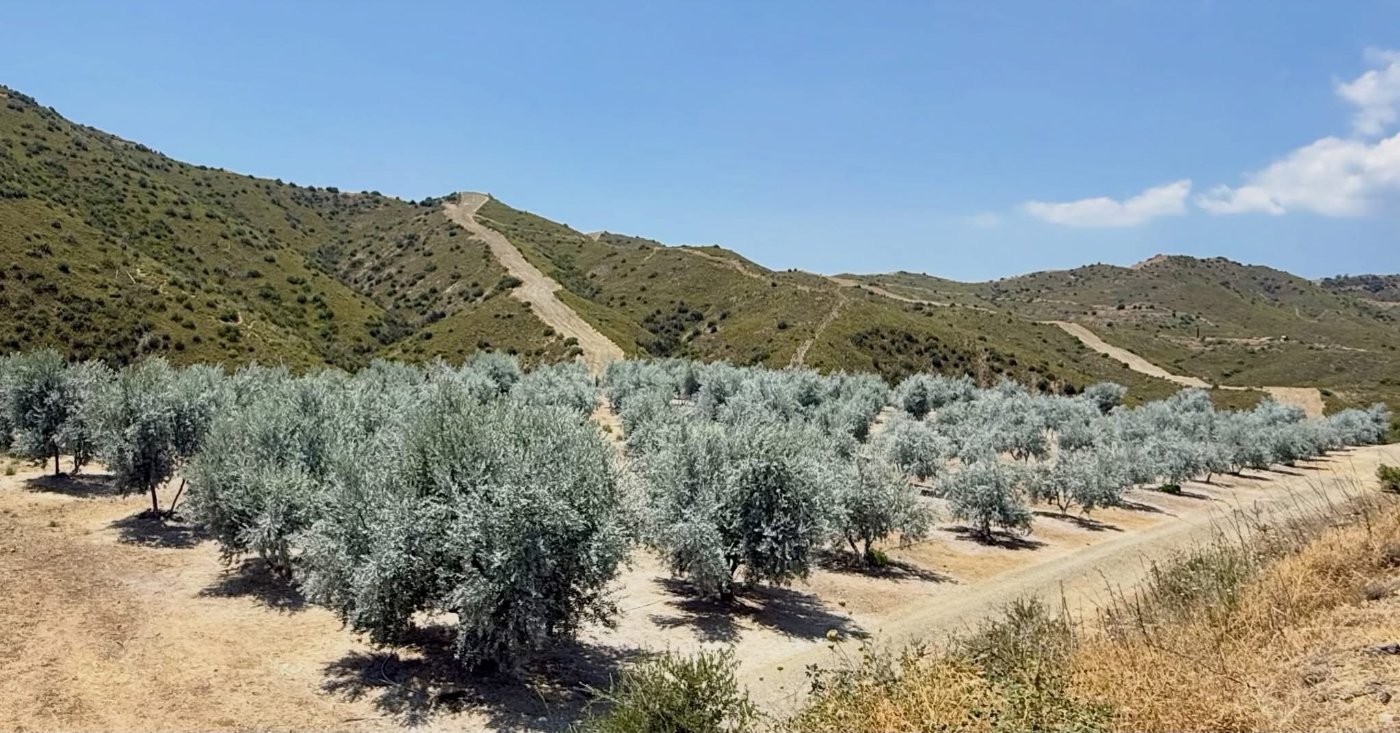
When fire swept through Demetris Taliotis’s olive grove in 2021, almost everything above ground was destroyed. The root systems survived, however, sending out new shoots. Taliotis chose to stay and see what might grow back. Today, he farms this mountain landscape through a practice that brings regenerative agriculture into conversation with biodiversity, sensory knowledge, technology and the cultural life of rural places.
Founder of Aparthenasa, an independent olive-oil and agroecological project, and named among the Top 50 Farmers 2026, Taliotis speaks to NatureallyDone about the work of regeneration, the economics of small-scale farming, and why an olive grove can be much more than a place to produce olive oil.
Your grove was destroyed by fire in 2021. What happened afterwards?
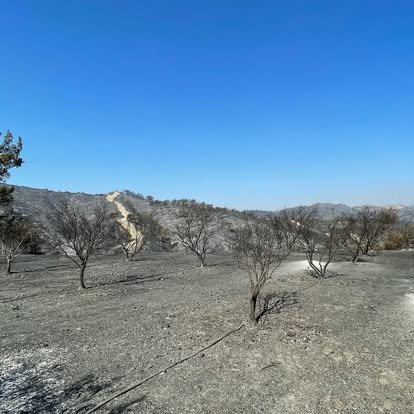
I bought the grove in 2020. It had been abandoned for almost a decade before that , and I immediately embarked on process of literally regenerating it. I had just repaired the irrigation system and was looking forward to out first proper harvest when, in July 2021, everything burned down.
After the initial shock I installed a basic the irrigation system and began watering the burned trees in the hope that their root systems would have survived. An olive is naturally more of a bush than a tree; we train it into a tree because that makes cultivation easier. Most of the roots had survived, sending up hundreds of shoots. After about two years, we removed the burned trunks and gradually began selecting the stronger shoots. One plant now has five trunks, another four,etc . It may eventually have three, two or even one. We’ll see where the process takes us - and I often say ‘we’ because this work involves more people than just me.
Did the fire make you turn towards regenerative agriculture?
No. I was practicing regenerative agriculture from the beginning. The fire forced me to decide whether to continue or stop. It took me months to come to terms with what had happened. I was angry and couldn’t accept that everything I had started and hoped for was gone. Eventually, I decided to carry on. The grove is still very much a work in progress.
You have also grafted some of the trees.
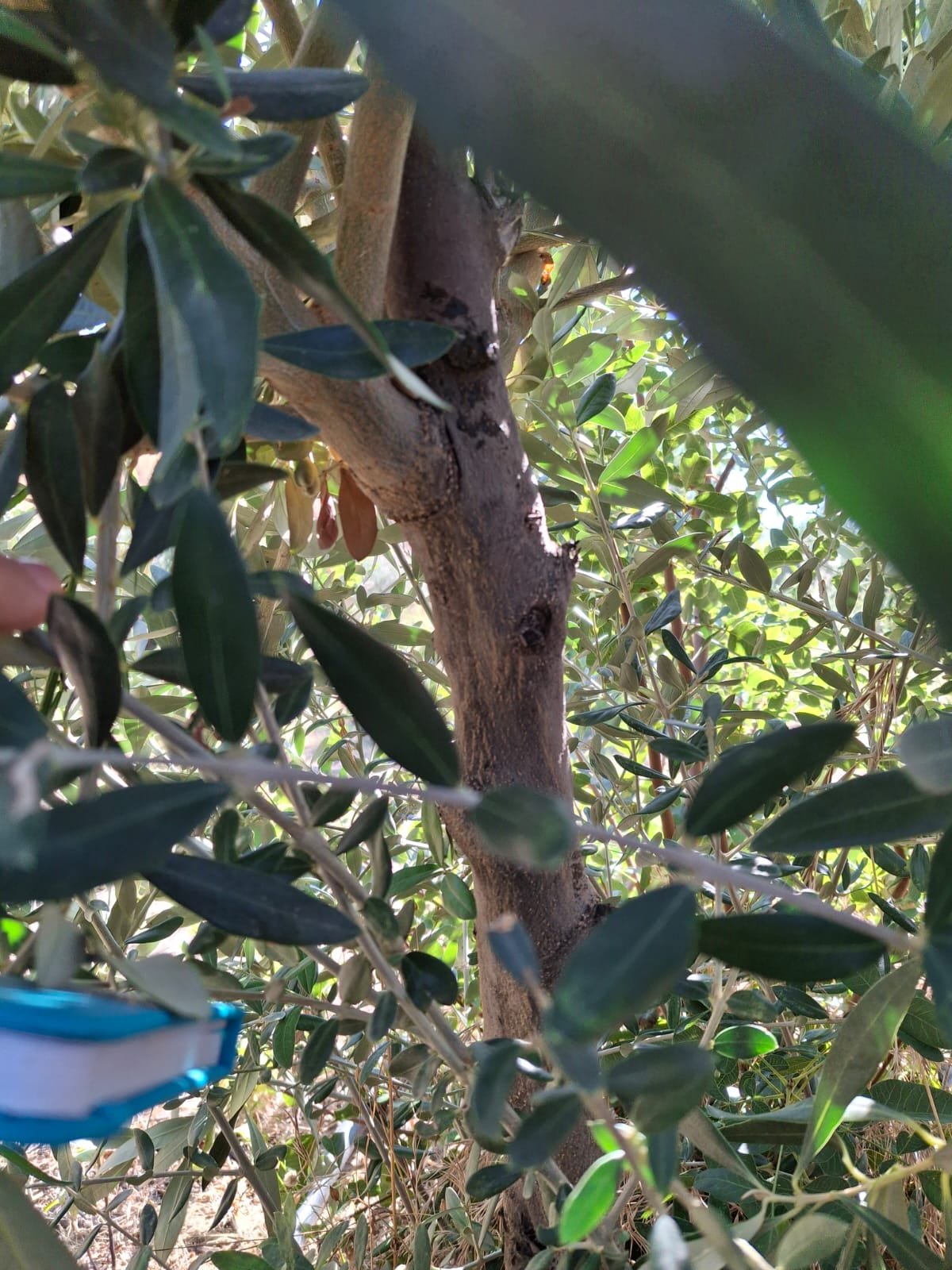
Most of the trees are Koroneiki; others are Kalamon. Some recovered less successfully after the fire, so we cut them back again and grafted them. Grafting means taking a small piece of wood from a mother tree and joining it to an existing plant. In this case, we’re using a living root system to establish a different variety. It is a practical intervention, but also a way of working with what has survived.
Aparthenasa has another olive grove in Sia?
Yes. After the fire, my father-in-law, who lives in Sia, asked me to manage his grove. I had already worked and harvested those trees before, so it was familiar ground. For three years, while I was restoring this burned landscape, I was also looking after the grove in Sia.
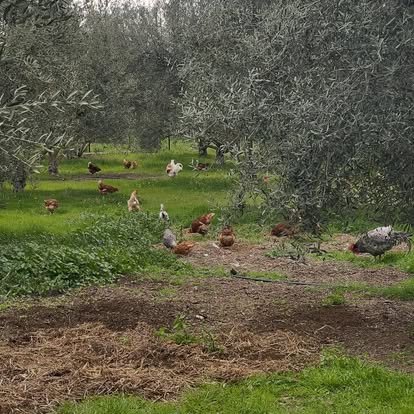
The two places are quite different. Sia is flatter and more conventional in its layout, with a house and chickens. It functions a little like a research centre. Vavatsinia, by contrast, is more like a studio or playground: a place to experiment, make mistakes and learn.
The land here looks very difficult to cultivate.
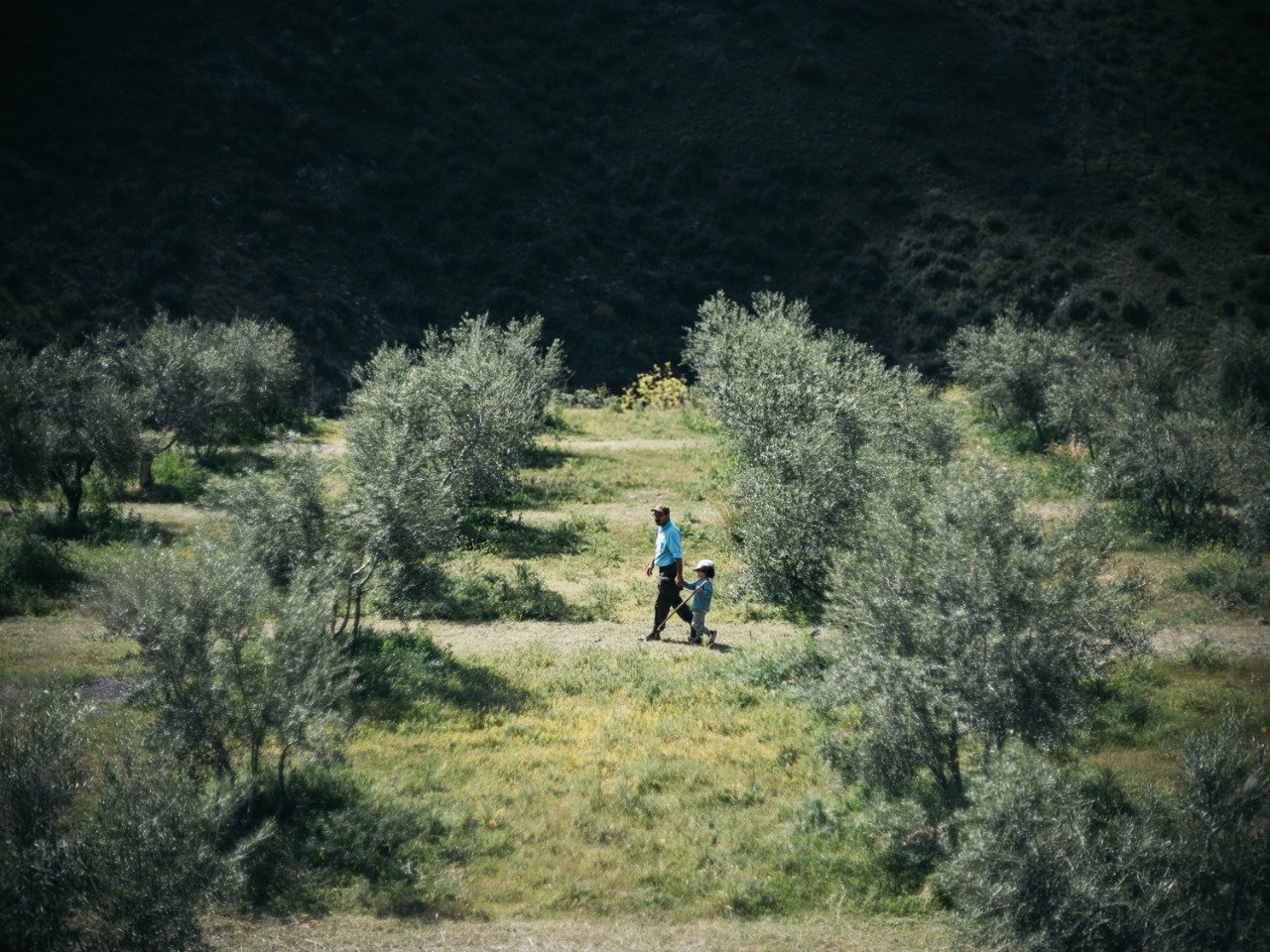
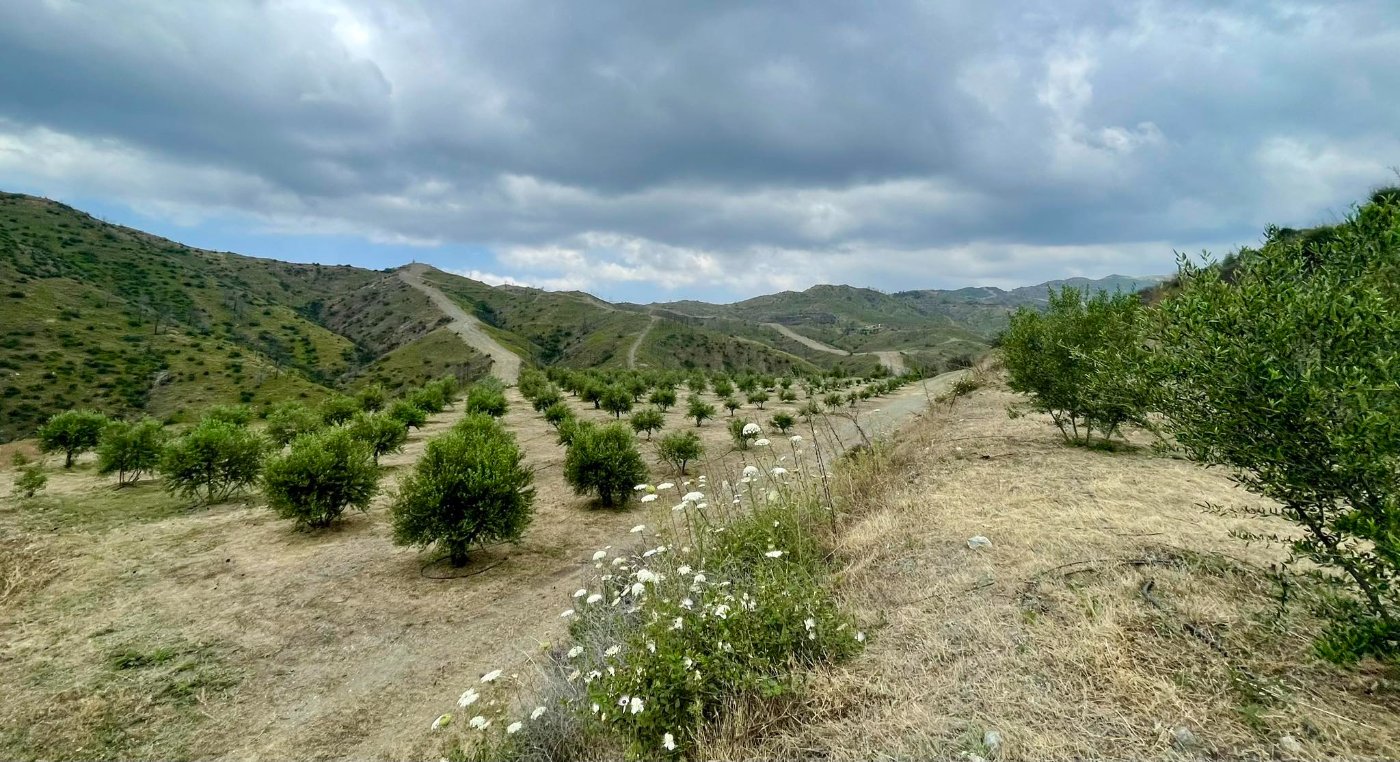
It is. The soil is rocky, poor and highly alkaline. In purely economic terms, cultivating this land can seem irrational. The plot is known as Mandri on the land-registry map, a name associated with a shepherd’s holding. It wraps around the mountain, and historically people kept animals here and cultivated what they could.
But it is exciting working here. The trees have survived under difficult conditions, developing extensive root systems in the process. Rather than seeing the landscape only in terms of its limitations, I try to understand what those conditions have made possible.
When you talk about regenerative agriculture, what does it actually look like?
It doesn’t necessarily look like anything distinctive. ‘Regenerative agriculture’ has become a popular phrase, but you can’t identify it simply by looking across a field. You have to look at the soil and understand the specific conditions of the land.
It isn’t about using no inputs, doing nothing and hoping nature will take care of everything. It is about recognising what matters in a particular place and working with it, rather than behaving as though we are in charge of it. For me, soil health is central. Nutrients may be present, for example, but high pH or runoff can prevent trees from accessing them. We need to work with those conditions and build organic matter. We’re also working with the Open University on a programme involving biochar.
Regeneration means helping the life and potential already present in a place recover, without pretending we know everything or assuming that the answer is simply to bring in more inputs.
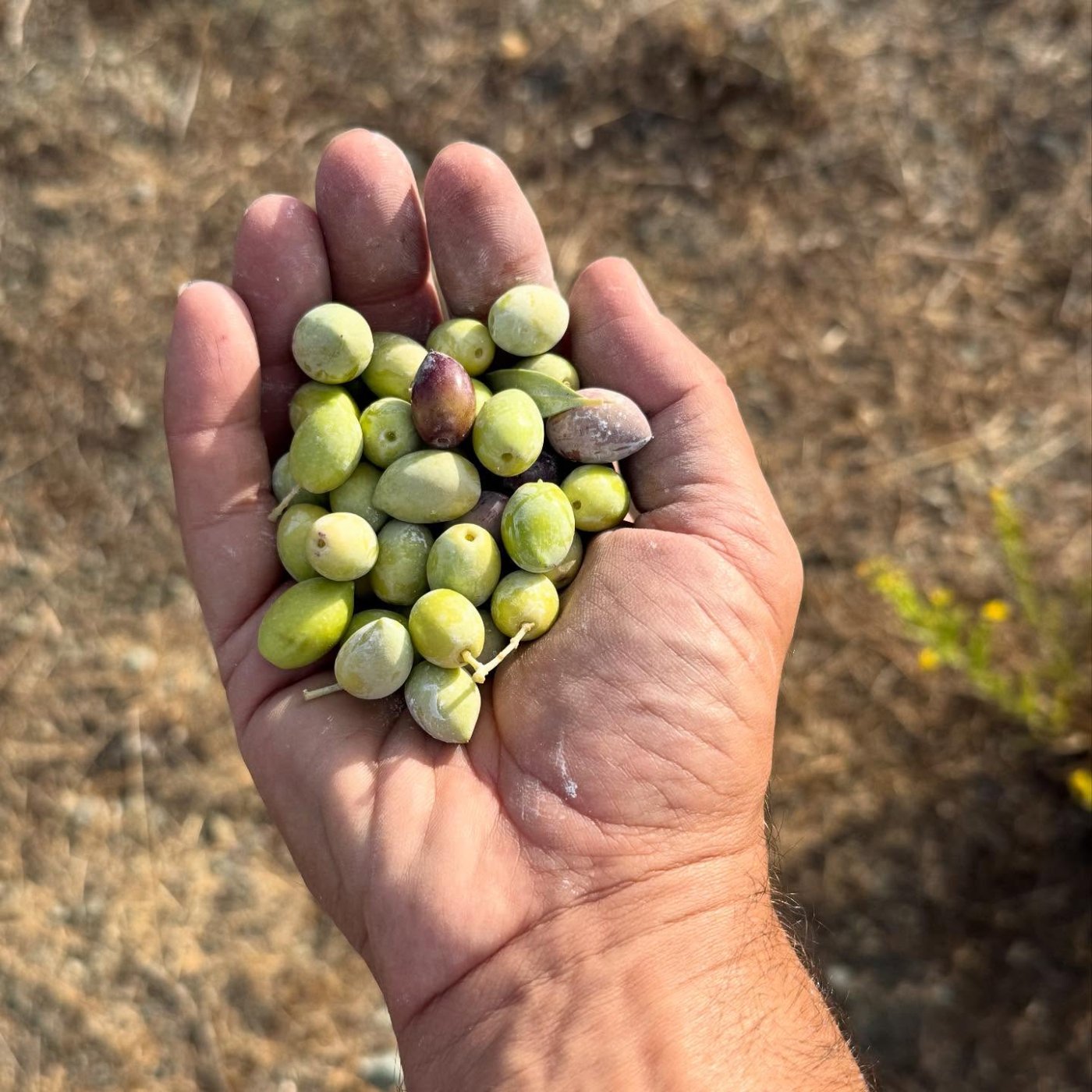
I use laboratory analysis to help determine when to harvest. The decision isn’t based simply on the calendar, the weather or the colour of the olives. We look at how the fruit is developing, including its water, oil and sugars content, and try to identify the point at which those elements come together in a way that supports the flavours and aromas I’m looking for.
Why don’t more farmers do this?
Because it costs money, and that cost has to be reflected in the selling price. The market isn’t always willing to pay it. Cyprus is an expensive place to farm, and exporting is difficult. Harvesting labour can upwards of €80–100 a day; then there is transport to the mill, fuel, packaging and all the small but costly parts and repairs that farming requires. Even bottles have to be imported from Greece.
The result is a high cost of production. These pressures aren’t exclusive to regenerative agriculture; conventional farmers face many of them too. It is difficult to persuade someone to pay more when cheaper alternatives are readily available.
So why do you keep doing it?
I’m not sure I could do anything else. This way of farming - of practising agriculture - is much more interesting to me than conventional production. Without the creative dimension, it would feel like just another job. And it’s not. There has to be a two-way conversation between the human and the more-than-human world. You have to pay attention, listen and respond to what is happening around you.
But it is still very difficult economically.
Of course. Climate change makes this work more urgent, but urgency doesn’t make the economics easier. In Cyprus, farms are often small, volumes are limited and operational costs are high. There is also a shortage of labour, so you can end up doing almost everything yourself.
If you look at the 1912 Land Registry map, this area was covered in vineyards. People cultivated this land a century ago. Their descendants are no longer here. When I bought this plot, it was so overgrown that we needed a digger just to reopen the old roads.
Calling farming a ‘passion’ can make it sound romantic. It isn’t. There are days when I think about stopping, especially after a bad season. Last year I produced very little oil and sold out by May. You ask yourself whether it is worth it. Then the work continues, and somehow you continue with it.
I see that passion is essential.
Passion matters, but so does a genuine connection to food, nature and the place you work. If you approach regenerative agriculture only as a job, I think you will struggle, particularly in Cyprus. The economics are easier at larger scales: during olive-oil tasting courses in Spain, I met a farmer who described her 20,000 trees as a small operation. I look after fewer than a thousand.
Olive oil is a global product, and Cyprus cannot compete on volume. For me, the reason to keep going lies in the connections between agriculture, food, ecology and the many things we can learn from them.
Regenerative agriculture is extremely important for biodiversity, isn’t it?
Look at these rabbit droppings. For me, they’re exciting because they tell me that wild rabbits are feeding and spending time here. They are a small sign that the ecosystem is functioning. There isn’t enough rabbit manure to make a meaningful difference to the olive trees; that isn’t the point. The point is that the grove is habitat, not simply a production unit.
I also sow vetch on two plots where there are no olive trees. It helps the soil by fixing nitrogen, but I leave it for migratory birds to feed on. In August, flocks of wood pigeons come down to it. I deliberately avoid disturbing established caper bushes when I mow or mulch. Sometimes that creates difficulties with the authorities, because the system can treat these plants as weeds.
Why is that?
Farm subsidies in Cyprus are largely tied to the land being farmed, rather than to the ecological value of what happens on it. An inspector may see an olive tree and then another plant growing beside it and regard the second plant as a weed. But some of those plants have a role in the ecosystem. I leave certain species because I want them here.
This is why regenerative agriculture cannot be discussed only in terms of production methods. It is also a question of policy, economics and labour. A farm cannot credibly call itself regenerative while treating workers as disposable, underpaying them or subjecting them to terrible conditions. If the human condition is excluded from the definition, the result is greenwashing.
How important is technology to your farming?
I believe in technology and innovation. We use irrigation sensors, weather stations and drones to map the land, collect data and, where appropriate, spray. But technology is not neutral: equipment is often designed around the needs of conventional chemical agriculture. A €100,000 drone may make spraying chemicals more efficient, but that doesn’t mean it meets the needs of an organic farmer. The technology exists, but the tools we need are not always available.
At the same time, I do a great deal by hand. The work depends on a balance between data, machinery, observation and physical engagement with the land—a choreography of different ways of knowing.
And what do you see as the future of the farm?
I took this place from abandonment through fire and into recovery. We now produce award-winning olive oil that meets the relevant laboratory and sensory criteria, and the ecosystem is returning. Where there was once blackened ground, there are now capers, white lavender and other signs of life.
That phase of the work is approaching a turning point. The question is what comes next. I suspect it will be something that goes beyond agriculture and olive-oil production, although I can’t fully describe it yet. The grove has become a place for experimentation and learning, and I want to understand what else it might become.
Would you be sad to see it go?
Very. I would be sad if I sold it or someone else took it over, particularly if it remained simply an olive grove. I don’t want it to be only that.
After the fire, an agronomist told me: ‘Don’t learn how to tend trees. Learn how to make olive oil.’ I understood what she meant. Tending trees is something you can learn relatively quickly. The more interesting questions lie beyond that: soil health, the soil microbiome, and the relationships between agriculture, ecology, food and policy. That is where I want the work to lead.
How important is policy to the future of regenerative agriculture?
It is fundamental. We can continue doing the same things and call them regenerative, but without policy change there will be no structural transformation. This is not about helping me, or a handful of farmers, to carry on. It is about changing the system.
People who live and work in rural areas—farmers in the broadest sense—do far more than produce food. They maintain landscapes, sustain ecological relationships and hold forms of knowledge that cannot simply be transferred to a laboratory. If we fail to recognise that wider role, we risk losing much more than agricultural production.
Let’s talk about the product you produce here: olive oil.
I make oil only from my own trees. I don’t buy in oil or blend it with someone else’s; I work with what the trees produce, and if there isn’t enough, I have to accept that. I started Aparthenasa because I wanted to make high-quality extra virgin olive oil myself.
I also carry out the quality control. I know what I’m looking for, and I keep back batches I’m not satisfied with. They may be perfectly acceptable oils, but if they don’t meet my own standards, I don’t sell them.
For people who don’t know much about olive oil, what does good olive oil actually mean?
Extra virgin is the highest commercial grade of olive oil, but the category is more demanding than many people realise. The oil must meet chemical parameters and pass a sensory assessment. Correct chemistry alone is not enough: if the oil has a sensory defect, it cannot be classified as extra virgin.
I’m involved in a project with the Agricultural Research Institute that tests oils produced in Cyprus and presented as premium. In one set of awards, 17 of 19 oils had defects, some minor and others significant. Problems can arise at any stage—in the field, at the mill, during storage or on a supermarket shelf.
Harvest timing is crucial. In general, harvesting earlier can help preserve freshness and desirable sensory characteristics. In Cyprus, it can also reduce disturbance to songbirds nesting in the trees later in the season. Polyphenols are another consideration: my oil is naturally high in them, but I think the fixation on high-polyphenol oil has become a fad. If you do want higher levels, harvest timing matters, and the window can be narrow.
The mill matters too. I work with a particular mill because I can collaborate closely with the miller and control variables that influence flavour and aroma, including how much fruit goes into the malaxer. Making good olive oil is not a matter of putting olives into a machine and hoping for the best.
What should consumers look for in the oil?
Start with what you enjoy. If you prefer a sweeter, milder oil, choose one; if you like bitterness, pungency and intensity, there are oils for that too. Koroneiki, for example, tends to be bitter, pungent and aromatic. Arbequina, also grown in Cyprus, can be much milder, with notes reminiscent of red apple.
Olive oil is food. If you don’t enjoy the taste, you don’t have to buy it. If you consume it only because you think of it as medicine, you may end up resenting it. I want people to enjoy olive oil, not force themselves to take it.
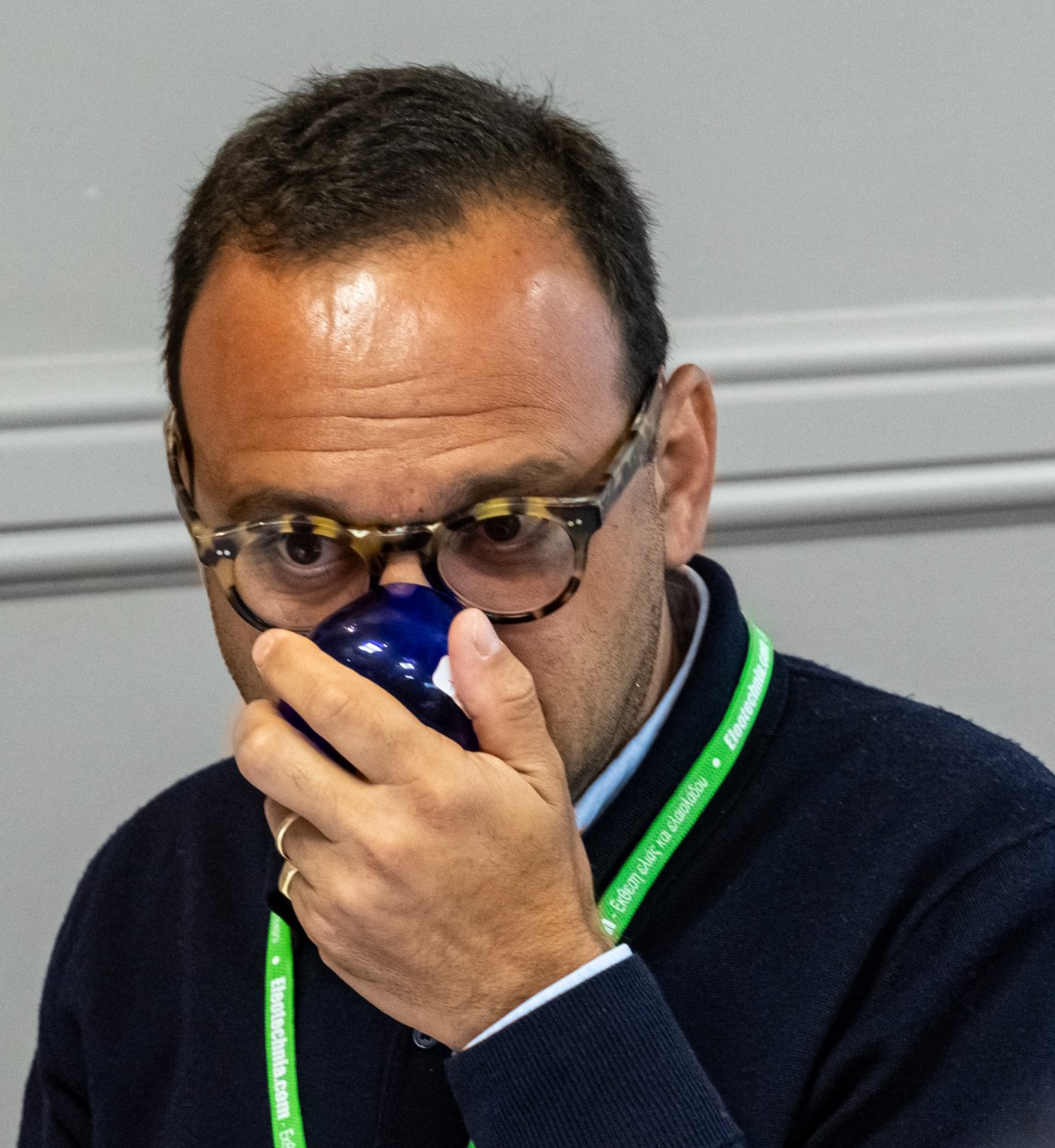
Consumers should also learn to recognise common defects, particularly rancidity and fustiness. Rancid oil can smell like wax, crayons or old peanuts. Fustiness is closer to the smell of sweaty clothes left in a closed bag. Ideally, olives should reach the mill as quickly as possible—maximum within 8–12 hours—rather than being left in piles, where fermentation and unwanted aromas can develop. Olive oil should taste fresh, not fermented.
We have wine tastings everywhere. Do you think we need more olive-oil tastings?
Absolutely. There is interest, but olive-oil tastings are not yet widespread. The challenge is finding good oils to taste, particularly as the season progresses and storage becomes an issue. I’m also not a fan of unfiltered oil: retaining moisture and fruit particles can accelerate deterioration.
There is a cultural challenge, too. Cyprus has tens of thousands of olive-oil producers, and almost everyone believes their own oil is the best. We are often attached to what we already know, and that can make it difficult to approach food with curiosity. Tastings could help people become more open to different varieties and styles.
My father-in-law, who has produced olive oil and worked as an agriculturalist for years, finds my oil too bitter. He prefers a style he grew up with, including characteristics considered as defects. I may be able to introduce my son to different tastes, but it is harder to change someone’s preferences later in life. The point is not to make everyone like the same oil; it is to help people taste with greater awareness.
If someone wants to buy your olive oil, where can they find it?
Through my website, Aparthenasa.com, when oil is available. If buyers are in Nicosia, I often deliver it myself; elsewhere, I use local courier services.
One final question. What advice would you give consumers or businesses wanting to take a step towards a more sustainable way of living or doing business?
Put your money where your mouth is. If you want to live sustainably but are buying packaged organic tomatoes, find a local producer and accept that you may need to pay more. You can buy three tomatoes instead of six; the point is to make your choices match your values.
For businesses, the principle is similar, though the choices can be more complicated. Don’t promise something you know you cannot deliver, and don’t call yourself sustainable, zero waste etc if you are not. Choose one change you can realistically make, then make it properly.
Interviewed by Lusine Mirzoyan