

Attending the Green Agenda Cyprus Summit offered an opportunity to hear from experts, innovators, policymakers, and industry leaders who are shaping the future of sustainability in Cyprus and beyond.
Unfortunately, due to traffic, I missed the presentation by Bora Markovic, whose work has helped me discover, even after 18 years of living in Cyprus, just how spectacular and unique this island truly is. If you are not familiar with his photography work, follow his Instagram account.
I arrived in time for the presentation by Demetris Tsiakkis, head of business development and strategy in Altia, who explored the future of sustainable real estate. He highlighted how responsible planning, construction, and long-term maintenance can significantly reduce environmental impact while creating healthier and more resilient communities. Sustainable development is no longer a niche concept—it is becoming a necessity.
One of the most inspiring presentations came from Amelia Kallman, futurist, author, and international speaker. Bringing remarkable energy to the stage, she shared practical insights on how emerging technologies can accelerate the transition toward a greener future. Her message focused not on distant possibilities but on opportunities available today, encouraging businesses and communities to take action rather than wait for perfect conditions.
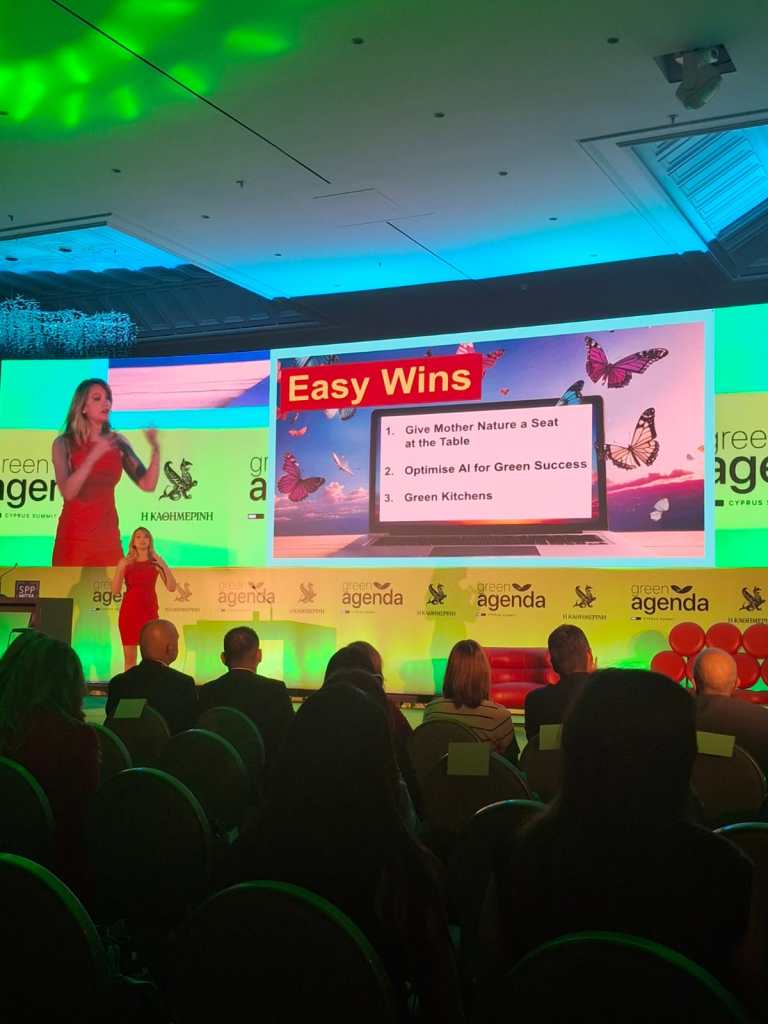
She pointed out at the opportunities for sustainable tourism focusing on digital detox, voluntourism, agritourism and ecotourism especially if the target group is GenZ.
The intersection of artificial intelligence and sustainability was explored by John Josephakis, Global VP at NVIDIA. He emphasized that Cyprus has a major advantage: its strong student population. By integrating AI more effectively into educational curricula, the country can equip future generations with the skills needed to solve environmental challenges. He also pointed out that Cyprus’s relatively small size can be a strategic benefit, allowing for faster adaptation and implementation compared to larger nations.
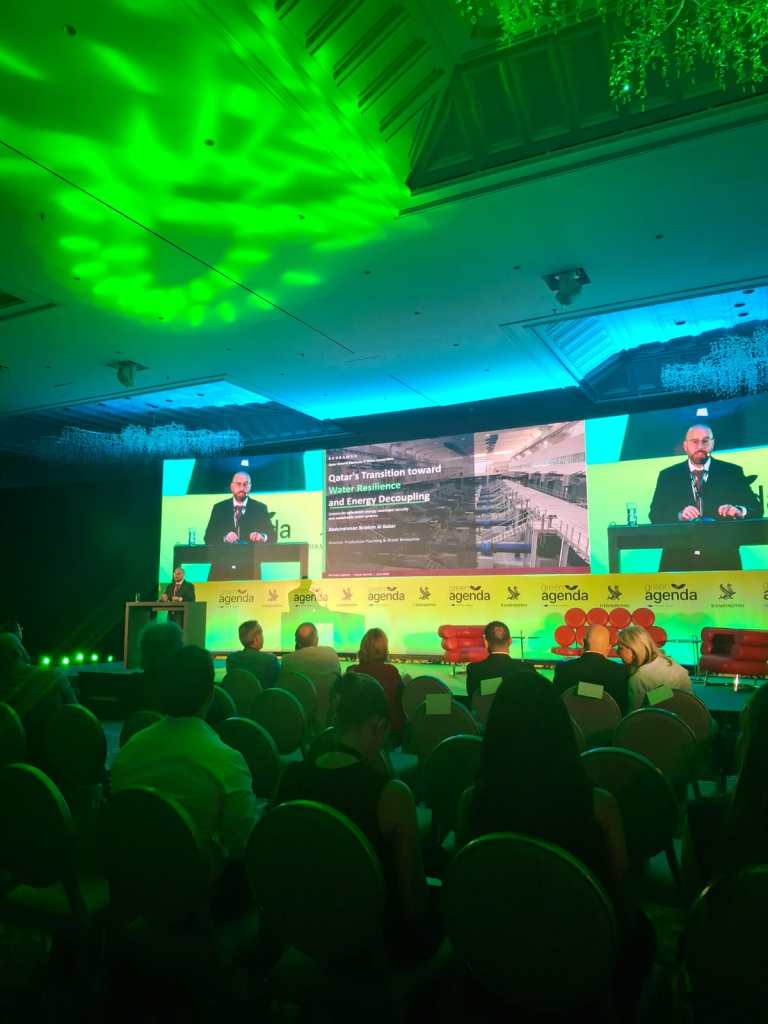
A compelling international perspective was provided by Abdulrahman Al Baker, who presented Qatar’s journey toward water resilience and energy decoupling. Particularly impressive was Qatar’s extensive use of Treated Sewage Effluent (TSE) in agriculture, landscaping, industrial operations, district cooling, and construction. His presentation demonstrated how innovative resource management can transform environmental challenges into opportunities.
Sustainable tourism was another key topic. Dimitris Palaiogiannis highlighted the importance of creating tourism models that generate lasting value for local communities, preserve cultural heritage, and benefit future generations. Sustainability in tourism is not only about protecting natural resources; it is about ensuring that economic growth contributes positively to the people and places that make destinations unique.
Anita Zachou offered a fascinating case study on redefining olive oil tourism. Her presentation illustrated how traditional products and local heritage can be transformed into meaningful visitor experiences that support rural economies while celebrating cultural identity.
Beyond individual presentations, discussions throughout the summit addressed critical issues including the future of Akamas, ESG implementation, renewable energy, and the transition toward energy independence.
A recurring theme was Cyprus’s continued dependence on unsustainable energy sources, particularly in the context of current geopolitical uncertainties. Many speakers agreed that Cyprus possesses many of the ingredients necessary for a successful energy transition—abundant sunshine, technological capabilities, entrepreneurial talent, and growing public awareness. Yet progress is often slowed by bureaucracy, lengthy procedures, and a lack of coordinated action.
One moderator summarized the challenge perfectly:
“We know what changes need to be implemented. We know how to do it. But for some reason, we don’t do it.”
Written by Lusine Mirzoyan
 www.natureallydone.com
Leave a comment