
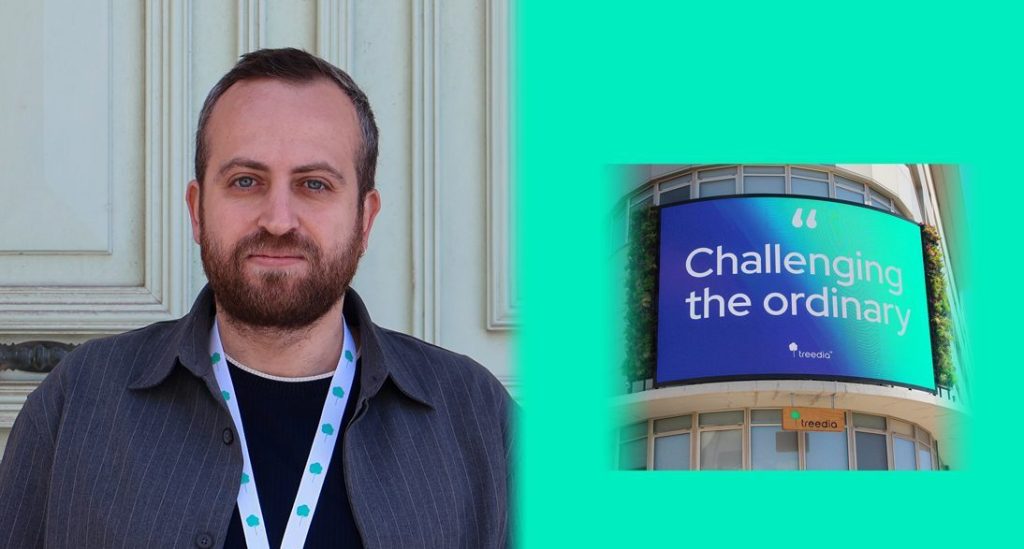
From selling tech gadgets to classmates as a teenager to building one of Cyprus’ most innovative sustainability-driven startups, Sotiris Karotsakis has always approached business with an entrepreneurial and disrupting mindset. As the founder of Treedia, he is rethinking outdoor advertising by combining digital innovation with environmental impact turning digital billboards into platforms that also support tree planting and cleaner urban spaces. In 2025,
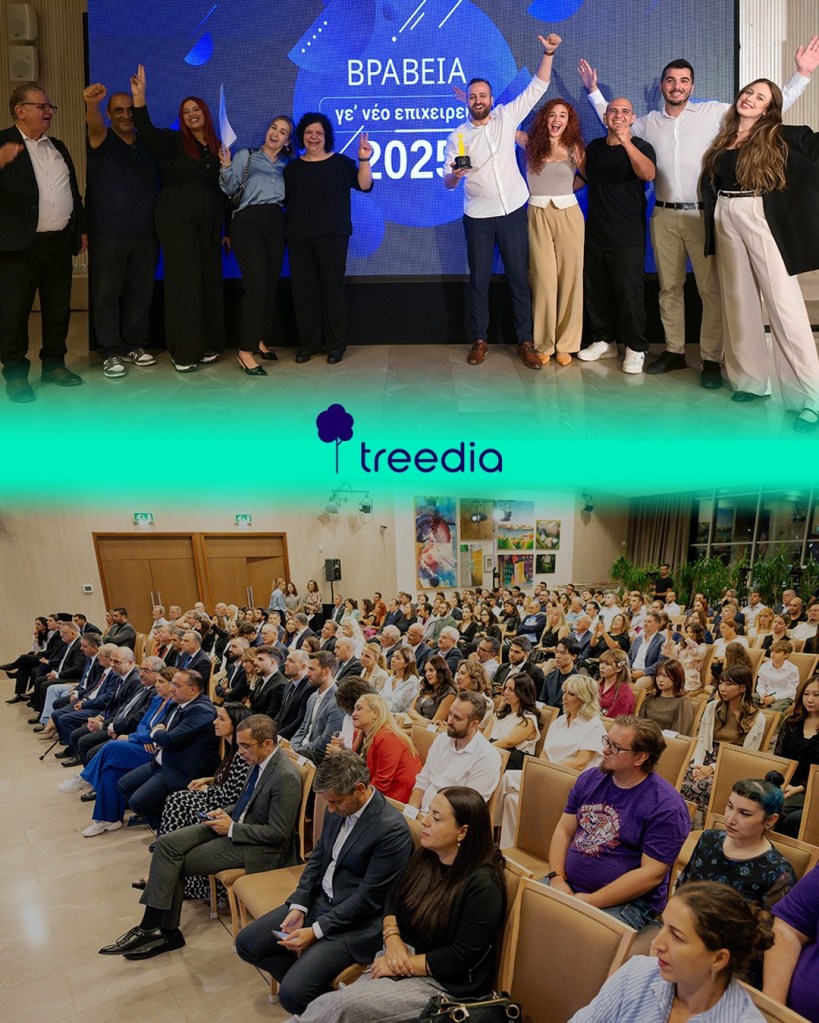
his work received national recognition when Treedia’s founder was honored with an innovation award at the Presidential Palace, highlighting the company’s growing impact in Cyprus’ entrepreneurial and sustainability ecosystem.
In this interview, he speaks about purpose, risk-taking, entrepreneurship, and why building something meaningful matters more than simply building a successful business.
Sotiris, tell a little bit about yourself: Were you born innovative and entrepreneurial or something led you to that?
My first entrepreneurial experience started when I was around 12 years old. Back then, with dial-up internet connections (nostalgically smiling) very few people knew about eBay or online shopping, so I started ordering products online and selling them to classmates at school.
I was bringing in PlayStation games, phone accessories, comics, Bluetooth gadgets, small tech products of the era — things that were considered exciting at the time. In a way, I became the “delivery guy” for the school. Looking back, that was probably my first real entrepreneurial experience.
I still don’t know exactly where that entrepreneurial mindset came from, but it was definitely there from an early age.
What did you study, and what was your professional path before Treedia?
After school, I completed two years in the army, where I served as a sergeant. That was my first experience with leadership and responsibility. Later, I studied Management Information Systems, which combines business administration and information technology. I then completed a master’s degree in Financial Economics and Data Analytics.
During my studies, I worked various side jobs, including waitering and other similar part-time roles. My first proper professional experience came around the end of my studies, where I was still a student, at IT and customer support for a software company in the online gambling industry. It was my first proper professional job environment, and initially it was exciting because I was earning my own money and learning how companies operate.
But after some time, I started questioning what I was actually contributing. I felt that I wasn’t doing something meaningful. Eventually, I made the decision to leave even though I didn’t yet have a clear plan for what would come next.
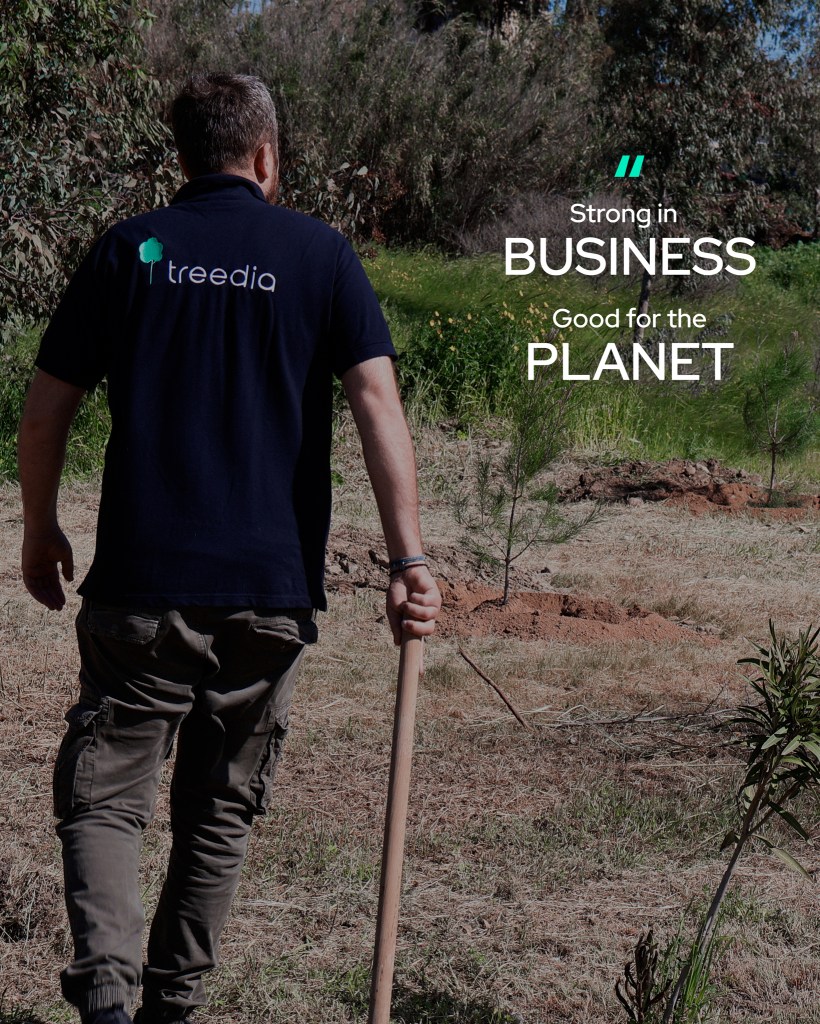
Was that the moment Treedia was born?
Not exactly. When I left my job, I didn’t have the idea for Treedia yet. It was honestly a risky decision. But I was young, I had no major responsibilities, and I had saved enough money to survive for a while.
A few months later, I came across a government program supporting young entrepreneurs through the Ministry of Commerce and Industry. That moment felt important like an opportunity that could genuinely change my life.
At first, my idea was focused on outdoor advertising. I noticed that the industry had remained very traditional for years. Even digital solutions felt outdated or poorly executed. I believed there was gap in the market and space to build something more professional, more innovative, and better designed.
Then I started asking bigger questions: How can this become sustainable? How can it create a positive environmental impact? That’s when the idea of combining media and trees came together, and Treedia started
taking shape.
For people unfamiliar with Treedia, how would you describe the activities of the company?
Treedia is essentially a digital outdoor advertising company with a sustainability-driven business model.
Sometimes people ask us:
“Are you a tree-planting company?” “Are you a marketing and advertising company?”
The truth is that we are both.
You can describe us as a tree-planting initiative funded through advertising revenue. Or you can say we are an advertising company that uses its profits to create environmental impact. Traditional environmental organizations often rely heavily on donations. We wanted to build a sustainable business model that generates its own revenue while giving back to society.
Our goal was to create one of the most competitive outdoor advertising products in Cyprus while embedding sustainability directly into the business itself and I believe we achieved that.
How does the environmental side of Treedia work in practice?
Our model is based on offsetting the environmental footprint of our digital screens through tree planting and sustainability initiatives.
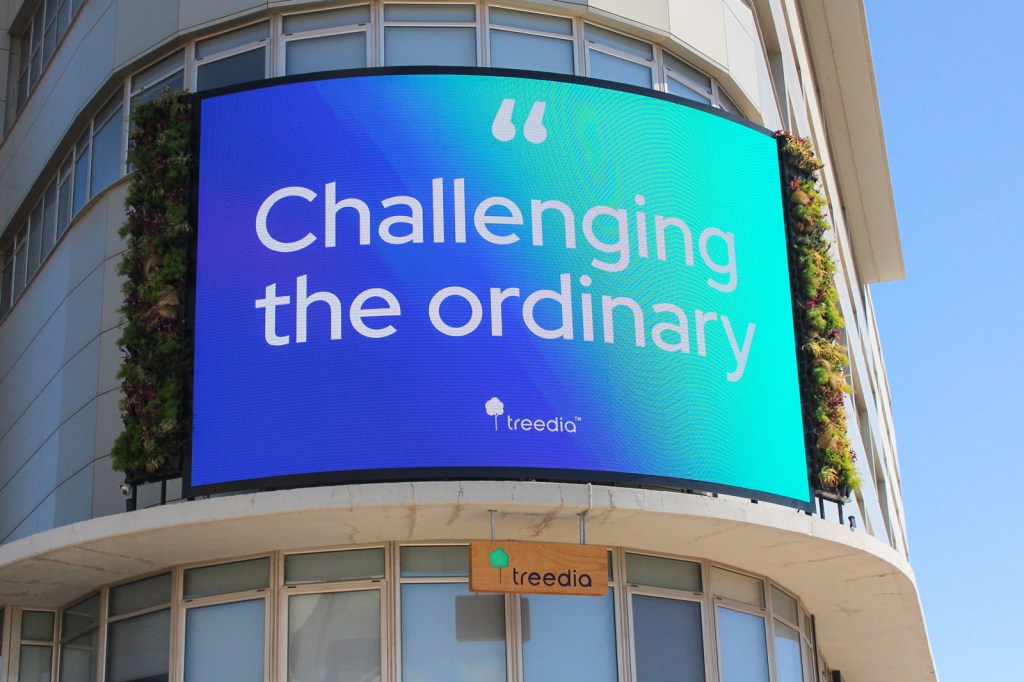
For every amount of screen space we operate, we plant an equivalent area of greenery. The idea challenges the traditional mindset of the outdoor advertising industry, where the focus has always been on building bigger and bigger installations.
We wanted to introduce a different approach. At the moment, we are still building the long-term structure behind these initiatives. We are collaborating with specialized local environmental organizations and local tree-planting communities that can manage projects professionally and ensure long-term survival of the trees.
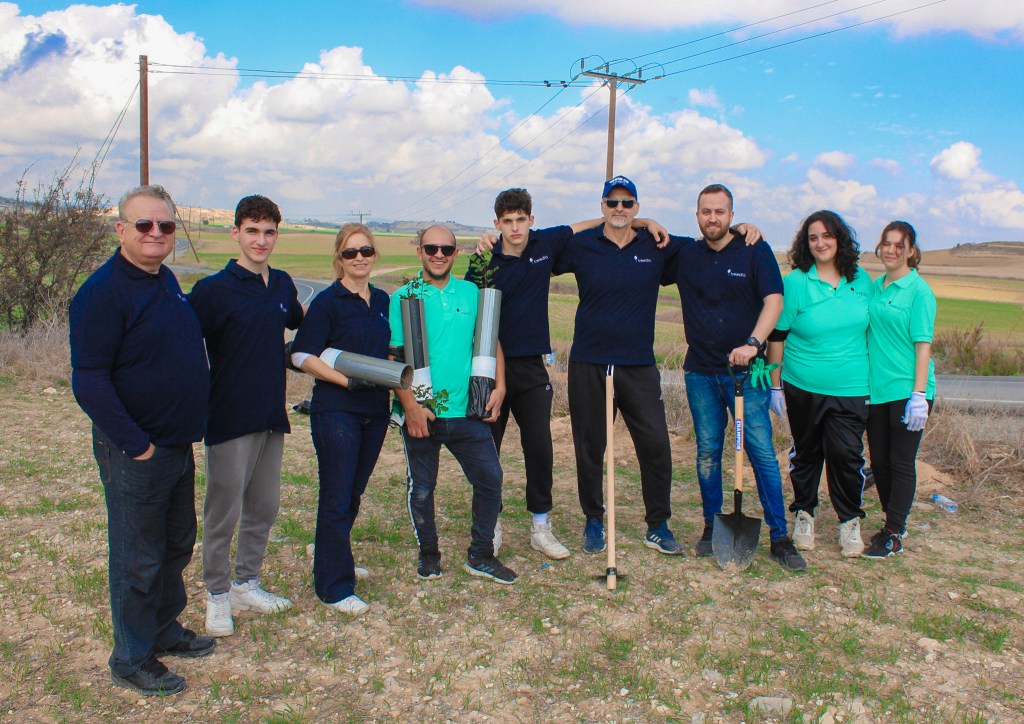
So far, many of the initiatives have been organized directly by our team. One recent project involved donating innovative underground irrigation systems, called “G.A.T.E – Trees in a Can” to the South-Nicosia Idalion Municipality. This patented system helps trees survive with less water while improving root-level irrigation and nutrient absorption. The plan is to publish soon a transparent structure where sponsors and partners can also
see the environmental impact generated through the platform.
I know that Treedia is not the only innovative solution in your group.
Yes. Our parent company is called Digital Innovation Group Ltd., and Treedia is one of the projects under that umbrella.
The philosophy behind the group is “technology for good.” or simply tech-for-good. Every project we develop combines innovation with positive social or environmental impact. Another project is our partnership with theBreath — an Italian technology that helps reduce air pollution through specialized filtration systems. We are integrating this technology directly into Treedia’s billboards so the structures themselves can contribute to cleaner urban air especially considering that our screens are located in heavily trafficked areas of the cities.
We also operate Wildberry Digital, a digital marketing and web design agency focused on ethical and sustainable brands. We work selectively with clients because we want the projects we support to align with our values.
Then there’s Aeforia Leadership, which originally started as a CSR and ESG-focused initiative. At the moment it’s inactive, but the long-term vision is to transform it into a green technology importing company that brings innovative sustainability solutions to Cyprus.
What are the biggest challenges when introducing innovative sustainability solutions in Cyprus?
One major challenge is bureaucracy, especially when working with public institutions or introducing something completely new to the market. Another challenge is education and market readiness. When you bring an innovative product to Cyprus, people often don’t immediately understand it, and that’s normal. That’s why I love the “ Law of Diffusion of Innovation” framework popularized by Everett Rogers, which explains that when introducing something innovative to the market, the first people you need to reach are fellow innovators, pioneers, individuals and organizations that naturally want to be first to try something new.
As entrepreneurs, we sometimes look at a new technology and think:
“This could change the world.” But when you actually bring it to the market, you face reality. You have to explain the value, educate clients, and slowly build trust around something unfamiliar. That process takes time.
Have there been moments when you wanted to give up?
There were moments when I thought everything would collapse. Times when I was sitting, holding my head and whispering to myself: “What have I done? Maybe this is going to fail completely.”
And often, those challenges were outside of my control. I’m not someone who always believes that everything will be fine or slogans like “never give up and the universe will reward you.” I’m a realistic person. During difficult periods, I was honestly thinking about how to reduce losses and survive. But somehow, we managed to continue moving forward. We managed to succeed.
What keeps you motivated during difficult times?
That’s a good question. I created Treedia because I wanted to build something meaningful, something that would give me a reason to wake up in the morning. Outdoor advertising alone does not excite me to be honest. Billboards themselves are not the dream. But outdoor advertising was my medium, my channel to achieve something meaningful through it. The real purpose is the impact behind them. We built a strong, highly competitive
advertising business in order to support something bigger. We built Cyprus’s most premium Digital Outdoor Media Network that ever existed, because
we knew that to plant real trees, we had to build a real, competitive business first.
At the same time, I’m still not completely sure what keeps me fighting every day. Maybe it’s purpose. Maybe it’s responsibility. Maybe it’s simply the desire to build something valuable. Maybe is the desire to leave something behind for next generations. But I do know that creating something with meaning matters deeply to me.
What are your future plans for Treedia?
The bigger the network grows, the bigger the environmental impact can become. We want to expand our billboard network, strengthen our sustainability initiatives, and build more structured partnerships with environmental experts and organizations.
The goal is to create a scalable business model where commercial success directly contributes to environmental action.
As a realistic person how do you feel about future of sustainability in Cyprus?
Cautiously optimistic. I don’t believe every company approaches sustainability authentically.In some cases, it’s just branding. But at the same time, there are organizations and people who genuinely care and are trying to make a difference.
Compared to 10 or 15 years ago, sustainability is now part of public conversation in Cyprus. People are discussing it, businesses are considering it, and awareness is growing. That alone is progress.
Finally, my last question I ask everyone in my interviews: what’s one small act of sustainability you believe everyone can embrace?
A small act of sustainability is to support local businesses and local producers whenever possible. Small everyday choices, like buying local products or supporting local fishermen and farmers, reduce environmental footprint while strengthening local communities and economies.
I also believe that every buying decision either small or big, is a vote for the kind of world we want to live in. From the coffee we drink and the beer we consume to the car we drive….to the outdoor media advertising provider we choose (laughing!)…We should try to reward businesses that are genuinely making an effort to bring more sustainable solutions to the market.
Interviewed by Lusine Mirzoyan
Photos are provided by Treedia

 www.natureallydone.com
Leave a comment