
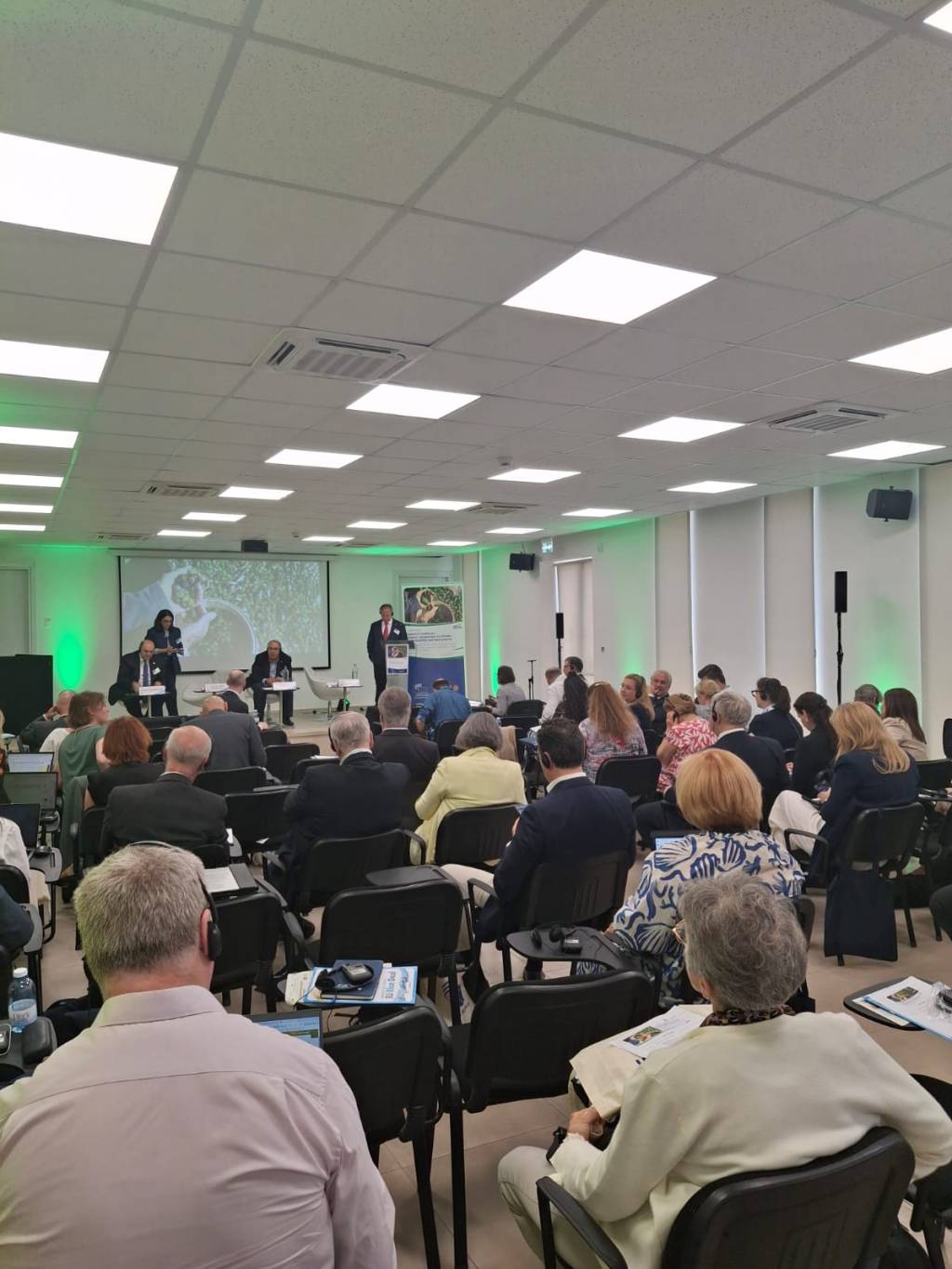
Yesterday’s event in Larnaca, “Island of Resilience – Cyprus’s Perspective on Climate, Sustainability and Food Security,” brought together experts and policymakers to explore how Cyprus can adapt to a changing climate placing water, sustainability, and food security at the centre of its future. The Conference was organized by the Civil Society Organisations’ Group of the European Economic and Social Committee (EESC) under the patronage of the Cyprus Presidency of the Council of the EU.
The Conference started with the inaugural session with the participation of:
- Cillian Lohan, President of the Civil Society Organisations’ Group of the European Economic and Social Committee (EESC)
- Andreas Vyras, Mayor of Larnaca
- Annita Demetriou, President of the House of Representatives, Cyprus
- Andreas Gregoriou, Permanent Secretary of the Ministry of Agriculture, Rural Development and Environment, Cyprus
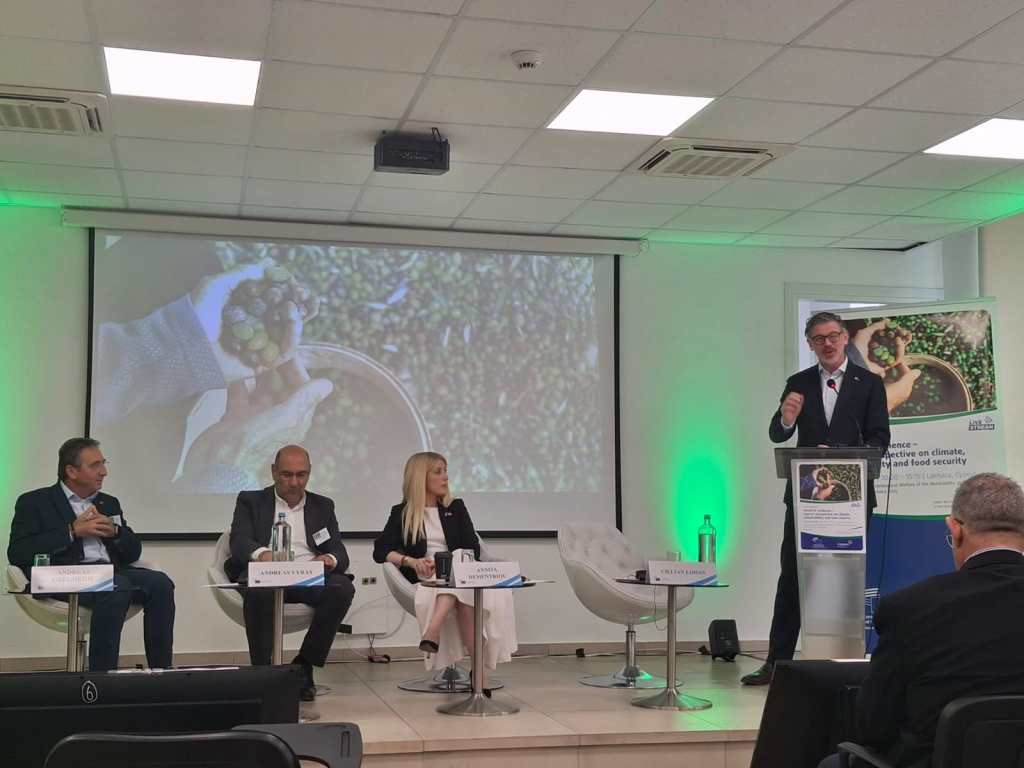
The opening panel set the tone by emphasizing that resilience is not just about policies on paper, but about real collaboration. Speakers stressed that meaningful change requires connecting governments, civil society, businesses, and citizens. There was a sense of urgency throughout the session, with Annita Demetriou noting that time is not in our favor and that Europe and Cyprus in particular must act decisively and lead by example.
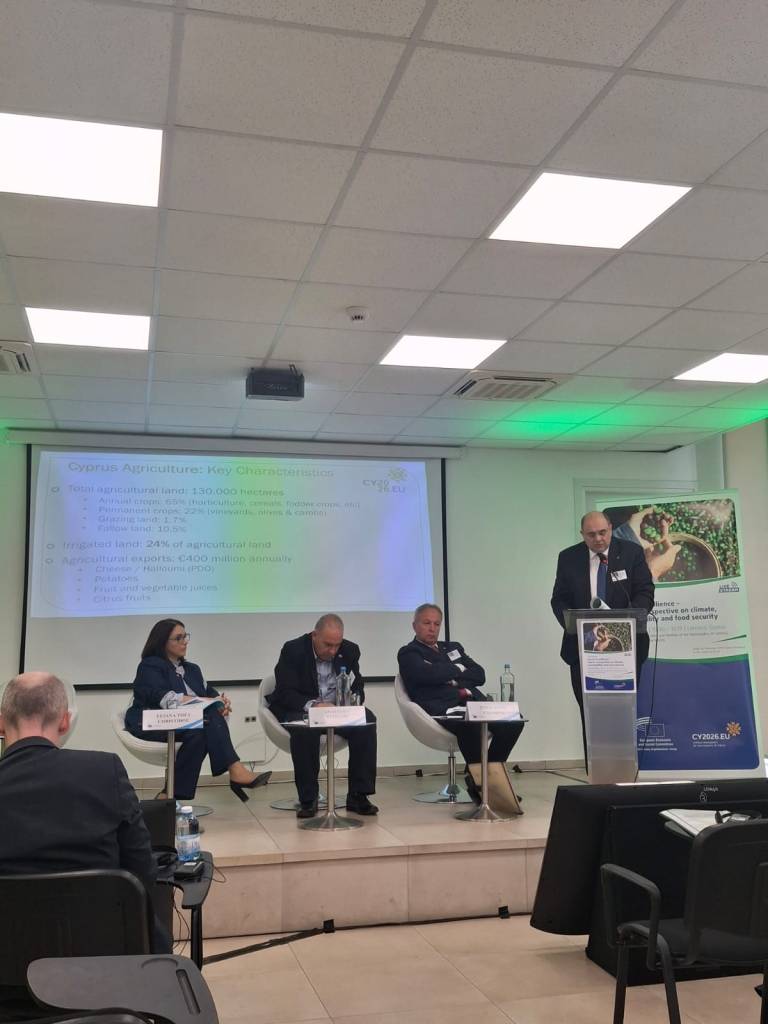
A major focus of the event was water resilience, which is one of Cyprus’s most critical challenges. This was a topic of the next panel discussion moderated by Panagiotis Champas, EESC Member with the participation of:
- Makis Antoniadis, Director of Cyprus’ Agriculture Department
- Anastasis Yiapanis, EESC Member, Rapporteur of opinion NAT/973 Water Resilience Strategy and European Climate Adaptation Plan
- Eliana Tofa Christidou, Director of Cyprus’ Water Development Department.
Rainfall on the island has dropped by approximately 15% since the 1970s, while inflows to dams have decreased by as much as 40%. At the same time, demand continues to rise due to population growth, tourism, and inefficiencies in ageing infrastructure.
Cyprus now has around 110 dams and reservoirs, ranking among the highest in Europe in terms of dam density. In addition, five desalination plants currently produce up to 235,000 cubic metres of water per day, with three mobile units adding another 37,000 cubic metres daily. These systems have become essential in ensuring a stable water supply and reducing reliance on unpredictable rainfall. However, it was also noted that the energy costs used at desalination plants are really high.
Despite this infrastructure, total water demand still exceeds availability, and irrigation needs are often not fully met. Desalination, while effective, comes at a high cost, both financially and environmentally, due to its heavy energy use and dependence on fossil fuels. Plans to expand desalination capacity and integrate renewable energy sources, such as solar power, are being taken into consideration.
Speakers emphasized that water resilience must be part of a broader, integrated strategy. Fragmented approaches where water, agriculture, energy, and climate policies operate separately are no longer effective. Instead, there is a need for coordinated planning, better data systems, and stronger cooperation across sectors. Nature-based solutions, such as improving soil absorption and designing “sponge cities,” were highlighted as practical ways to manage water more sustainably.
Agriculture, closely linked to water availability, is also under pressure. The sector covers around 130,000 hectares of land, with only 24% being irrigated. While agriculture contributes about 1.8% to Cyprus’s GDP, this rises to 7.8% when processed agricultural products are included, highlighting its broader economic importance. Annual exports, including products like cheese, potatoes, and citrus fruits, reach approximately €400 million.
However, the sector faces structural and environmental challenges. Farms are often small and fragmented, the farming population is ageing, and competition from international markets is strong. Climate change adds another layer of difficulty. More frequent and severe droughts are no longer exceptions—they are becoming the norm, directly affecting crop yields and rural livelihoods.
To address these pressures, Cyprus is focusing on a combination of immediate support and long-term planning. Financial aid schemes have already been introduced, including €23 million in emergency funding for farmers, €10.2 million for natural disaster support, and targeted assistance for sectors affected by extreme weather. At the same time, there is a growing emphasis on adaptation, innovation, and the development of a long-term national food security strategy.
The last panel before the break was on the island dimension in EU policies. It was moderated by Elena Calistru, President of the EESC’s Economic and Monetary Union and Economic and Social Cohesion (ECO) Section with the participation of:
- Penelope Papavassiliou, Permanent Secretary at the Directorate General for Growth, Cyprus’ Ministry of Finance
- Ioannis Vardakastanis, EESC Member, Rapporteur of opinion ECO/689 The Island Dimension in European Cohesion, Competitiveness and Sustainable Development Policies.
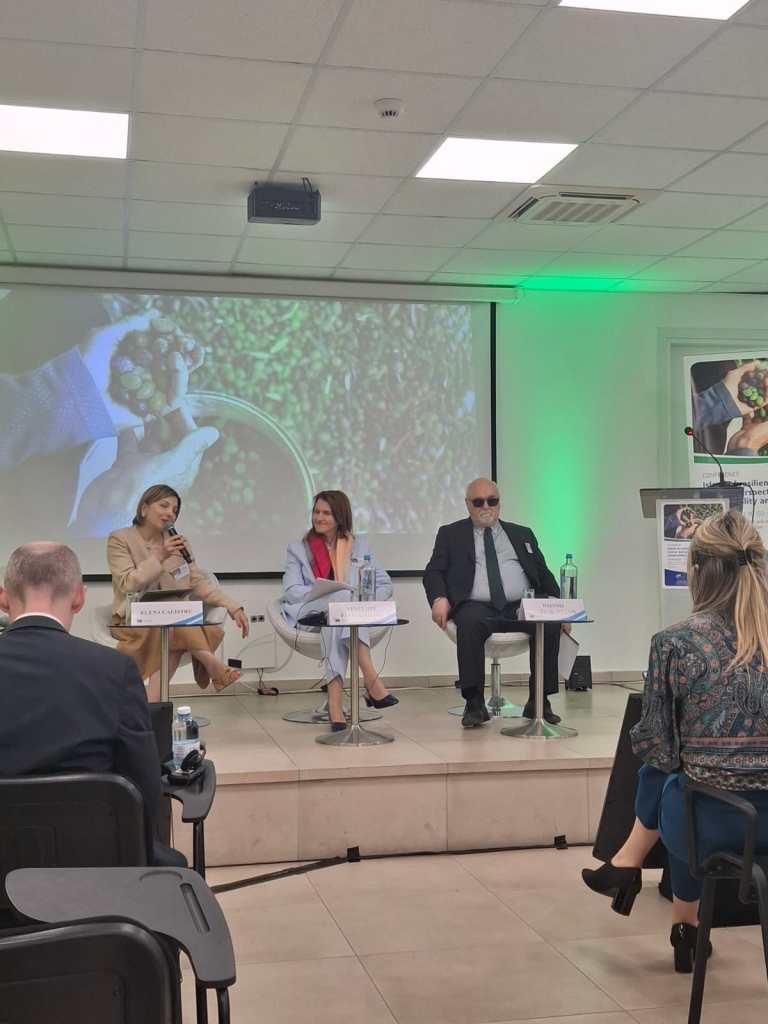
A key message from Ioannis Vardakastanis was that islands are on the front line of climate change. Due to their geography, they experience environmental impacts earlier and often more intensely than mainland regions. However, he also framed islands as potential “living laboratories” for sustainability. With access to natural resources such as sun, wind, and sea, islands are well-positioned to lead the transition away from fossil fuels. At the same time, their ecosystems are fragile and unique, requiring protection—not as static “museum pieces,” but as dynamic, living environments that support both nature and local communities. He stressed that the European Economic and Social Committee recognizes the need for a more systemic and tailored EU strategy for islands.
Penelope Papavassiliou expanded on this by emphasizing that islands are not simply smaller versions of mainland regions they operate under distinct structural constraints. Limited connectivity, higher costs, and restricted access to markets make it harder for them to fully benefit from EU economic opportunities. She highlighted that food security cannot be viewed in isolation, as it is closely linked to transport, energy, and water resilience. This makes integrated policymaking essential, combining sectors that are often treated separately.
At the same time, she acknowledged that turning policy into practice remains a challenge. While EU frameworks exist, they are not always effectively adapted to island realities. There is a clear need to ensure that European policies are designed to work equally well for islands, not just mainland regions.
Looking ahead, upcoming discussions at EU level including a policy coherence meeting in June and a high-level event in Paphos are expected to further address these gaps, with input from the EESC helping to shape more inclusive and effective strategies.
The last panel discussion of the event was around Food security and the role of biodiversity in Cyprus and the EU. It was moderated by Anastasis Yiapanis, EESC Member with the participation of:
- Konstadinos Mattas, Professor at the Aristotle University of Thessaloniki and Coordinator of BioValue (Horizon 2020 project)
- Elena Stylianopoulou, Deputy Director of Cyprus’ Environment Department
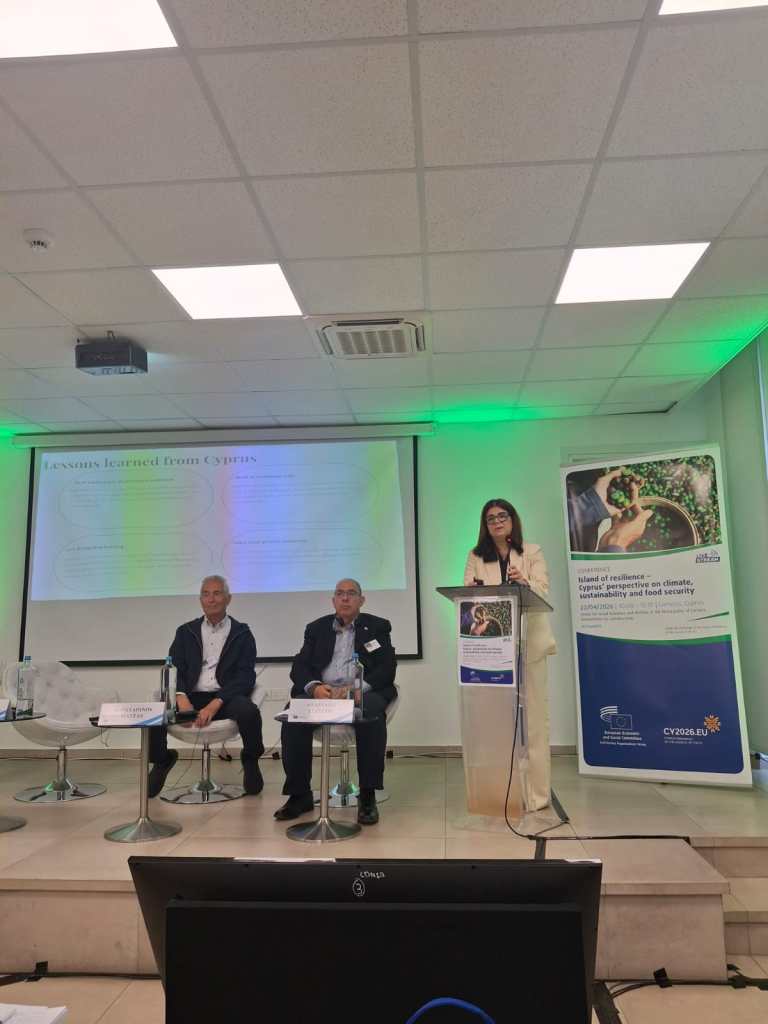
Konstandinos Mattas highlighted that the world is facing both a climate and biodiversity crisis and they are essentially two sides of the same coin. One of the main drivers of biodiversity loss is land-use change, and without protecting biodiversity, water systems cannot be sustained. He warned that unless global warming is limited to 1.5°C, climate change will become the dominant and irreversible threat.
A striking example of biodiversity loss is the dramatic reduction in agricultural diversity: from thousands of plant species to just a few dominant ones, from hundreds of vegetable varieties to a fraction of that today. This loss of agrobiodiversity has serious consequences for food security and ecosystem resilience. Importantly, islands like Cyprus still preserve unique crop varieties that no longer exist elsewhere, making them especially valuable.
He also emphasized the need to rethink how we view food systems. Instead of separating agriculture, environment, and consumption, a holistic “agro-food system” approach is needed. Individual choices matter too: what people consume (“from fork to farm”) can influence production and policy. The Mediterranean diet, for example, supports a wider variety of crops and promotes biodiversity. However, with the number of farmers declining globally, their role becomes even more critical. They are at the center of any sustainable transition.
Elena Stylianopoulou reinforced that food security depends on healthy ecosystems, including pollination, fertile soils, water availability, and genetic diversity. She outlined the EU’s Biodiversity Strategy for 2030, which aims to tackle key drivers of biodiversity loss, promote pollinators, and support organic and ecosystem-friendly farming.
In Cyprus, about 30% of land is protected under the Natura 2000 network, and the island hosts an impressive diversity of around 1,700 crop species. Key lessons from Cyprus include treating biodiversity as a form of economic resilience, working at a landscape level, investing through integrated funding, and valuing local genetic resources.
While the discussions were insightful and presented a lot of interesting and important data, I couldn’t help but wish for more emphasis on practical, immediately applicable solutions—clear examples of what can be implemented on the ground today. Similarly, at an event centred on sustainability, it would have been encouraging to see a more conscious effort to reduce single-use plastics, aligning the event’s practices more closely with its message.
Written by: Lusine Mirzoyan

 www.natureallydone.com
Leave a comment