
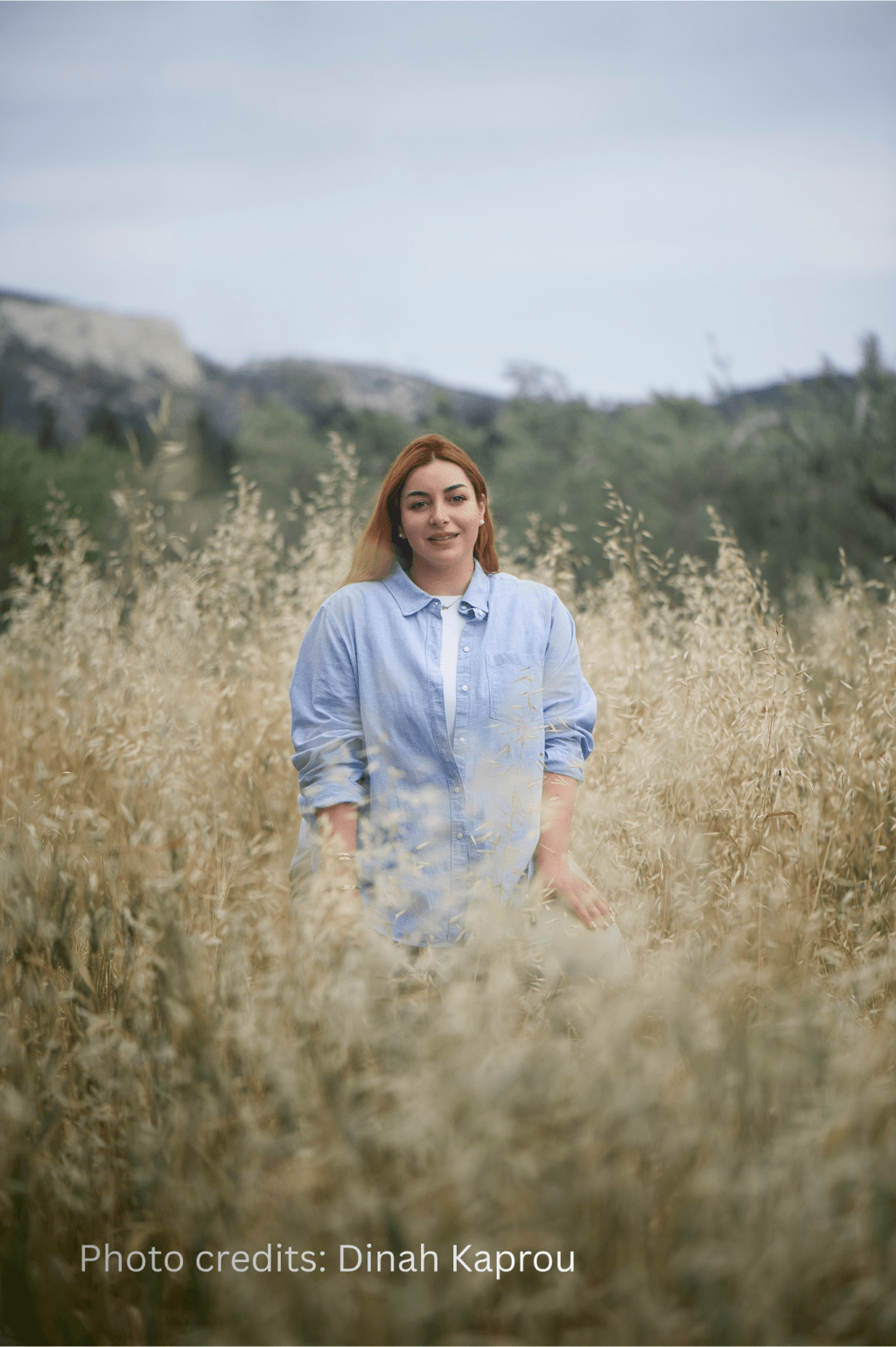
In this interview with Sara Mariza Vryonidi, project manager at Friends of the Earth Cyprus coordinating the Food Connect project we talked about the Food Connect project, the realities of food waste in Cyprus, and why real sustainability requires systemic change, not just individual effort.
Mariza, was sustainability always your professional focus, or did you gradually move into this field?
Sustainability has been part of my thinking since my first degree in physics.I wanted to pursue work that would have a real impact, and that led me toward energy and sustainable development. At that time, sustainability was not a widely used term in my circles, but the idea of working on issues that affect society and the environment was always important to me.
When I moved back to Cyprus, I became involved with the organisation Friends of the Earth as a volunteer and later started working there as an intern. Interestingly, when I first saw the job advertisement, I thought they were looking for an event manager. I applied, thinking it would be temporary, but it turned out to be something much more meaningful.
At the same time, I began working at the Energy Lab of the Cyprus University of Technology as a research assistant. The lab works across several sustainability sectors, including energy, construction, maritime, and education. Over the five years I work there, I have been part of different european projects under the broader umbrella of sustainability, each offering a different perspective.
Can you mention some of the projects?
One of the projects (CABE project) focuses on construction and demolition waste and on how to make the sector more circular by transforming it into valuable resources within a sustainable circular economy. The goal is to rethink what happens to materials after a building is demolished and bridge innovation, sustainability, and digital transformation in the built environment.
Another project (Buildskills Academy project) focuses on education and training for professionals in the construction sector—designers, architects, engineers, and others. The University, as part of its Lifelong Learning Centre, provide certified vocational training programs on green and digital skills. One example is training on biomimicry: learning from how nature builds and adapts, and applying those principles to construction and design.
Working across different sustainability sectors must give you a unique perspective. Has it changed how you think about your everyday choices?
To some extent, yes, although I was already raised to be mindful of consumption. The environment in which someone grows up plays a big role in shaping these habits.
I had the privilege to study abroad, which influenced many of my personal habits. For example, while living in Leicester in the UK, I regularly shopped at a zero-waste store. It was accessible, affordable, and widely used by the community.
When I returned to Cyprus, I realised that some of these systems simply do not exist here yet, or are not widely accessible. Sometimes you have to compromise because the infrastructure and social norms are different.
Working in sustainability constantly exposes you to new knowledge and perspectives. Even if certain sectors, like construction, do not directly affect my everyday life, learning about them helps me understand the bigger picture and share that knowledge with others.
Let’s talk about the Food Connect project. I have attended the first launch you organized but for those who are reading this interview, can you briefly explain what is the project about?
Food Connect is a European LIFE co-funded project that builds on a previous initiative called FoodPrint, which started in 2021. The original big goal was to create a network of people and organizations interested in reducing food waste and supporting food donation.
Food Connect expands this effort. Its main objective is to develop a digital platform and mobile application that makes food donation easier and more organised. Through the platform, businesses in the HoReCa sector, including hotels, restaurants and catering services, can donate surplus food, while recipient organisations and individuals can identify available food and collect it. The project operates in Cyprus and is also being expanded to Malta and Portugal.
Beyond the platform itself, the project has two additional goals:
- Strengthening the network of stakeholders who care about food donation and food waste reduction.
- Raising awareness about the importance of food donation as a strategy to reduce food waste.
Another important outcome of the project is the development of a business model that will make the platform replicable. This means that other countries or organisations will be able to adopt and implement similar systems in the future.
During the project launch, it was mentioned that Cyprus has one of the highest levels of food waste per capita in Europe (294 kg yearly per person). Why do you think that is?
I think it comes down to three things: lack of infrastructure, weak redistribution systems, and limited political will to treat food waste as a serious structural issue. And this is not just about individual behaviour. In other sectors too, we see that change happens when there is political choice behind it. In Germany, for example, cities invested in separate collection, reuse and circular systems, 50 years ago, making better practices easier and more normal. The same applies to food waste: if the right systems are not in place, waste remains the default.
So for me, we can’t continue blaming the “culture” alone. An equally important part of the problem is the absence of systems, infrastructure and clear support for prevention and redistribution.
Beyond food waste, why do you think Cyprus struggles with waste management compared to some other European countries?
One of the main reasons is the lack of infrastructure and systemic support.
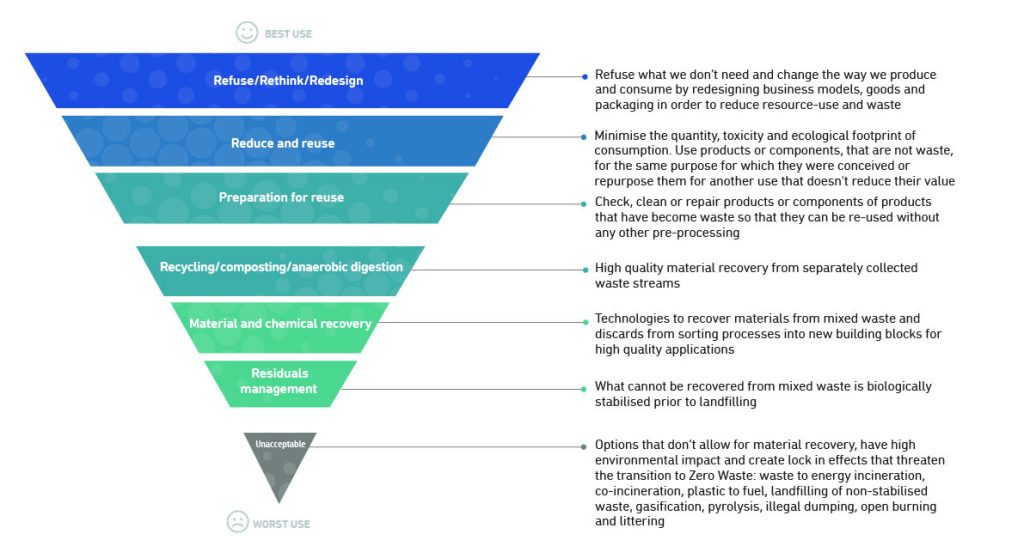
If we look at the waste hierarchy, the first priority is source prevention, along with redesigning systems. Then comes reducing, reusing, repairing. Unfortunately, many of these practices are not well developed in Cyprus.
For example, in Finland, there are community repair spaces where people can fix items instead of throwing them away. If the battery cover of a remote control breaks, you can go to a workshop and 3D-print a replacement part rather than buying a new device.
This type of system extends the life cycle of products and reduces waste. Another example involves green points, recycling centers. In some countries, these centers also include repair workshops where people can fix items before discarding them, or where workers repair items and sell them at low cost. These initiatives reduce landfill waste and provide employment opportunities for vulnerable groups.
In Cyprus, most waste still ends up in landfills, such as the site in Pentakomo (OEDA facility) and public awareness about existing alternatives remains limited.
Where does most food waste actually occur: households, restaurants, or retailers?
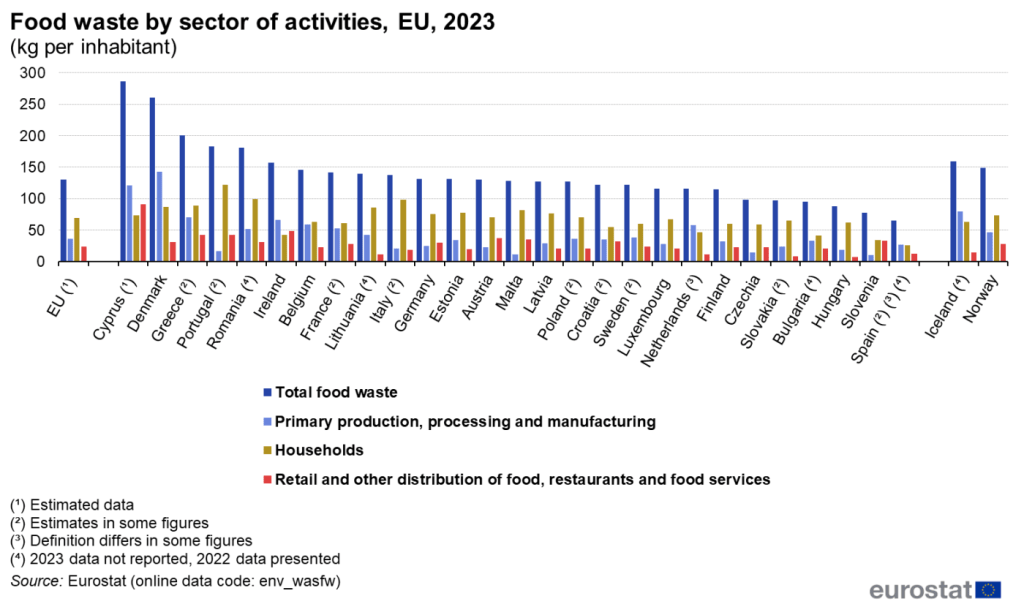
According to Eurostat data, households actually account for the smallest share of food waste in Cyprus. The larger share comes from primary production, processing and manufacturing and the rest from retail, catering services, and restaurants etc. In reality, I personally believe the situation is probably worse than the numbers suggest.
What kind of response have you seen from businesses regarding Food Connect? What are the biggest challenges in encouraging companies to participate?
Overall, businesses are open to the idea of donating surplus food, especially when they understand the social impact. However, two main concerns come up
The first is related to the health and safety regulations. Businesses worry about liability and whether donating food might create legal risks. Fortunately, in 2025 the EU and the Republic of Cyprus published official guidelines on food donation. These guidelines clarify the rules and provide businesses with reassurance.
The second concern is resources. Businesses worry that managing food donations will require additional staff time: someone to record the items, prepare them, and coordinate the donation process.
To address this, we are designing the platform to be as simple and user-friendly as possible, so that the additional workload is kept to a minimum.
In the long term, there are clear benefits for businesses. Reducing food waste reduces costs, and participating in donation initiatives can also strengthen corporate social responsibility and public image.
Sustainability challenges can sometimes feel overwhelming. What keeps you motivated?
Being part of a community that cares makes a huge difference. If someone tries to tackle these challenges alone, it can feel discouraging. Working with organisations, researchers, activists, and professionals who share the same vision creates a sense of collective purpose. It reminds you that change is possible.
I also believe that the media does not always show the full picture. Many positive initiatives exist, but you often have to actively look for them. Another motivation for me was choosing to return to Cyprus after studying abroad. The country has enormous potential. Because it is small, there is flexibility for changes, and Cyprus could become a model in areas such as sustainable cities, mobility, tourism, and technology. But for that to happen, people who care need to stay and contribute.
Finally, a question I ask everyone in my interviews: if you could choose one thing everyone could do on a personal or business level to contribute to sustainability, what would that be?
I actually don’t believe the responsibility lies primarily with individuals. Small personal actions like switching to reusable straws are positive, but they do not solve the systemic problem. What really matters is collective action.
My advice would be to become part of communities and organisations that care about these issues, be curious, ask when you have questions and open conversations that will help you grow. When people work together through community initiatives, policymaking, or professional networks, they can push for systemic change.
Individual choices alone are not enough. But when communities organise and act together, they can reshape the system.
The interview is taken by Lusine Mirzoyan
 www.natureallydone.com
Leave a comment