
Articles · Interviews
The Art of Preserving Nature: Meet the Founder of YES OF MOSS
Nature has a way of changing how we feel in a space. A touch of green can soften an interior, create a sense of calm and bring the outdoors a little closer to everyday life. But what happens when natural plants are difficult to maintain, particularly in a sunny climate where many residents spend part of the year abroad?
For Anna, founder of YES OF MOSS, the answer lies in preserved moss, flowers and other botanical materials, transformed into decorative pieces that combine nature, craftsmanship and contemporary design. Working from a production studio in Paphos, her team creates bespoke artworks, botanical installations, corporate logos and decorative objects for both residential and commercial interiors.
I spoke with Anna about the inspiration behind the business, their upcoming exhibition in Limassol, the art of working with preserved plants, and how botanical design can become part of a more sustainable lifestyle.
Anna, what inspired you to start working with preserved moss and botanical art?
The idea first came to me when we were living in St Petersburg. We returned from Singapore feeling inspired by how lush and green everything was there. Plants were everywhere, including inside buildings, where green walls brought nature into the interiors.
I wanted to introduce the same feeling into my own life. St Petersburg has a very different climate, with frequent overcast weather and limited sunlight, so keeping plants healthy indoors can be difficult without artificial lighting.
When we built our house, we wanted to fill it with greenery, but we did not live there permanently. It was important to find a solution that would not require regular care. That was how I discovered preserved moss and began using it to decorate our home.
When we moved to Cyprus, we recognised a similar need. Many people here divide their time between countries, which makes caring for living plants challenging. Asking someone to come in and water them creates extra work and inconvenience.
We decided to bring the same solution to Cyprus, first for ourselves and then for other people who might appreciate it.
What makes preserved plants different from ordinary houseplants?
Living plants require watering, fertilising and occasional repotting. Their leaves also collect dust over time and need to be cleaned.
Preserved plants are different. Their natural biological processes have been stopped through a preservation process, so they no longer need watering or the usual plant care. The preservation solution we use has antistatic properties, which helps prevent dust from accumulating on the leaves.
For people who travel frequently or want greenery in a space without the ongoing maintenance, this can be a practical alternative.
Are there other misconceptions about preserved moss?
The idea that moss is a dust collector is one of the most common misconceptions. In fact, preserved moss has antistatic properties that help prevent dust from building up.
It is important to understand, however, that preserved moss does not purify the air in the way living vegetation does. Its biological processes have been stopped, so it does not function like a plant growing in a forest.
One of its less obvious qualities is its ability to absorb sound. Larger moss installations can help reduce noise, making them useful in certain interiors.
For example, we have installed moss panels in former doorways and niches in offices where thin partitions allowed sound to travel between rooms. The panels helped absorb some of that noise.
But for me, the most important benefit is aesthetic. These are not simply decorative plants; they are art objects. You can look at them, notice the details and take a moment away from work or your everyday thoughts.
Even though I make these pieces myself and have seen them countless times, I still find myself stopping to admire them. Looking at or touching the moss gives me a sense of calm. Of course, everyone responds differently, but I find that greenery can change the atmosphere of a room and help me feel more peaceful.
How are the moss and plants sourced, and where do the colours come from?
There are many different varieties of moss, and our workshop has several dozen types, as well as more than a hundred varieties of plants.
Take reindeer lichen, for example. In nature, it has a rather grey, understated appearance and grows in ecologically clean northern forests. We purchase it already prepared for use, and during the preservation process it can be coloured in different shades.
We have 12 shades of green alone, ranging from natural tones to much brighter colours. These allow us to create colourful compositions and incorporate moss into logos and other customised designs.
We recently completed two interesting projects for Pavel Muntyan, using moss to bring elements of his animated films to life.
What are the plants preserved with, and are the materials safe?
This is a question people understandably ask. The preservation process we use is based on glycerin, and the colours are made with food-grade dyes.
Glycerin is widely used in moisturising products, and these are the materials we work with to preserve the plants and achieve their colours.
We explain the materials and preservation process to our customers so they understand what goes into each piece.
How does the creative process work, from the first idea to the finished piece?
Everything begins with visualisation. Before we start making anything, we need to see what the finished piece will look like and help the customer imagine it in their own space, whether that is a living room, an office or a commercial interior.
We develop a design proposal and agree on it with the client before moving into production.
A great deal of the work takes place in our own workshop in Paphos. We make frames and logos ourselves, and we have laser equipment that allows us to work with materials such as acrylic and wood and create different engravings.
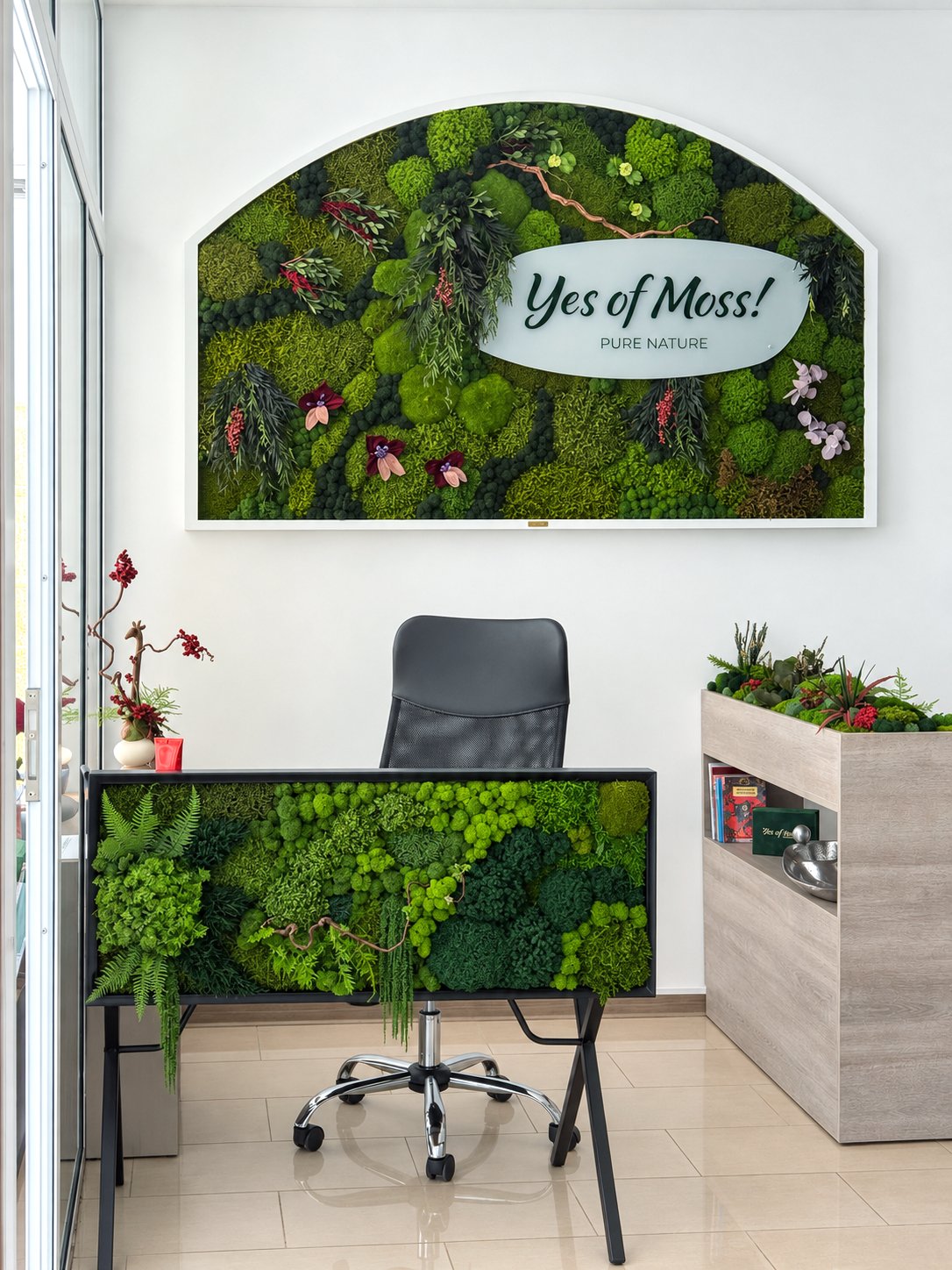
Our capabilities extend beyond wall art. For example, we have produced furniture and a room-dividing structure for an office, all made in-house at our production facility in Paphos.
Having this equipment and production capacity gives us considerable flexibility. We can take on a wide variety of ideas, including large-scale projects and highly individual designs.
Who are your clients? Is your work mainly intended for private homes or commercial spaces?
Our work can be incorporated into almost any type of interior. We work with businesses, offices, restaurants and hotels, as well as private villas and apartments.
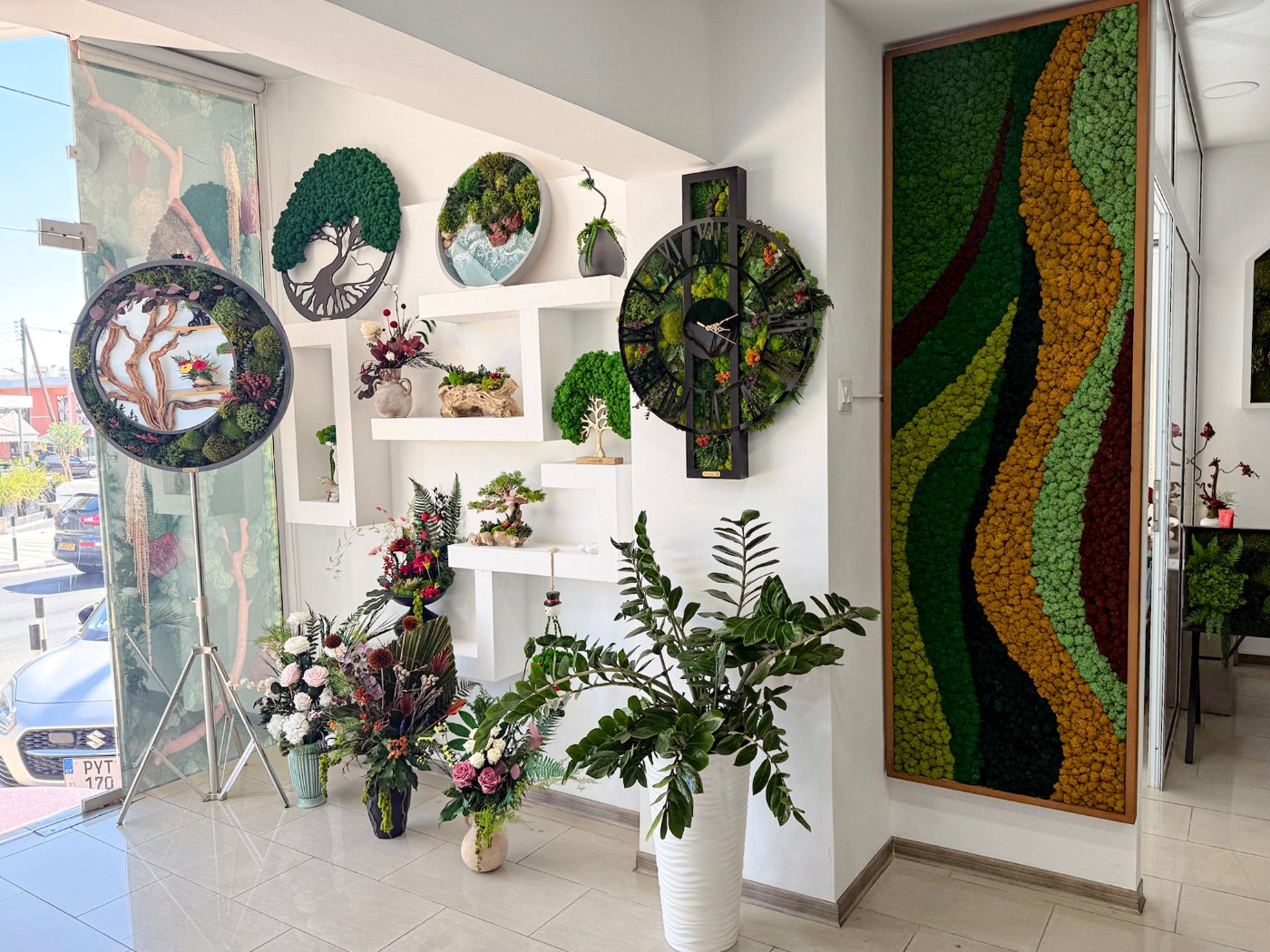
The range of products is equally varied. Alongside wall compositions, we create clocks, decorative objects and botanical arrangements for different spaces.
Our pieces are also popular as gifts. Most people have someone in their lives who is difficult to surprise because they seem to have everything already. A personalised botanical artwork can be a thoughtful alternative.
We can create something specifically for the recipient, taking their personality and interests into account. Alternatively, customers can choose from our existing collections.
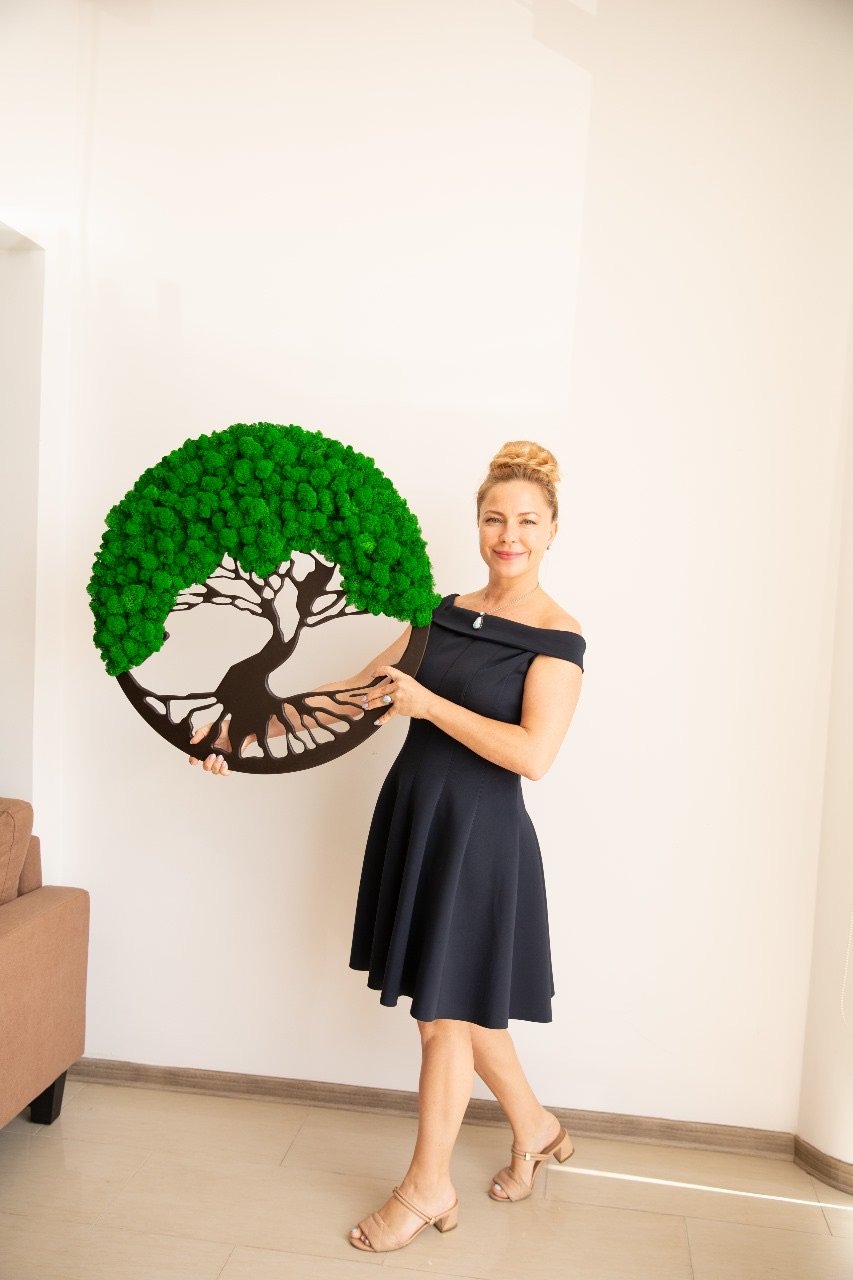
One example is our Tree of Life design. It is a meaningful symbol associated with growth, prosperity and family, making it suitable for many occasions, from birthdays and weddings to a simple gesture of gratitude.
Absolutely. Handmade work has its own individuality, particularly when we use natural materials.
Some of our pieces incorporate epoxy resin, for example, and it is impossible to pour two identical pictures. The plants and their arrangements also vary, so even when we repeat a design, the final result is never exactly the same.
Every piece has its own character. That is part of what makes botanical art special.
Is there a particularly unusual client request that has stayed with you?
We receive unusual ideas all the time. One that immediately comes to mind was a woman who wanted a tree to appear to grow out of the headboard of her bed.
At first, we were a little taken aback. We had to stop and think about how we could make the idea work in practice.
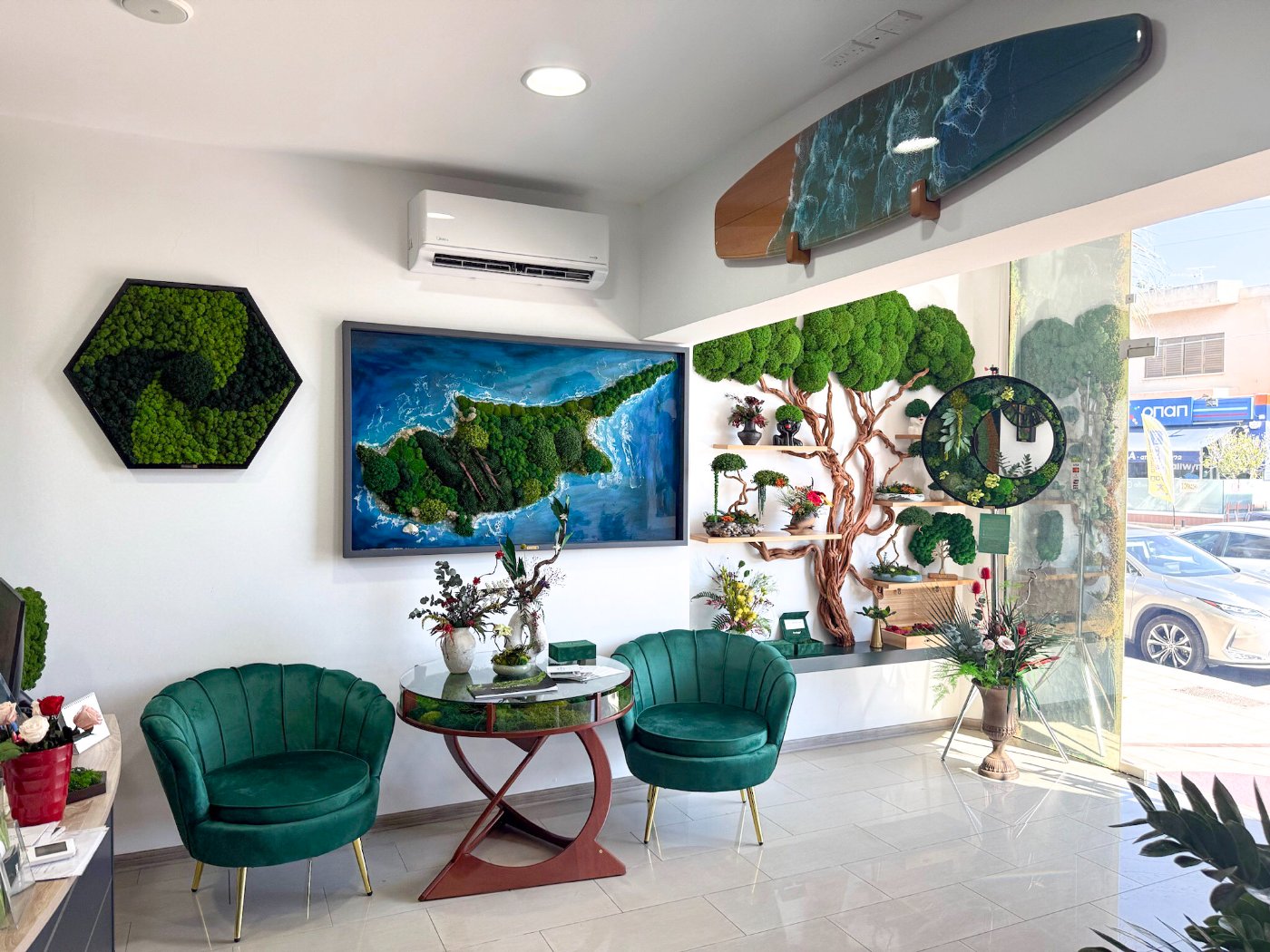
Eventually, we found a way to realise it. The idea later inspired the tree installation that now stands at the entrance to our showroom.
Sometimes, a client's imagination pushes us in a new direction and gives us an idea we would not otherwise have considered.
You are preparing an exhibition in Limassol. What can visitors expect?
The exhibition will take place from 2 to 8 November at the Aphrodite Amathusia Cultural Center in Limassol. We look forward to meeting visitors in person, introducing them to our work and explaining how our pieces are made.
People will be able to explore the collections, see the materials up close and place orders for customised designs. All pieces presented at the exhibition will be available to purchase, with delivery or collection arranged afterwards.
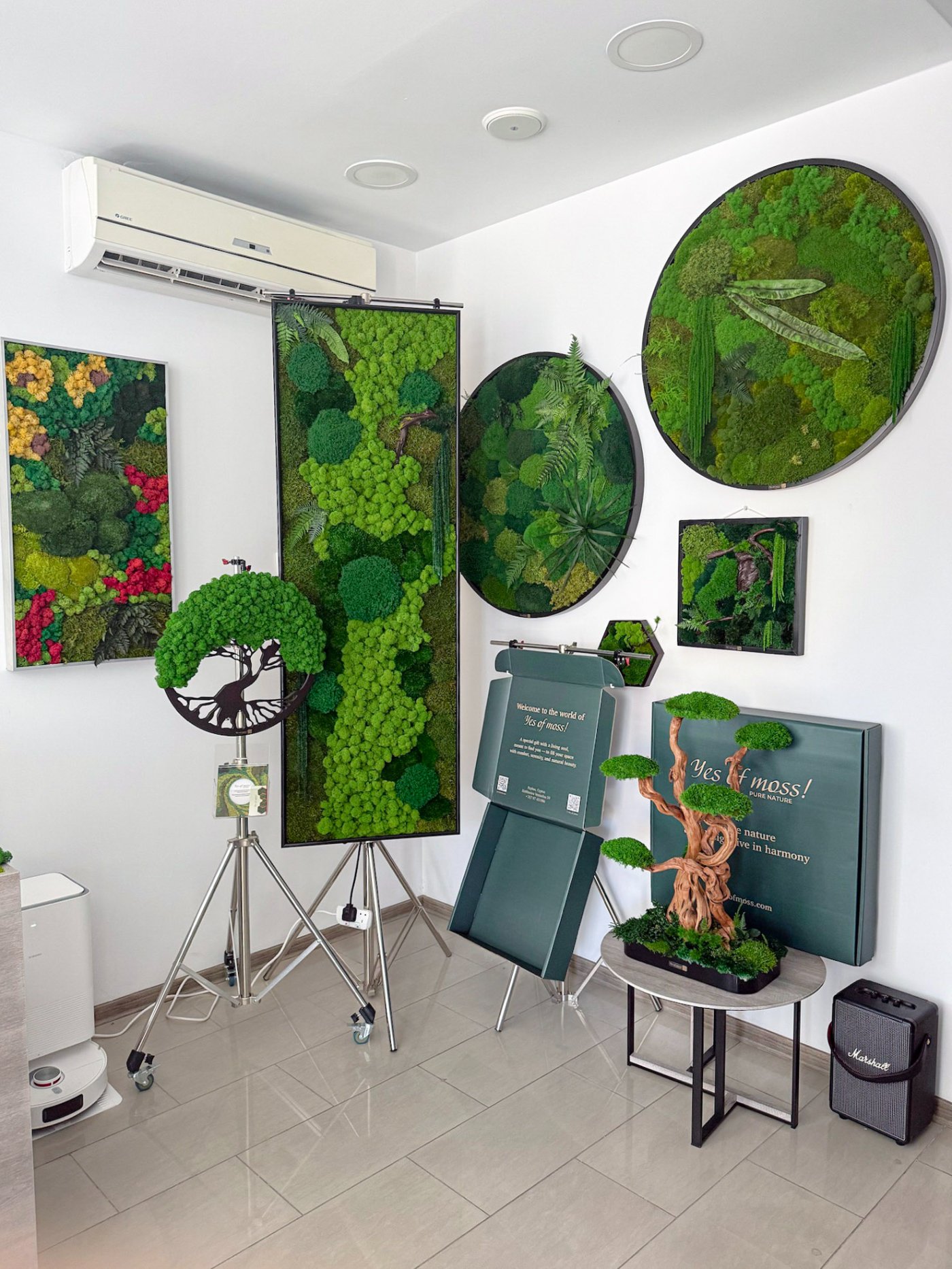
Alongside our wall compositions, we will present our Fairy Trees collection. These sculptures are made using natural azalea wood, which has wonderfully unusual, twisted shapes.
We use the distinctive forms of the wood to create arrangements in different sizes, from small tabletop pieces to larger wall compositions.
Seeing these works in person is important. Photographs can show their appearance, but they cannot fully convey the texture, the details and the character of the natural materials.
My last question, which I ask everyone I interview: what is one change you would encourage people to make towards a more sustainable way of living?
For me, sustainability begins with caring for ourselves and caring for nature. It is about making more conscious choices, from the food we eat to the things we buy and the materials we bring into our homes.
One change I would encourage is reducing plastic use and thinking more carefully about consumption.
Consider flowers, for example. Many of us receive a beautiful bouquet, enjoy it for a few days and then throw it away when it wilts. We buy another, and the cycle continues. For businesses with reception areas, where flowers are often used to decorate the space, replacing arrangements can become a regular expense.
Our preserved flowers offer another option. The roses you see here are natural flowers that have been preserved, and they are already around three years old. They still look beautiful.
Using preserved flowers and plants in a reception area means a business can maintain a botanical display without continually replacing fresh arrangements. This can help reduce ongoing spending and the resources associated with repeated purchases.
Our aim is to offer natural materials and designs that last, while helping people and businesses make more considered choices about how they decorate their spaces.
For me, that is an important part of conscious consumption: choosing things that bring lasting value rather than automatically replacing them again and again.
Interviewed by Lusine Mirzoyan
Photos are provided by YES OF MOSS