Articles · Interviews
Closer to Nature: Georgia Shoshilou on Bees, Biodiversity and Sustainability
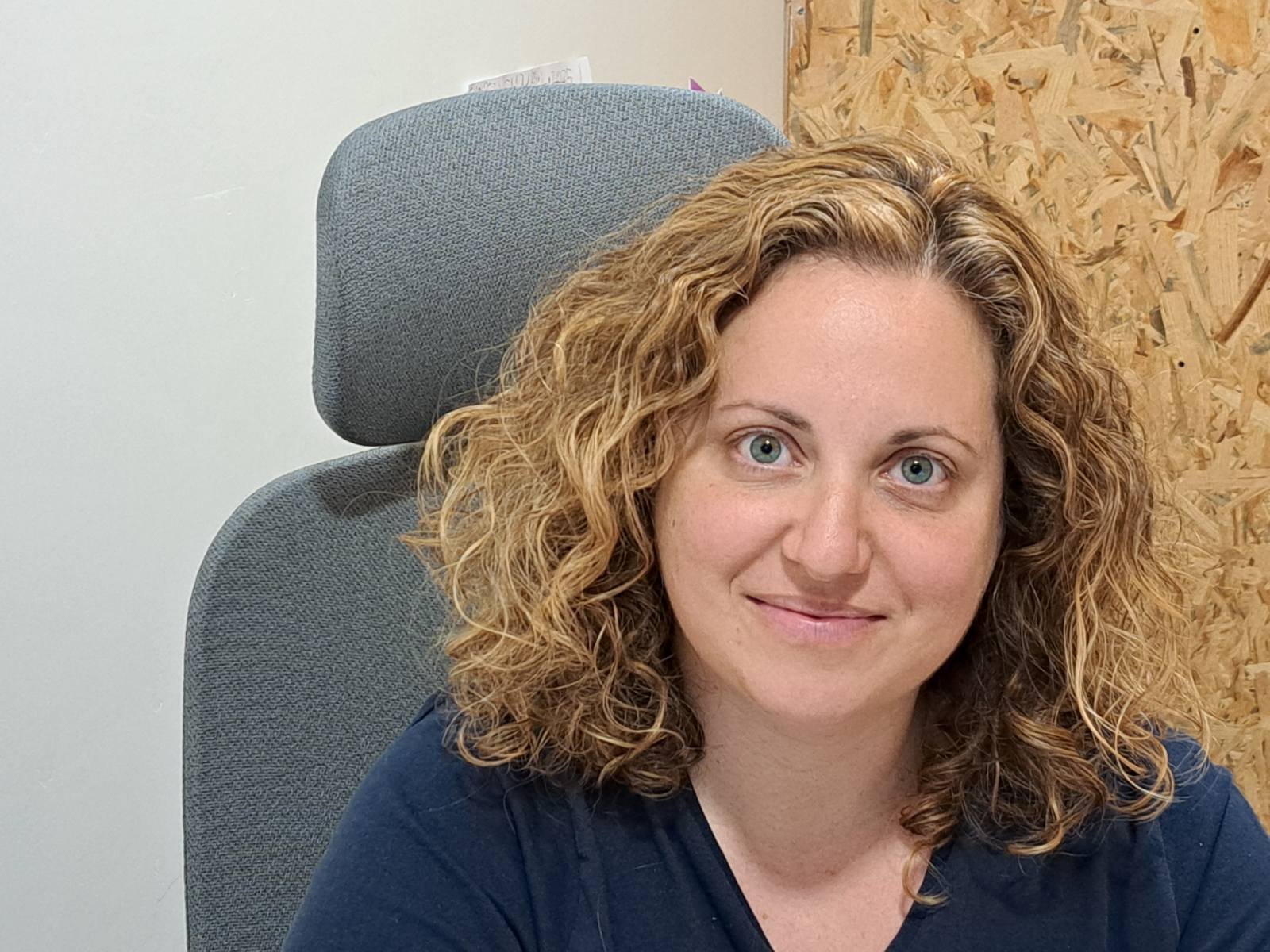
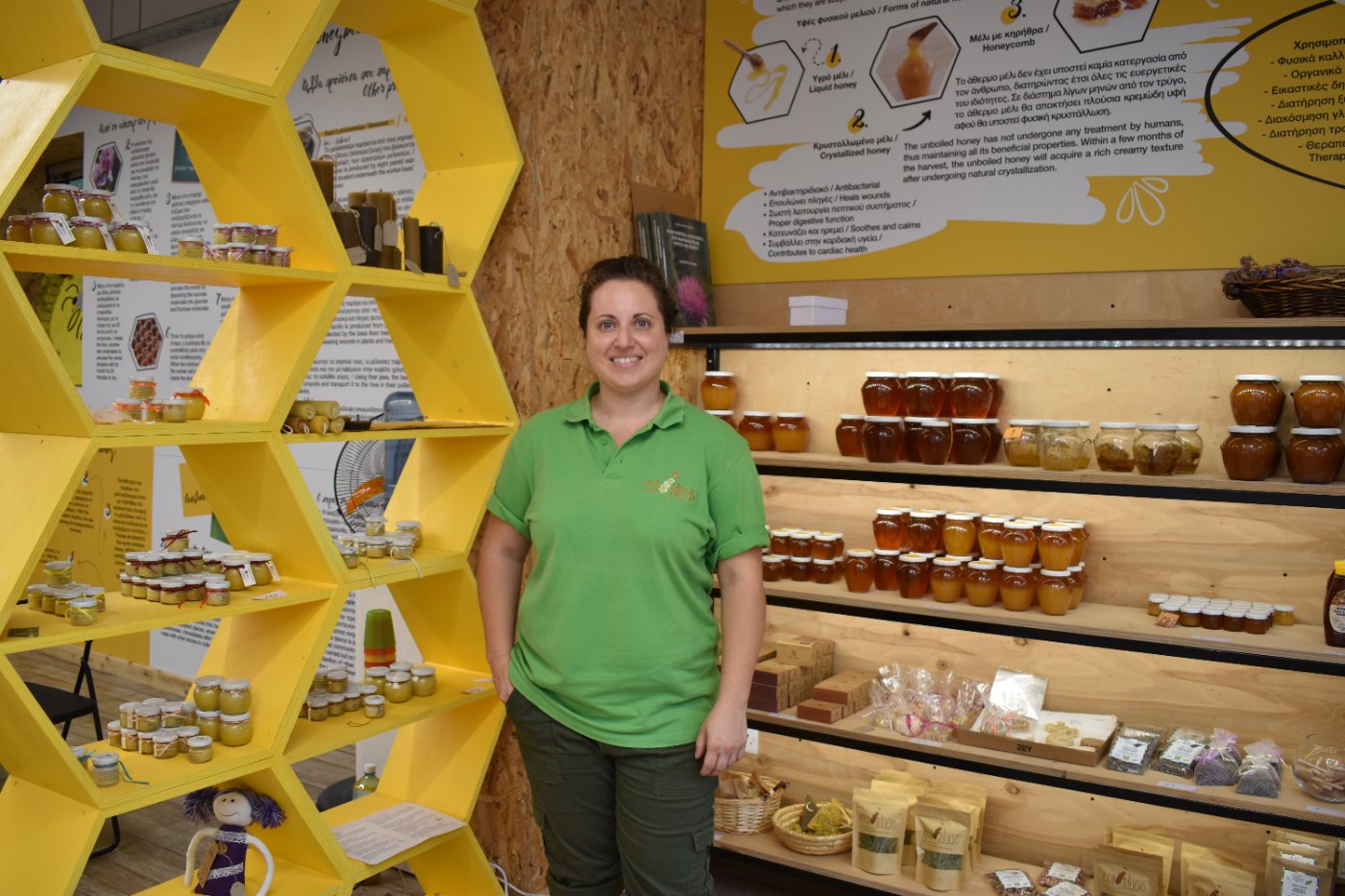
After seven years working on environmental protection, policy and advocacy in Cyprus, Georgia Shoshilou, director of Ecophysis Bee & Nature Center traded policy meetings for pollinators. Today, in the village of Vavla in rural Larnaca, she and her beekeeper husband run a bee and nature centre where children meet bees, families taste local honey and cheese, and sustainability is something you can taste, smell and enjoy. NatureallyDone met Georgia for this interview over a warm cup of tea and locally made honey.
You were born in Lefkara, studied in Greece, and completed a Master's in Edinburgh. What did you study, and what brought you back?
My Master's was in Biodiversity and Ecosystem Health. After my studies I worked for seven years at the Federation of Environmental Organizations of Cyprus as a scientific collaborator. I went to Parliament and to the Departments of Health and Environment, to all the decision-making boards where we were members, and I tried to promote environmental protection: air pollution, biodiversity, waste management, every area of the environment.
Then I decided to come to the countryside and start something with my husband, who was already a beekeeper. I found the world of bees fascinating, and as a biologist and educator I wanted to show people, especially children, how amazing it is. I also wanted to show them the wild edible herbs they can pick from nature, and how our grandparents used them in traditional gastronomy. That is how our Bee and Nature Center began.
Why Vavla? Tell me about Ecophysis a bit.
My husband Kostas was already bottling honey here in Vavla. Our bees live in many villages around the area, but this is where we extract the honey and where we have our land. We developed it with minimal premises, staying as close to nature as possible, with a natural garden.
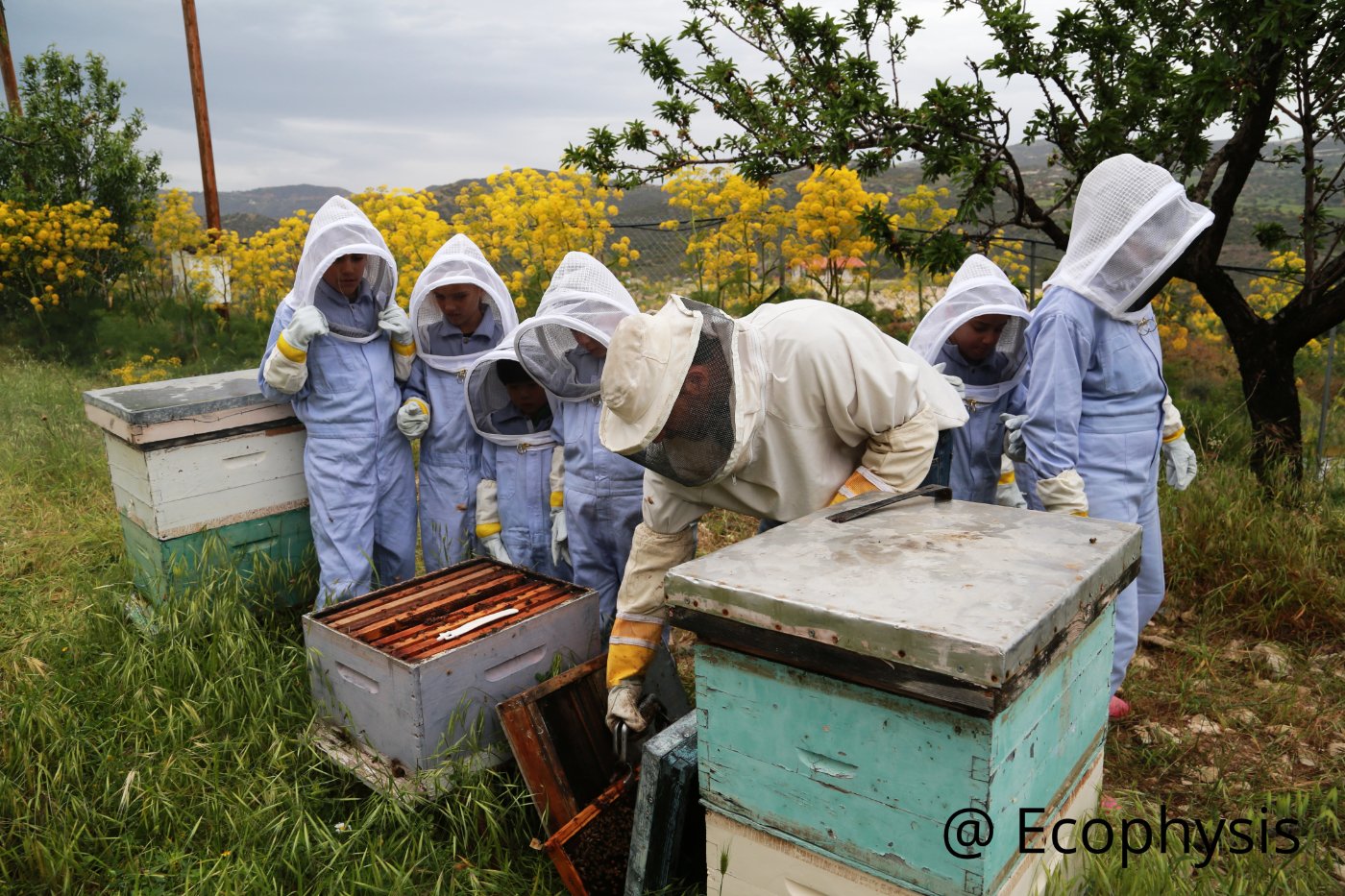
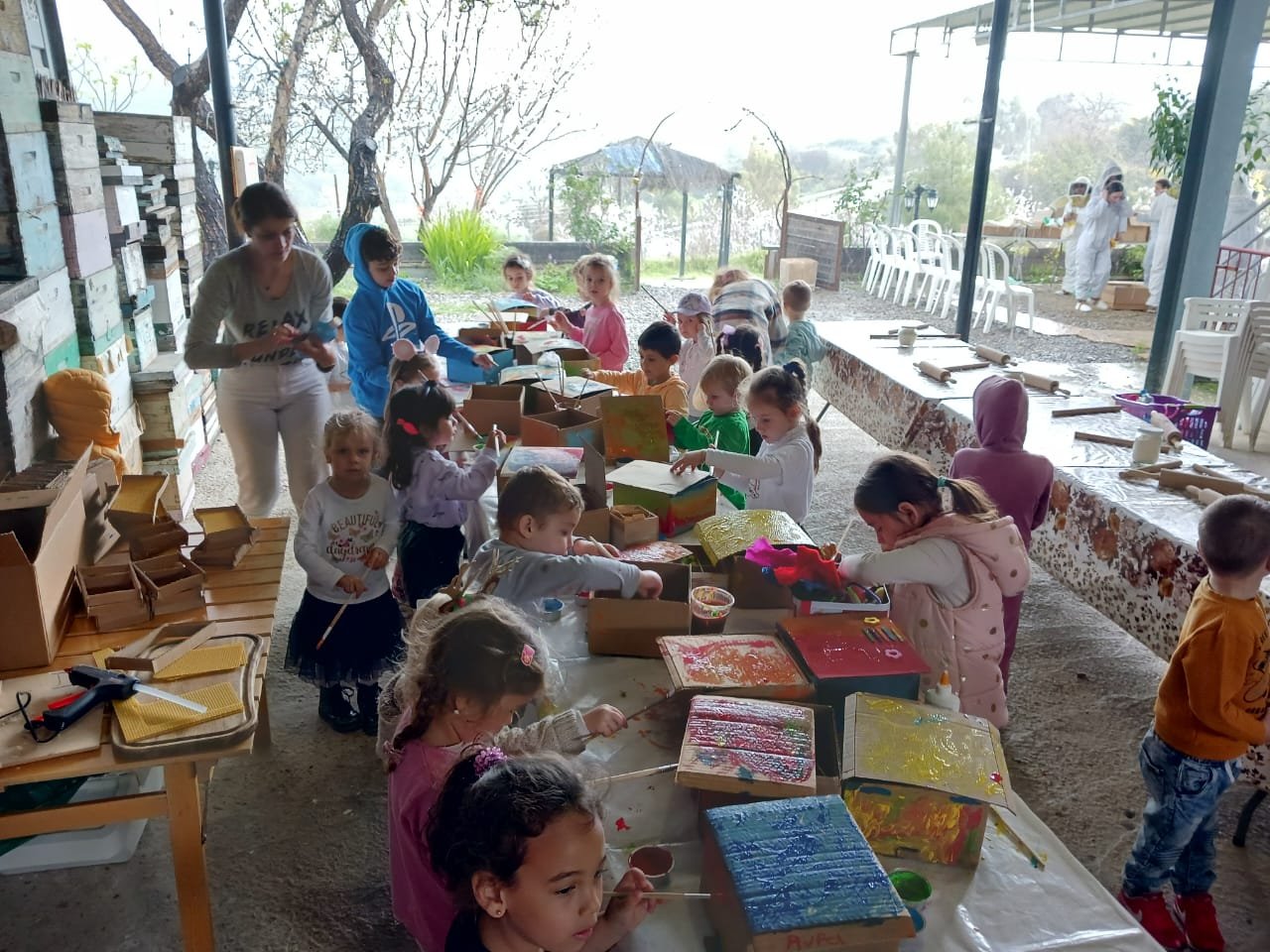
We host events and school trips, and we now have a registered programme that allows us to visit schools to talk about bees and honey. On Sundays we welcome families who want a nice day outdoors with their children or grandchildren, to taste rural, local products. We focus on local products as another form of sustainability, a way to empower local businesses. We collaborate closely with the dairies in Skarinou, so honey with halloumi is a great combination, and we add olives from Vavla and Lefkara and bread from the area. It makes a wonderful brunch. So it's not just a fun day, it's a sustainable fun day, a whole experience. Our aim is not simply to teach people facts about bees, but to let them experience biodiversity, local food and rural life directly through all their senses.
Before working with bees, was there something you believed that turned out to be wrong?
As a biologist I had entomology lessons at university, but that was about it. Beekeeping practices, such as how bees store honey, were largely unknown to me. What I always understood is that you have to communicate with them and understand their needs if you want to enjoy a little of what they create.
We often hear that bees are vital for our food. What does that mean in practice?
It's quite simple. Some bees work inside the hive, but others are the collectors, the pollinators. They look for pollen and nectar, which they carry home to make honey and to feed their larvae. While a bee is on a flower, pollen grains stick to her hairy body, and as she travels from flower to flower she transfers them. Pollen carries the plant's male reproductive cells. When a bee moves from flower to flower, it transfers pollen, enabling fertilisation. After successful fertilisation, the flower can develop into a fruit containing seeds, which can later give rise to new plants.
Honeybees are especially successful because of their hairy bodies and because they communicate. When a forager finds a good source of nectar or pollen, she communicates its location to other bees, so many foragers may concentrate on the same patch of flowers. Honeybees also show what we call floral constancy, often visiting the same plant species during a foraging trip. When thyme is in bloom, for example, many foragers may concentrate on thyme before moving on to other floral sources. This helps transfer pollen between flowers of the same species. And because honeybee colonies contain large numbers of foragers, they can provide a substantial pollination workforce.
Honeybees are the famous ones. Which other
pollinators should we know?
Bumblebees are also important pollinators. Unlike honeybees, they form much smaller colonies and do not produce harvestable quantities of honey. Cyprus also has many solitary bee species, which nest individually in a variety of natural cavities and are valuable pollinators too. Beyond bees, butterflies and other nectar-feeding animals also contribute to pollination.
What simple steps can we take in our gardens and on our balconies?
The easiest thing is to plant Mediterranean herbs: oregano, rosemary, lavender, sage, geranium. They're great for our kitchens and our teas, and they bloom for many months of the year. They need little water and are very resilient in drought, so you aren't creating another environmental problem by watering. Bees love aromatic flowers.
The best thing of all is to protect natural habitats, because wild plants are the most drought-resistant. Even in the driest areas you'll see bees visiting a flower. That means the flower, despite the dry surroundings, holds the moisture it needs to make nectar.
How are climate change and drought affecting bees?
Drought is one of the biggest problems we face in Cyprus. This year we had more rain, which gave us better flowering conditions and, in our apiaries, we saw stronger bee populations and produced many new colonies. But it was not a big honey year. With abundant pollen and new flowers, the colonies invested heavily in population growth. From spring we had many new swarms and prepared many new boxes to house them.
But it's not a problem. You invest. A beekeeper knows you must look after the bees and hope that one day they give back the time and effort you put in, in honey, wax, propolis, royal jelly and pollen. So hopefully next year we will have a big harvest.
How can non-beekeepers tell whether they're getting good honey?
It isn't easy to judge honey quality simply by taste or appearance. Fresh honey is naturally liquid when we extract it from the hive, and over time many types of honey crystallise naturally. The speed of crystallisation depends on the floral origin and composition of the honey, so crystallisation should never be considered a sign of poor quality. There are machines that mix honey into a creamy texture, but we don't use them. We bottle our honey liquid, and over time it naturally becomes thicker and may crystallise completely.
In our case, we produce floral honeys rather than pine honeydew honey. We don't produce pine honeydew honey in our area because the insect responsible for producing the honeydew secretions on pine trees is not present locally. Honeybees collect these sugary secretions from the trees and use them to produce honeydew honey. Excessive heating can delay crystallisation and may also affect some of honey's natural characteristics and enzyme activity.
And the taste?
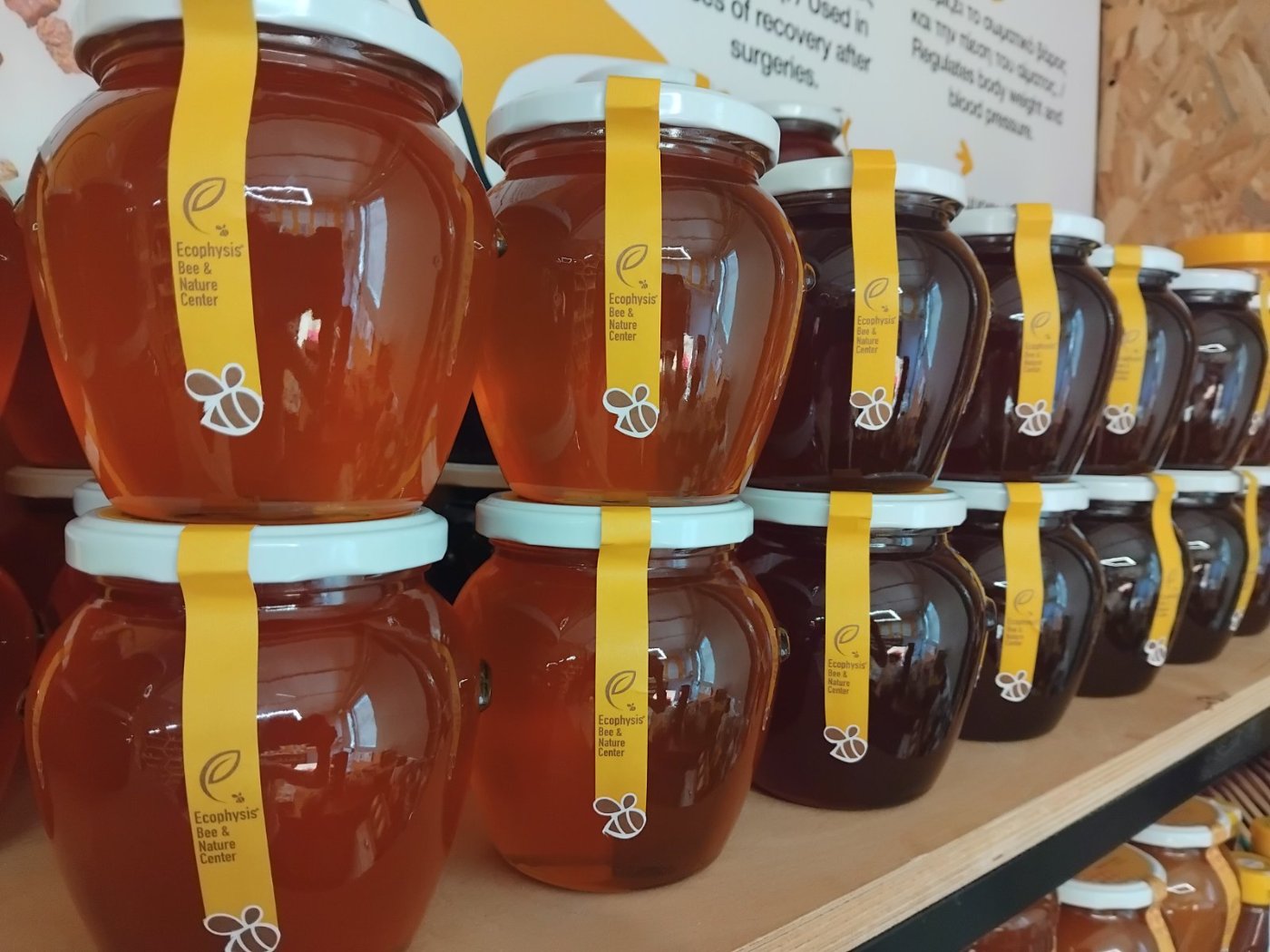
This year we have four honeys, and we do lots of tastings to explain how each one reflects the flowers of its period: spring honey, early summer, late summer and thyme. The thyme is a small amount, but a wonderful one. Honey is like wine: it depends on the season and the year, and every year is a surprise. We had three years of good thyme honey, and this year there's only a little, but of very good quality.
If you could advise people to take just one extra step towards sustainability, what would it be?
It's about lifestyle, and about being proud of it. I take my own water bottle everywhere. Even in a coffee shop, I'm not embarrassed. I don't want to use plastic or paper, so I bring my own. If there's a tap, I'll fill it, and if not, I'll show that this is simply my way of living.
Maybe the next step for everyone is to be proud of who they are, rather than worry about what others will say, as many young people do.
If you know this is the way to go, it's what we must teach our children, in everything we do. At the fruit market, for example, I'll say to my children, "No, we're not taking these bananas because they aren't Cypriot." I want them — and perhaps the people around us — to think about where their food comes from.
So my advice is to feel proud of the way you choose to live, and to teach it. Even if you convince just one person, that's a huge impact.
Interview by Lusine Mirzoyan
Photos are provided by EcoPhysis