
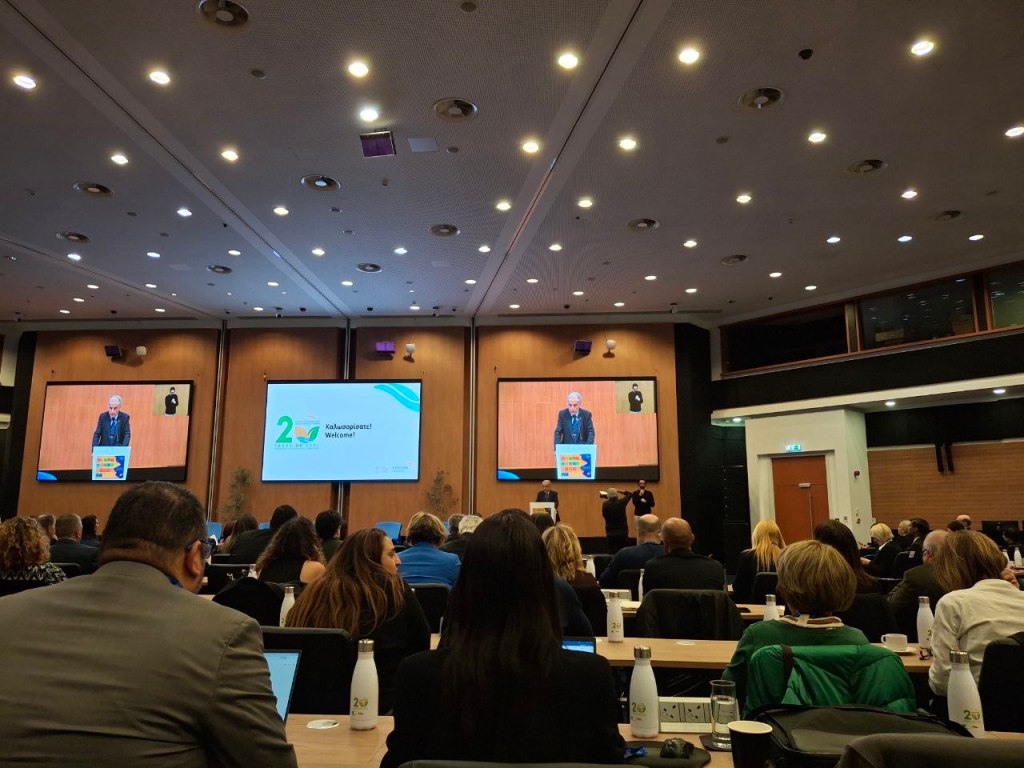
On 27 February 2026, tourism leaders, policymakers, sustainability professionals and business representatives gathered in Nicosia for the European Conference on Sustainable Tourism. The event was organized by the Cyprus Sustainable Tourism Initiative. The core message was simple: tourism must change, and it must change now.
A Different Reality for Tourism
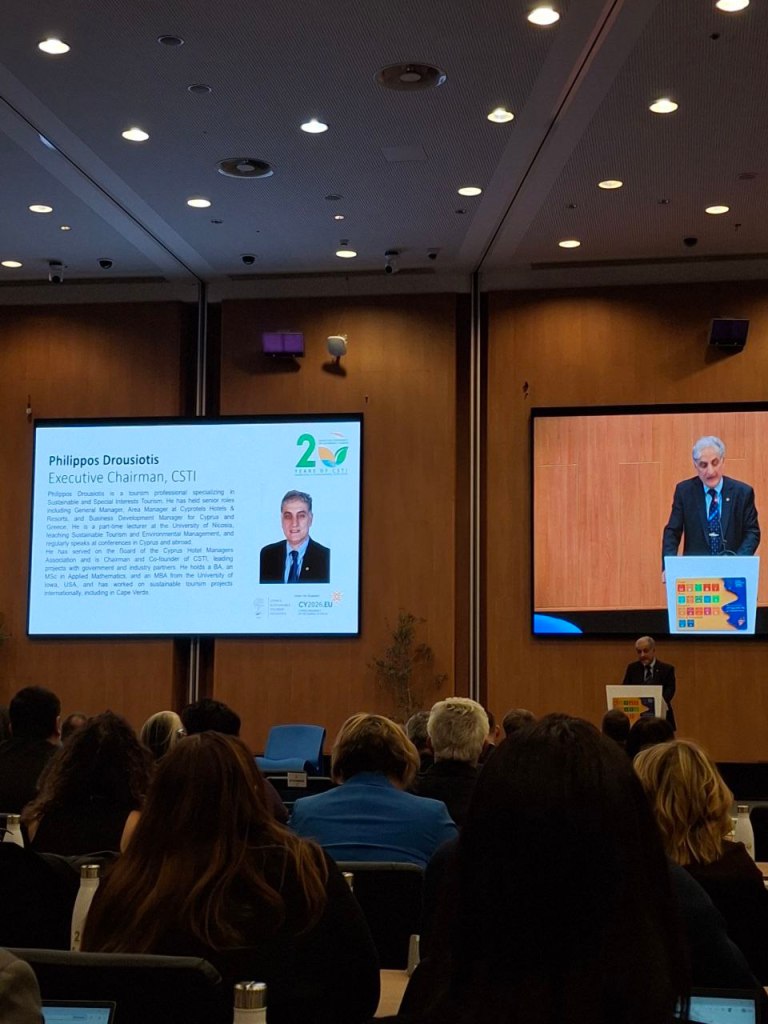
Philippos Droussiotis, Executive Chairman of the Cyprus Sustainable Tourism Initiative (CSTI) opened the Conference with the welcoming speech. Followed by Jeremy Sampson, CEO of The Travel Foundation, who set the tone for the day.
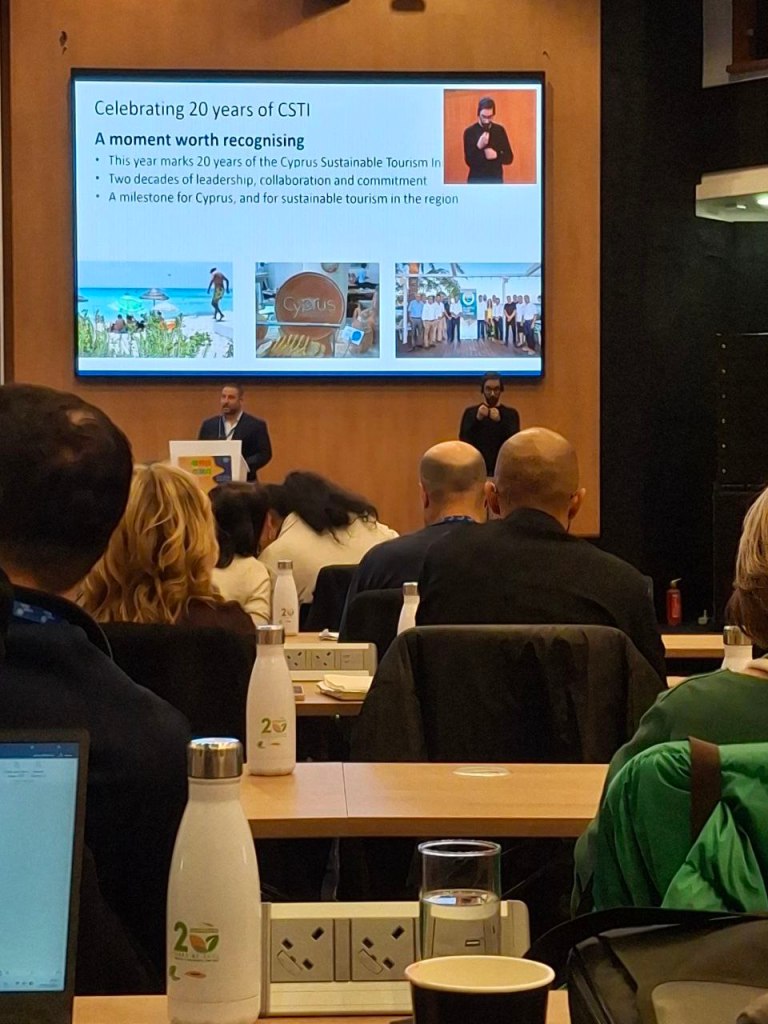
Tourism today operates in a reality that is more exposed, more interconnected and more vulnerable than ever before. Climate change is no longer something we prepare for in the future. It is already reshaping destinations. Emissions from tourism continue to rise, yet the system we rely on was not designed for climate conditions like these.
His argument was not about limiting tourism but about transforming it. If planned correctly, this transition can strengthen destinations and improve the visitor experience.
He outlined four key priorities:
- Understand climate risk clearly and honestly
- Mobilise funding through a tourism resilience fund
- Build institutional and local capacity
- Ensure communities benefit fairly, using equity-based indicators and standards
If implemented properly, Cyprus could position itself as a climate-ready destination that protects people, place and prosperity. In the Mediterranean, adaptation must be the starting point, especially in water management, heat resilience and destination planning.
The warning was clear. The next 20 years will be more challenging than the last 20. Decisions made now will define what Mediterranean tourism looks like tomorrow.
The Mediterranean Under Pressure
In a video message, Doctor at Climatology Christina Anagnostopoulou described the Mediterranean as a global climate hotspot. The region is warming 20 percent faster than the global average. Around 37 percent of its coastline faces high risk.
For tourism-dependent economies, this is not abstract science. It is a direct economic and social challenge.
The Growing Plastic Crisis
Boris Erg, Director of the European Regional Office of IUCN, presented sobering figures. An estimated 1.16 million tonnes of plastic have accumulated in the Mediterranean Sea, with roughly 229,000 tonnes added each year.
Plastic pollution is not just an environmental issue. It directly affects marine biodiversity, coastal communities and the attractiveness of tourism destinations.
This discussion connects closely with the European Ocean Pact, presented by Kostas Kadis, European Commissioner for Fisheries and Oceans. The Pact aims to ensure coherence across EU ocean policies and is structured around six pillars: ocean health, a sustainable blue economy, stronger coastal communities and islands, improved marine knowledge, maritime security, and global ocean governance. With the largest exclusive economic zone in the world, the EU carries significant responsibility in protecting its seas.
A Creative Opportunity for Cyprus
One of the more practical ideas was presented by Enrico Toja, President of Eco-Sustainable Development Association of Elafonisos, Greece. The idea was about positioning Cyprus as a pilot destination for sustainable tourism through the management of invasive lionfish.
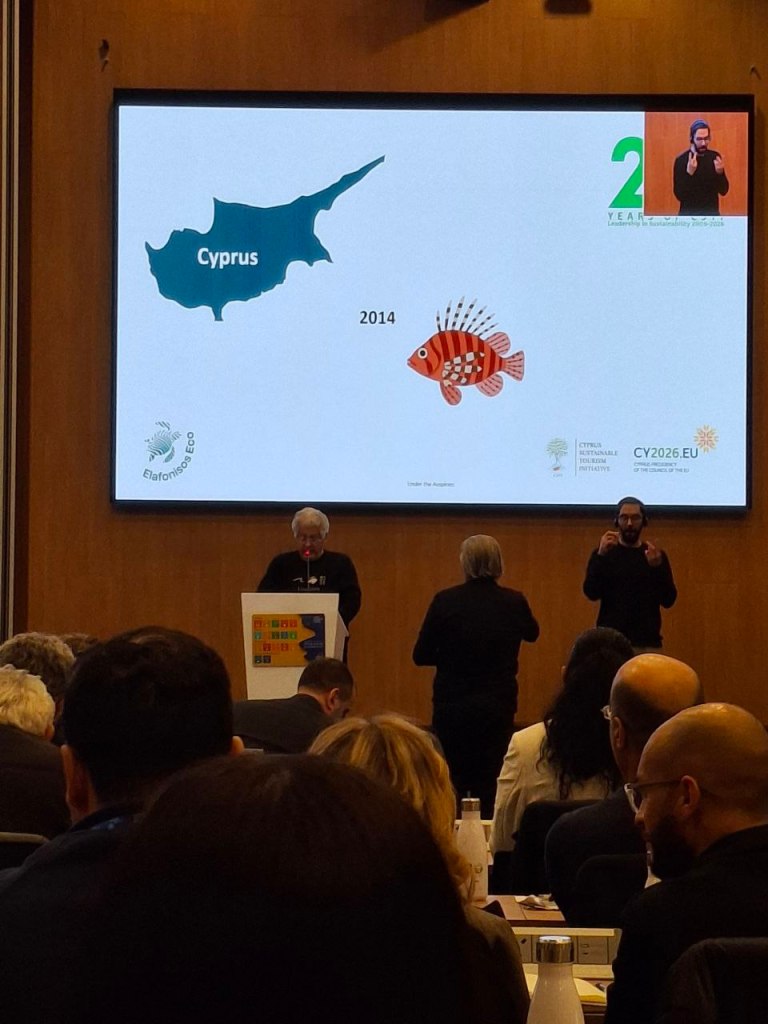
Lionfish are threatening Mediterranean biodiversity. Instead of treating the issue only as a problem, it can also become an opportunity. Guided lionfish diving tours, promoting lionfish on restaurant menus and involving fishers, universities, chefs, local communities and tourists could both protect ecosystems and strengthen Cyprus’ image as a sustainable gastronomy destination.
The Cost of Change and the Cost of Doing Nothing
The program of the Conference continued with panel discussion on driving the sustainable tourism at the local level.
Farah Shammas, Managing Director at St.Raphael Resort & Marina shared her reflection on the pace of change. When she first pushed her team to move quickly toward sustainable practices, many thought she was unrealistic. It took a couple of years to bring everyone on board. Her point was clear: leadership in sustainability often feels uncomfortable at first, but momentum builds once people understand the urgency.
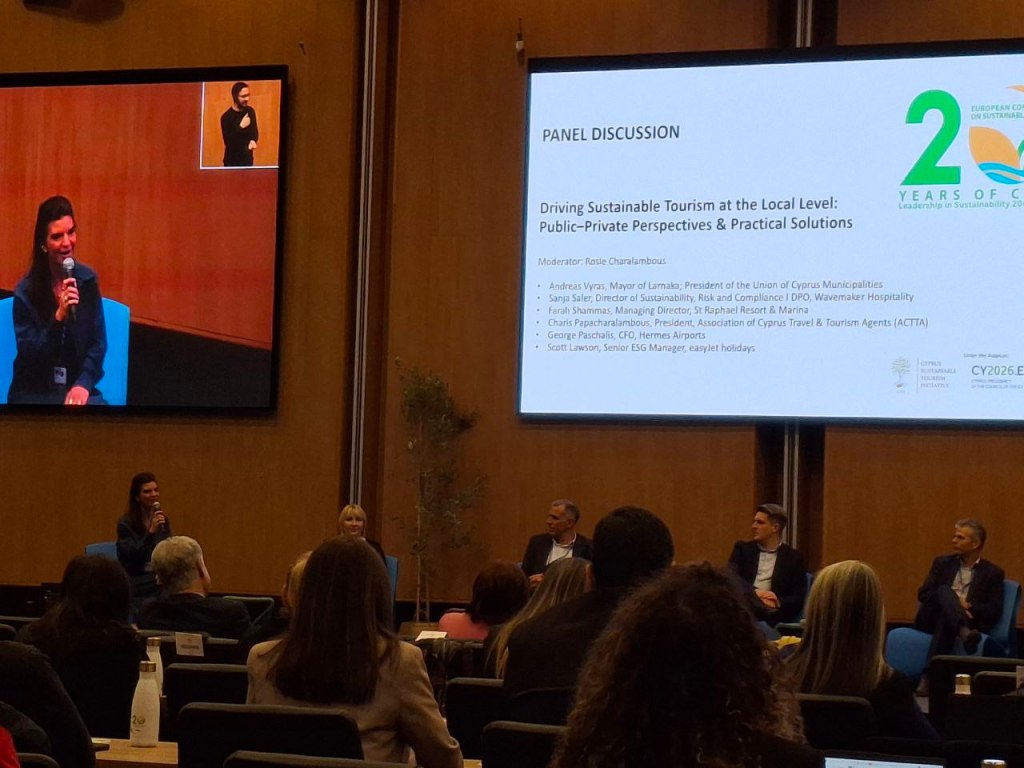
Implementing sustainable solutions requires investment. These investments can feel risky at first, even unrealistic. Yet they are necessary and will pay off, whether in the short or long term.
The Mayor of Larnaca Andreas Vyras questioned how “pay as you throw” waste systems can function without the right infrastructure in place. Policies alone are not enough if systems are missing.
Kostas Koumis, Deputy Minister of Tourism stressed that no real change can happen in tourism without the private sector. Incentive schemes, he argued, are essential to encourage businesses to move in a more sustainable direction.
Antonia Theodosiou, Commissioner for the Environment highlighted another persistent issue: implementation. Even when countries sign environmental agreements such as the Barcelona Convention for coastline protection, enforcement often falls short. Capacity building and accountability must become priorities.
A New European Direction
Apostolos Tzitzikostas, EU Commissioner for Sustainable Transport and Tourism, announced that a new European strategy will be presented in June. It will focus on four pillars: sustainability, competitiveness, resilience and digitalisation.
One expected development is legislation that integrates sustainable travel choices more clearly into ticketing and booking systems, helping travellers make better-informed decisions
A Defining Decade Ahead
What emerged from the conference in Nicosia was not panic, but urgency.
The Mediterranean is on the frontline of climate change. Tourism remains one of its most important economic sectors. If the region acts decisively, it can become a global example of climate-ready tourism. If not, the risks will only intensify.
Cyprus has the opportunity to lead, but leadership requires coordination, investment, the willingness to move beyond declarations and most importantly, ACTIONS.
Lusine Mirzoyan
 www.natureallydone.com
Leave a comment