
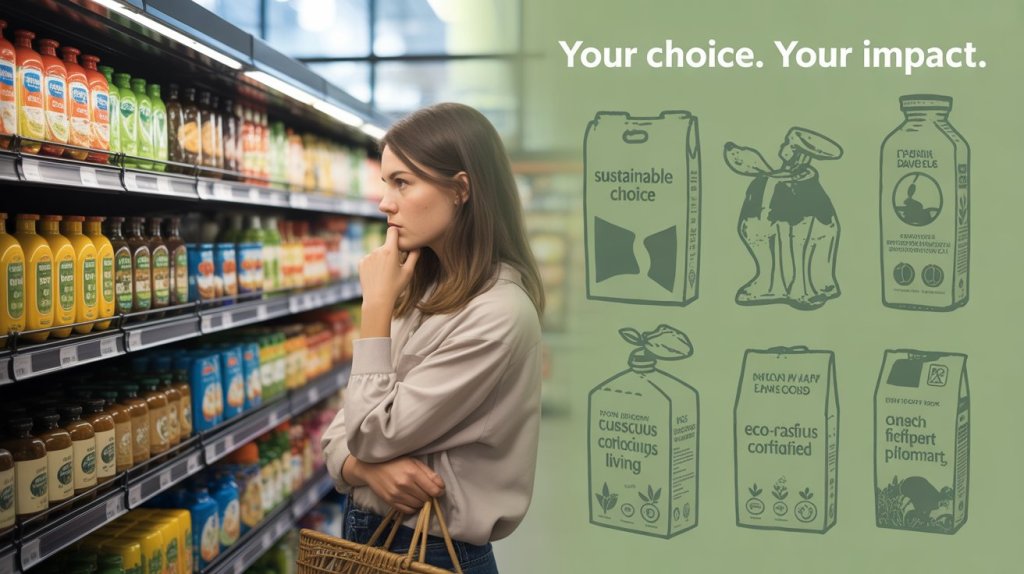
We’ve all seen the messages. “Think ecologically.” “Save the planet.” “Choose green.” These slogans show up on billboards, packaging, and social media feeds. They sound inspiring, yet in practice, they often fail to shift buying behavior. Why? Because while most of us do care about the environment, saving the planet is rarely the deciding factor when someone is choosing between two products at the checkout.
The Problem With “Eco-Only” Messaging
- Too Abstract
“Save the planet” might seem as a noble call, but it’s so broad that it feels distant from personal experience. Shoppers are thinking about convenience, personal benefits, price, taste, or style — not global climate targets. - The Price Barrier
Many sustainable brands come with a higher price tag, which reinforces the perception that “green” is a luxury a few can afford. If the choice is between a 15 euro eco-friendly detergent and a 6 euro mainstream one, most households will stick with what they can afford. - Guilt vs. Empowerment
Overly moralistic or guilt-driven marketing often backfires. People don’t want to feel shamed for buying what they can afford or what’s easily available. They want solutions that make sense in their own context.
What Works Better
To engage everyone (not just eco-conscious early adopters) marketers need to go beyond abstract appeals and connect sustainability with everyday priorities. Here’s how:
1. Focus on Personal Benefits
Sustainability should be a bonus, not the only selling point.
- A reusable bottle isn’t just good for the planet — it keeps drinks colder longer and saves money over time.
- A hybrid car not only leads to reduced emissions, but it saves fuel and money and perfect if a lot of time is spent in traffic.
2. Make It About Savings, Not Sacrifice
People love saving — time, money, and hassle. When sustainable products are framed as long-term cost savers, the value proposition becomes stronger.
- Energy-efficient appliances: “Cut your bills in half.”
- Durable clothing: “Buy less, replace less often.”
3. Normalize, Don’t Niche
Sustainability should be positioned as the default, not an exclusive option.
- Instead of saying “eco-friendly shampoo,” frame it as simply “great shampoo” — that also happens to be eco-friendly.
- Avoid “othering” the sustainable choice; make it feel normal
4. Tell Human Stories
Numbers and warnings can feel heavy. Stories about real people living better through greener choices create relatability. Think testimonials of families who’ve saved money, or communities benefiting from regenerative farming.
5. Address Accessibility
If sustainable brands remain more expensive, they’ll stay niche. Marketers and businesses (and governments) must consider scaling, partnerships, or new distribution models to make prices competitive. Sustainability shouldn’t be a luxury badge; it should be a practical option for everyone.
Saving the planet doesn’t start with slogans. It starts with making sustainable living feel natural, rewarding, and accessible for all.
 www.natureallydone.com
Leave a comment