
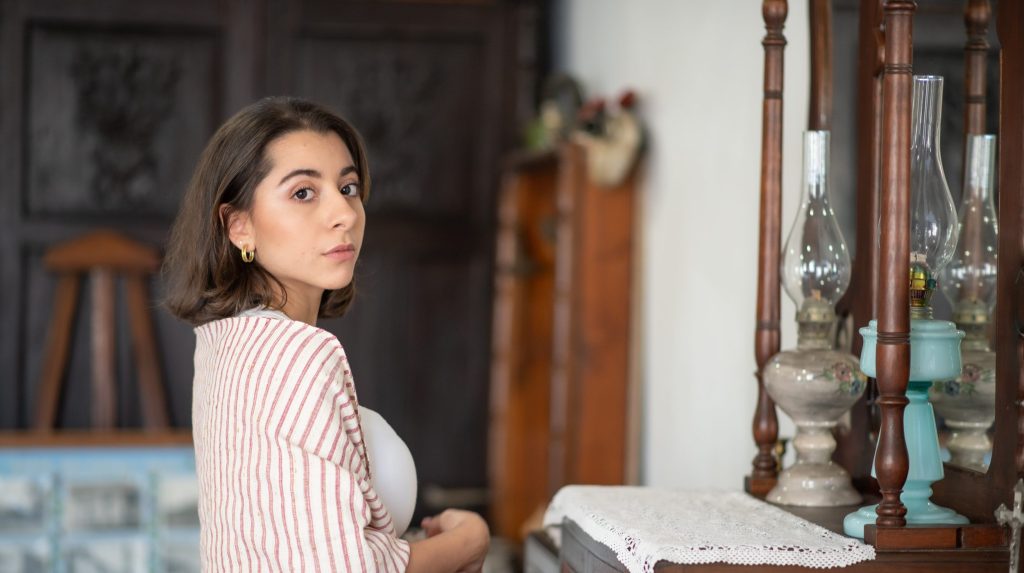
When Andreani Panayides founded Folkmona, it was more than a fashion brand — it was a
mission to revive Cyprus’s rich textile heritage with a sustainable, modern twist. From
organic, locally woven fabrics to traditional craftsmanship, learn how Folkmona connects
culture and conscious fashion in our interview.
How did everything start? What’s the story behind Folkmona?
Folkmona started during my university years when I had to return to Cyprus because of
COVID. Being back home after so long made me see things differently. As part of my art
degree, I started learning traditional crafts like Lefkaritiko and weaving at the Cyprus
Handicraft Centre.
I realised people around me didn’t appreciate these traditions the way I did. So, I launched
an Instagram page to explore Cypriot artists, culture, and techniques. What started as a blog
slowly grew into something more — a way to bring tradition into people’s daily lives.
What did the discovery about outsourced alatsia fabric mean to you?
At first, I thought I could simply buy traditional Cypriot fabric and make clothes from it. But I
soon discovered that most of the Alatsia fabric on the market was low-quality and
manufactured in places like Pakistan. It felt wrong to recreate traditional pieces using
materials that had no real connection to Cyprus.
That realisation made me dig deeper into our textile history and start conversations with local
weavers. I understood how important it is to revive fabric production on the island and
restore its cultural meaning.


What is the Rizari Collection, and how does it differ from Alatsia?
Alatsia is a traditional striped fabric made in various colours like red, green, and blue. Rizari
is our modern reinterpretation, made with organic threads and enhanced with gold and silver
details. The name comes from “rizari,” a plant root used to produce red dye.
One of the first pieces I envisioned for Folkmona was a modern version of the traditional
saya dress. We redesigned it using Rizari fabric to create something contemporary and
wearable today.
What was the hardest part of reviving traditional fabric-making in Cyprus?
The biggest challenge was finding weavers who were willing to revive these traditional
fabrics. Many didn’t see the point or had stopped weaving altogether. But eventually, I found
someone who understood the importance of this work — and that made all the difference.
How do you ensure your production is low-impact and eco-friendly?
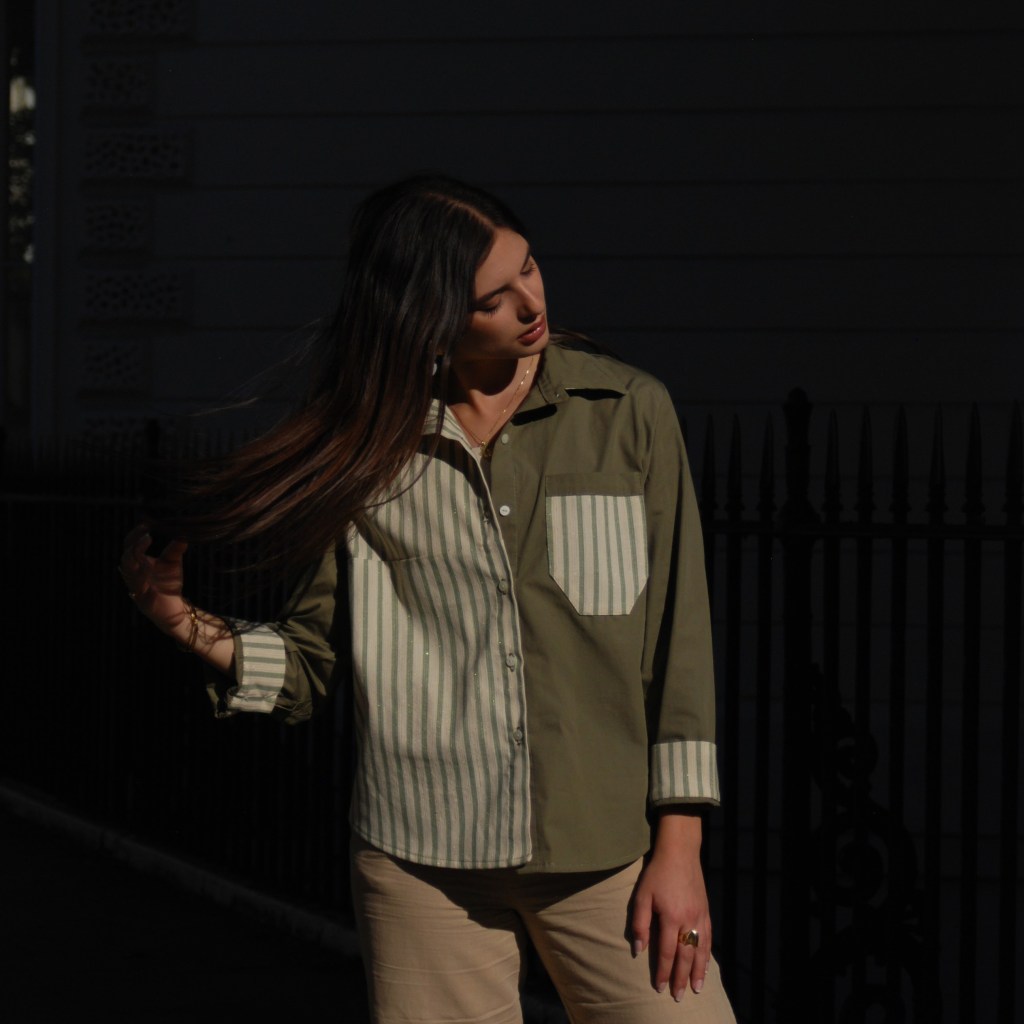
We use only natural fabrics like organic cotton and linen, all of which are GOTS-certified.
The threads for our Rizari fabric are also organic. Our production is deliberately small-scale
— we only make items when we receive orders or know there will be demand at specific
events.
We try to minimise waste at every step and always prioritise working in a way that respects
the environment.
Do you use leftover fabric or offcuts?
Absolutely. We use leftover fabrics in our kourellou weaving workshops — a traditional
Cypriot method of repurposing old textiles. People cut old clothes into strips and weave them
into new creations like mats or fabric art. It’s a wonderful way to reduce waste and keep
culture alive.
What does “slow fashion” look like for Folkmona?
For us, slow fashion means producing only one collection a year. We also created two
custom looks for the Cyprus Film Festival and are currently working on our second full
collection.
Slow fashion is about designing high-quality pieces that aren’t trend-driven — items you can
wear in different ways, across seasons, and for years to come.
What does sustainable fashion mean to you personally?
To me, it’s about mindful consumption — not buying things just for the sake of it. It’s about
asking who made it, how it was made, and whether it will last.
I believe in capsule wardrobes filled with versatile, quality pieces that serve multiple
purposes. One well-made piece you love and wear often is far more sustainable than
constantly buying things you barely use.
You’re based in both Cyprus and London. How does that shape your brand?
Being in both places helps me stay connected to different aspects of my heritage. In Cyprus,
I immerse myself in traditions and collaborate with artisans. In London, I see how much the
diaspora values these cultural ties because they miss them.
I try to design clothes that work in both environments — versatile pieces that are comfortable
and adaptable to different climates.
Do you have a favourite story from someone who wore your designs?
Yes! Members of the Cypriot community in London have told me that wearing Folkmona
makes them feel closer to home. That really means a lot. It shows that what we create isn’t
just clothing — it’s a connection.
What do you say to people who think Folkmona is too expensive?
I understand that not everyone sees the value right away, but every piece is handmade from
scratch — starting with the fabric itself. When you buy from Folkmona, you’re supporting
local weavers and helping preserve cultural heritage.
We’re not about fast fashion. Our goal is to create long-lasting, meaningful clothing that
supports a bigger cause. In the long run, investing in one good piece is better than buying
many cheap, disposable ones.
What’s next for Folkmona?
We’re working on our second collection, which will include weaving, crochet, and Lefkaritiko
lace. We’ll also be running more workshops where people can learn these traditional
techniques themselves.
We’re collaborating with other Cypriot creatives, especially in the diaspora, to create custom
pieces and explore new ways of sharing our culture.
How can people buy Folkmona pieces?
You can pre-order directly through our website. Since we only produce what’s ordered, it
may take a bit longer, but it helps minimise waste.
We also sell at pop-ups, events, and workshops, and you can always message us on
Instagram for custom orders.
Website: http://www.folkmona.com
Instagram:www.instagram.com/folkmona
 www.natureallydone.com
Leave a comment